Every time Anubha Jhawar told a customer that Celeste did not make tea bags, she risked losing a sale. As a certified Tea Sommelier, she preferred loose-leaf tea and wanted customers to experience the leaf properly. The market kept answering with a simpler request: convenience mattered too.
Celeste eventually found a compromise in cotton tea bags and other convenient formats. More recently, Anubha faced a harder version of the same lesson. In October 2026, she wrote publicly about Serendipity, one of the first blends she created. Customers who tasted it liked it, but after four years it still did not sell consistently. Eventually, she had to accept that founder attachment was not a business case.
Those two decisions reveal more about the New Delhi tea brand than a conventional founder biography would. Celeste, launched in 2020, is a premium artisanal tea business built around Indian tea, design, gifting and increasingly what the brand now calls mindful luxury. Anubha’s journey has become an exercise in deciding which principles deserve protection — and which products, formats or assumptions need to change.
Returning to Tea Through Design
Tea was familiar to Anubha long before it became a business. She grew up in Siliguri around tea estates and tasting rooms, with her father Manoj Jhawar working as a professional tea taster. Yet she initially chose design, studying interior and product design at NIFT Hyderabad and later working in interiors and a lighting-solutions business.
When she returned to tea, that design experience came with her. She trained at the UK Tea Academy in 2018 and spent much of 2019 developing blends before Celeste launched online in July 2020 after the pandemic disrupted its original plans.
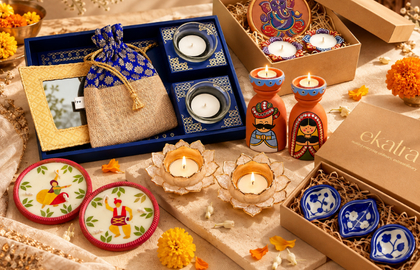
The result was not simply a tea catalogue. Anubha treated packaging, gifting and brewing as part of the product experience. Celeste today sells black, green, white, oolong, herbal and flavoured teas, along with gifting formats and tea bags. Its current website increasingly uses the language of ritual, slowing down and mindfulness — a noticeable evolution from the founder’s earlier insistence that Celeste should not become “another wellness tea brand.”
The distinction is worth preserving carefully. Celeste has not abandoned craftsmanship for wellness positioning; rather, the brand now allows wellbeing and mindful ritual to sit alongside provenance, blending, flavour and design. That is a more accurate picture of the business in 2026.
Learning What to Protect — and What to Change
The tea-bag decision remains a useful example of founder adaptation. In a recent public post, Anubha described how refusing tea bags repeatedly cost the brand sales before she accepted that convenience was not necessarily an attack on the brand’s values. The question was whether Celeste could change the format without abandoning the product standards behind it.
The recent Serendipity story adds another layer. Founders are often advised to be persistent, but persistence can become expensive when it is attached to the wrong product. Anubha kept trying to improve visibility and messaging for a blend she personally loved because people who tasted it responded well. The missing signal was purchase behaviour.
That is a different kind of discipline from staying true to a brand principle. Protecting craftsmanship may strengthen the business; protecting a slow-selling SKU because the founder created it can do the opposite.
In her July 2026 Women Listed Awards application, Anubha described one of her hardest decisions as resisting constant discounting, mass positioning and trend-led claims in order to protect Celeste’s identity. The two ideas are not contradictory. She is learning to distinguish between rigidity and consistency: change what the customer experience requires, but do not let every short-term sales opportunity redefine what the brand is.
Building More Than a Consumer Tea Brand
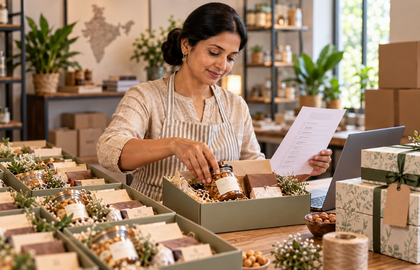
Celeste’s business has also become broader than the consumer-facing brand alone. Alongside direct-to-consumer teas and premium gifting, Anubha has developed CelesteEstate as a B2B tea business offering private label, contract manufacturing, wholesale, exports and corporate gifting. Its current website positions the operation as an end-to-end partner for businesses that want customised tea products, giving Anubha another way to monetise sourcing, blending and product-development expertise.
That B2B layer matters because it changes the scale equation. A premium consumer brand can grow through repeat purchases, gifting and retail, but manufacturing and private-label services create a second commercial engine that is less dependent on Celeste’s own consumer acquisition.
In her Awards application, Anubha described Celeste as bootstrapped and profitable, with a team of 6–10 and annual revenue in the ₹50 lakh–₹1 crore range. She identified repeat consumer purchases, referrals and returning hospitality or corporate-gifting clients as important measures of trust.
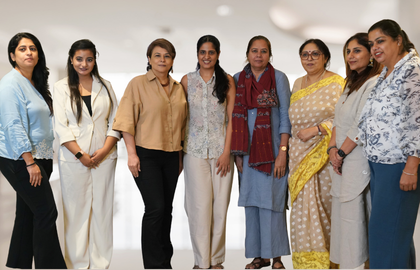
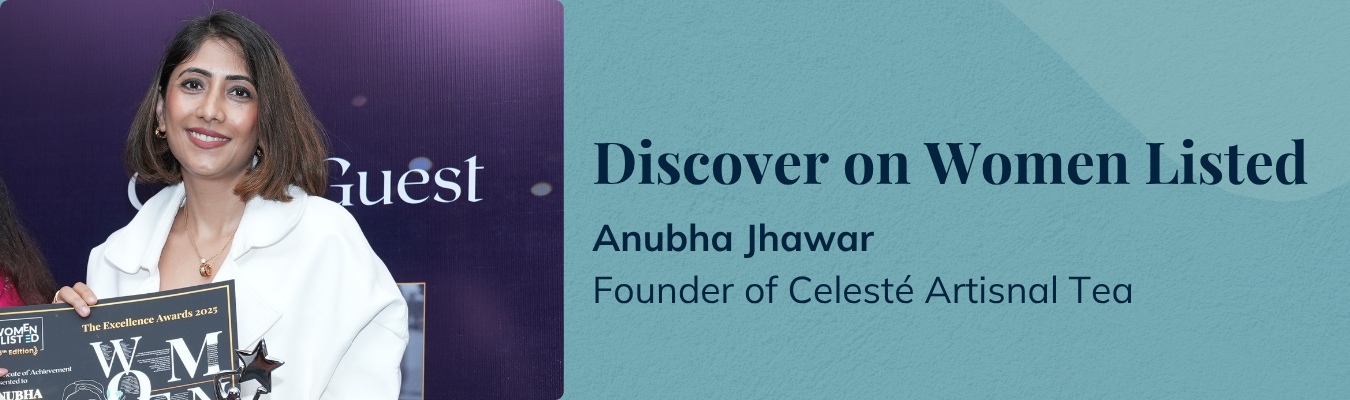
On 25 July 2026, she received jury recognition in the Bootstrapped Sustainable Growth category at Women Listed The Excellence Awards 5th Edition at India Habitat Centre, New Delhi — a category closely aligned with the disciplined, bootstrapped growth described in her application.
Taking Indian Tea Into Global Markets
Anubha’s next ambition is international. Celeste’s current public material describes an expanding global footprint, while CelesteEstate positions itself for worldwide private-label and export work.
International growth creates a familiar problem for culturally rooted brands: which parts of the story travel naturally, and which need reinterpretation? Anubha has previously written about learning that simply exporting an Indian relationship with tea was not enough; overseas customers may bring different flavour associations, routines and expectations to the same product.
Her design background is useful here because the business has always involved translation — from tea expertise into packaging, from loose leaf into convenient formats, and now from Indian tea culture into products that make sense in different markets.
Conviction Without Rigidity
Anubha’s story can easily be reduced to a return to family roots: the daughter of a tea taster becomes a Tea Sommelier and starts a tea company. The more useful founder story is what happened after she returned.
She has had to turn inherited familiarity into product development, design, sourcing, gifting, B2B services and commercial decisions. She has also had to learn that conviction is not the same as attachment.
The tea bags taught her that customers can be right about format without being right about everything. Serendipity taught her that a founder can love a product that the market does not need enough. Meanwhile, the decision to remain bootstrapped and resist discount-led growth reflects the opposite lesson: some principles are worth holding even when faster alternatives exist.
For women entrepreneurs building premium consumer brands, that distinction is valuable. Sustainable growth is not simply about moving slowly. It is about knowing what should remain consistent as the market responds — and what must be allowed to change.
Discover Anubha Jhawar and Celeste on Women Listed.