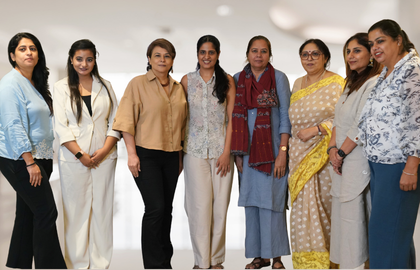
Delhi's interior design scene is being shaped by a generation of women who combine aesthetic clarity with practical execution. That matters because the broader market is large and still expanding. India's interior design market is projected to reach USD 65.01 billion by 2031, growing from USD 35.48 billion in 2026 at a CAGR of 12.87%, with residential interiors expanding fastest at a 16.47% CAGR, according to Mordor Intelligence's India interior design market outlook. For clients searching for women interior designers in Delhi, that growth creates both opportunity and noise.
Transforming Spaces: Delhi's Leading Women in Interior Design. Delhi's design scene is being shaped by a generation of visionary women who blend artistry with functionality, creating spaces that inspire and comfort. From sprawling luxury homes to meticulously crafted commercial interiors, these professionals are setting new standards. This guide, curated by Women Listed, goes beyond a simple directory. It offers a look into the philosophies of Delhi's top women interior designers and provides a practical framework to help you choose the right partner for your project. For readers also tracking broader style shifts, this expert guide for interior designers is a useful companion read.
Table of Contents
- 1. Professionals
- 2. K2India
- 3. Raseel Gujral Ansal / RGA Design Studio (Casa Paradox)
- 4. Iram Sultan Design Studio
- 5. Lipika Sud Interiors Pvt. Ltd.
- 6. Monica Khanna Designs
- 7. Seetu Kohli Home
- Women Interior Designers in Delhi, 7-Point Comparison
- From Inspiration to Implementation
1. Professionals

Start here if you want to make a good hiring decision, not just collect pretty references. Women Listed Professionals works best as a shortlist-building tool because it lets you compare women-led businesses across categories and cities before you spend time on calls, site visits, and proposals.
That matters in Delhi NCR. The main challenge is rarely finding inspiration. It is separating polished marketing from clear service scope, reliable communication, and a business setup that can handle your project.
Why it stands out
Women Listed gives clients one place to review profiles, services, visuals, and business details side by side. That makes the early screening process faster and more disciplined, especially for clients comparing independent designers with small studios.
The format is useful because it reveals how a designer presents her work. A profile with clear scope, relevant project images, and direct contact information usually signals a more organized intake process. That does not guarantee execution quality, but it is a practical early filter.
Practical rule: If a designer cannot explain her scope, style, and process clearly online, expect extra back-and-forth once the project starts.
A strong profile also sits within a wider business network. That includes expert-led learning, curated visibility, recognition through initiatives such as the Business Lounge and Excellence Awards, and founder-focused growth pathways like the WeEvolve Programme for entrepreneurs who are still working to strengthen their market position.
Best fit and trade-offs
This option suits readers who want a framework for choosing, not just a famous name to admire. Use it well, and it helps with three decisions that usually trip clients up:
- Shortlisting: Compare multiple women interior designers in Delhi before reaching out.
- Credibility screening: Check whether the profile shows consistency in style, service clarity, and professionalism.
- Match quality: Spot designers whose scale, category focus, and presentation fit your project, whether it is a residence, office, retail unit, or renovation.
There are limits, and they are worth stating plainly. Some premium visibility and on-ground opportunities sit behind paid plans for businesses, and offline networking is concentrated in Delhi NCR. For clients in and around Delhi, that local concentration can still be useful because it increases the odds of finding designers who are active, visible, and easier to verify through the same business community.
One more practical tip. Before you contact anyone, create a simple comparison sheet with five columns: project type, style fit, budget comfort, execution support, and response quality. That turns browsing into a real selection process.
For readers who want a practical overview of how designer-client collaboration usually works, Lewis and Sheron's interior design guide is a helpful reference point.
2. K2India

K2India is the name to shortlist when the brief involves heritage, architecture, and interiors that need to feel cohesive from the first drawing to the final furniture detail. Led by Sunita Kohli and Kohelika Kohli, the studio is known for a multidisciplinary approach that spans architecture, restoration, landscaping, and bespoke furniture.
This isn't a studio for casual styling refreshes. It's a serious choice for clients with large residences, legacy properties, and projects where proportion, craft, and historical sensitivity matter as much as visual impact.
Where K2India is strongest
The key advantage is integration. When one studio handles architecture, interiors, and custom furniture together, clients avoid the common problem of fragmented decision-making between separate consultants. That's especially valuable on complex homes where structural planning and interior intent need to align early.
K2India is also a strong fit for restoration-heavy work. Clients dealing with older Delhi homes, Lutyens-era influences, or properties that need conservation-minded updates will usually get more value from a team that understands what should be preserved and what can be modernized without flattening the building's character.
Some firms are great at decorating a finished shell. K2India is better when the shell itself needs design intelligence.
The trade-off is obvious. This is premium work. Timelines can stretch because artisanal detailing and restoration standards don't move at mass-market speed. Clients with a strict budget ceiling or a highly compressed timeline may find the process too demanding.
Still, for estates, formal residences, and high-protocol projects, that rigor is often the point.
3. Raseel Gujral Ansal / RGA Design Studio (Casa Paradox)

RGA Design Studio, together with Casa Paradox, appeals to a specific kind of client. This is for people who don't want safe luxury. They want rooms with personality, collectible energy, and a point of view.
Raseel Gujral Ansal's work sits at the intersection of art, interiors, and branded design language. That shows up in bold palettes, sculptural furniture, and spaces that feel curated rather than merely furnished.
What clients should know before hiring
The biggest strength here is creative direction. Some designers are excellent project managers but visually cautious. RGA Design Studio is the opposite. It offers a strong signature and a complete ecosystem of custom furniture and décor, which helps clients achieve a finished look without assembling pieces from too many unrelated vendors.
That can be a real advantage for large apartments and statement homes in Delhi, especially when the client wants the space to feel distinctive from day one. It also suits hospitality-minded homes where entertaining matters as much as comfort.
A useful way to think about it is this: if K2India leans toward architectural gravitas, RGA often leans toward collectible identity.
Hiring insight: Clients should ask whether they want a designer to interpret their taste, or lead it. With RGA, the studio's voice will be part of the result.
The caution is equally clear. Minimalists may find the language too expressive. Detailed customization can also lengthen procurement and execution. For clients exploring how women-led platforms improve visibility for distinctive creative businesses, Women Listed's perspective on a women business visibility platform in India adds useful context.
4. Iram Sultan Design Studio

Iram Sultan Design Studio is the right kind of boutique practice for clients who want luxury without loudness. The studio is known for layered interiors that rely on texture, restraint, and careful curation rather than obvious spectacle.
That distinction matters. In Delhi's premium market, many homes aim for richness. Fewer achieve calm. This studio tends to work well for clients who want rooms to unfold slowly, with detail that becomes more noticeable over time.
Why clients choose this studio
Recognition matters, but only when it aligns with the work. The studio's AD100 recognition supports what the portfolio already suggests. It's a strong option for clients looking for refined residential or hospitality interiors with a bespoke feel.
The boutique scale is part of the appeal. Clients often get a more collaborative process and closer attention to materiality, mood, and furniture composition. That can produce better results in homes where every room needs its own rhythm but the overall narrative still has to feel coherent.
There is a trade-off. Smaller studios can't always take on many large projects at the same time. Clients should ask about active project load, design involvement by the principal, and expected response times before committing.
Quiet luxury only works when the designer is disciplined. Without that discipline, the result can feel underdone instead of refined.
For clients who value subtlety, that discipline is exactly what makes this studio worth considering.
5. Lipika Sud Interiors Pvt. Ltd.

Lipika Sud Interiors Pvt. Ltd. brings something many clients underestimate until a project gets difficult: range. The practice works across residential, corporate, hospitality, and institutional interiors, with integrated execution and a long-standing presence in Delhi NCR.
That breadth makes it a practical choice for clients who need a team that understands more than one project type. A founder designing both a home and a studio office, for example, may value that versatility more than a highly narrow design signature.
Where this firm delivers value
One of the studio's stronger differentiators is its connection to Indian craft and artisanal collaboration. That can bring depth to a project, especially for clients who want contemporary interiors with material memory, not copy-paste luxury drawn from the same imported references.
It also helps that the firm has turnkey capability. For many clients, especially those managing work and family schedules, design isn't just about taste. It's about who can coordinate drawings, procurement, execution, and finishing with the least friction.
A realistic note belongs here. Because the visual language can shift across project types, clients should arrive with a clear brief. This is not the studio to hire and then hope the design direction defines itself.
- Best for mixed-use needs: Strong when the client wants one team that can handle home, office, hospitality, or institutional logic.
- Best for craft-led briefs: Useful for spaces that want Indian artisanal elements integrated into a contemporary setting.
- Watch for fit: Smaller residential projects should confirm priority level and team allocation early.
Readers exploring adjacent women-led Delhi NCR aesthetics may also like this Women Listed feature on women-led home decor stores in Delhi NCR.
6. Monica Khanna Designs

Monica Khanna Designs stands out because the studio's hospitality experience changes the way it handles space. Interiors shaped by hotel and luxury transport thinking often perform better under daily use. Layouts are tighter, circulation is cleaner, and finishes are selected with durability in mind.
That can be especially valuable in Delhi homes that host frequently, serve multiple generations, or need to balance elegance with wear resistance.
Who should shortlist this studio
Clients looking for high-touch, hospitality-grade interiors should pay attention here. Monica Khanna's background includes luxury train design, which suggests a sharp understanding of compact planning, material resilience, and controlled visual drama. Those skills transfer well to premium residences, boutique commercial spaces, and hospitality settings.
The other advantage is sourcing. A studio with strong procurement networks can save clients a great deal of time when a project needs custom furniture, imported pieces, or hard-to-find finishes that still have to align with one coherent design story.
The trade-off is bandwidth. Boutique studios that maintain quality control by limiting active projects can move more deliberately. That's often a plus for result quality, but only if the client's timeline can accommodate it.
A beautiful presentation isn't enough. Clients should ask which finishes are easy to maintain, which ones show wear quickly, and who signs off on substitutions if stock changes mid-project.
For buyers who want spaces that feel polished, structured, and guest-ready, Monica Khanna Designs is an intelligent shortlist candidate.
7. Seetu Kohli Home
Seetu Kohli Home is a strong fit for clients who want interior design and luxury furnishing procurement under one roof. The studio combines architect-led design services with a retail ecosystem and access to international furniture brands, including Ralph Lauren Home.
That setup changes the client experience. Instead of designing first and sourcing later from scattered vendors, clients can move through a more curated path where the furnishing language is integrated early.
What to clarify before signing
This studio is at its best when the brief is unmistakably premium. Clients who want global brand associations, high-touch curation, and a polished showroom-led process will likely find the model appealing. It's also useful for homes where furniture is not an afterthought but a major part of the design identity.
The biggest benefit is procurement efficiency at the luxury end. International brand access can reduce some of the uncertainty that comes with piecing together high-value furnishings from multiple unconnected suppliers. That doesn't remove all lead-time issues, but it can streamline decision-making.
Still, style fit matters. If the client prefers minimal, low-visibility interiors, a brand-forward luxury approach may feel too formal or opulent. Budget clarity matters too, because premium branded furniture tends to shape the full project cost from the start.
A smart client question here is simple: how much of the final look depends on branded selections, and how flexible is the studio if the client wants a quieter mix of bespoke and branded pieces?
Women Interior Designers in Delhi, 7-Point Comparison
A shortlist is only useful if it helps you choose. Use this comparison to match each studio to your project type, budget range, design appetite, and tolerance for custom work, approvals, and procurement lead times.
The fastest way to use this table is to compare three things first. How complex your project is. How much hands-on coordination you want from the studio. How specific your visual direction already is.
| Item | Implementation complexity | Resource requirements | Expected outcomes | Ideal use cases | Key advantages |
|---|---|---|---|---|---|
| Professionals (Women Listed) | Low. Simple profile setup with optional upgrades | Minimal to moderate. Time to build profile, paid tiers from ₹3,999/yr | Better discoverability, lead generation, networking opportunities | Independent service providers and small businesses seeking visibility and leads | Searchable listings, learning resources, events, recognition pathways |
| K2India (Sunita & Kohelika Kohli) | High. Multi-disciplinary work with restoration, protocol, and execution complexity | Significant. Premium budgets, long timelines, specialised teams | Restoration-grade, highly crafted luxury residences and estates | Heritage conservation, large protocol-heavy projects, bespoke luxury homes | Deep restoration expertise, cohesive end-to-end delivery, fine craftsmanship |
| Raseel Gujral Ansal / RGA Design Studio | High. Bespoke, art-led design with custom furniture integration | High. Custom procurement, artisanal production, longer lead times | Bold, collectible interiors with a distinct creative identity | Clients seeking statement, art-forward luxury homes and curated collections | Strong creative direction, integrated bespoke furniture and decor |
| Iram Sultan Design Studio | Medium-high. Detail-rich, context-led design process | Premium. Boutique team focus, curated sourcing | Refined, textural, thoughtfully curated interiors | Residential and hospitality clients wanting subtle, layered luxury | AD100 recognition, refined craftsmanship, personalised collaboration |
| Lipika Sud Interiors Pvt. Ltd. | Medium. Turnkey project management and execution | Mid-to-premium. Project management, artisan collaborations | Versatile, craft-integrated interiors across sectors | Homes, offices, hospitality and institutional projects needing end-to-end delivery | Turnkey capability, strong artisanal integrations, broad sector experience |
| Monica Khanna Designs | Medium-high. Hospitality-grade detailing with performance-driven finish selection | Premium. Specialised procurement, limited project bandwidth | Durable, hospitality-quality interiors with strong narrative clarity | High-use residential and commercial spaces, hospitality projects | Proven hospitality and transport expertise, meticulous planning and finishes |
| Seetu Kohli Home | Medium. Showroom-led consultations with branded furniture integration | High. Branded furniture procurement and curated sourcing | Opulent, brand-forward interiors with efficient sourcing | Clients wanting international luxury brands integrated into interiors | Access to global luxury brands, flagship showroom support, efficient procurement |
A practical hiring note. High complexity does not automatically mean better design. It usually means more approvals, more custom decisions, more vendor coordination, and greater sensitivity to delays if one part of the chain slips.
If you want a quick first filter, use this:
- Choose K2India for heritage depth, architectural authority, and projects where craftsmanship and restoration standards matter more than speed.
- Choose RGA Design Studio if you want a strong point of view and are comfortable letting the designer shape the visual identity in a bold way.
- Choose Iram Sultan Design Studio if you prefer restraint, layering, and a quieter luxury that reveals itself in materials and detailing.
- Choose Lipika Sud Interiors Pvt. Ltd. if execution control and sector versatility matter as much as the final look.
- Choose Monica Khanna Designs for high-use spaces where durability, planning discipline, and finish performance need to hold up over time.
- Choose Seetu Kohli Home if branded furniture and retail-backed sourcing are part of the brief from day one.
- Use Professionals (Women Listed) if your goal is to discover and compare women professionals efficiently before committing to calls and site visits.
Trade-off sits between authorship and adaptability. Some studios are strongest when clients want a defined signature. Others are better suited to briefs that need operational flexibility, phased execution, or closer budget control. That is the question to settle before you shortlist meetings.
From Inspiration to Implementation
Choosing among women interior designers in Delhi gets easier when the decision is tied to project type, design temperament, and process fit. Prestige matters, but fit matters more. A designer who excels at heritage restoration may not be the right choice for a fast apartment makeover. A studio known for bold luxury may not suit a family that wants soft, understated comfort.
Women Listed recommends starting with three filters. First, define the project clearly. Is it a new build, renovation, styling-led refresh, retail space, or a hospitality-grade interior? Second, decide how much creative control is needed from the designer. Some clients want interpretation. Others want strong authorship. Third, test operational fit early. Ask who leads the design, who manages execution, how procurement is handled, and what happens when site realities change.
The broader profession makes this shortlist even more significant. Globally, women dominate interior design, yet leadership visibility hasn't always kept pace. In the United States, 69% of the 87,000 interior designers are women, while 67% of partners or principals at large firms remain men, as cited by Riluxa's analysis referencing Interior Design magazine. That gap is one reason platforms that improve discoverability and recognition for women-led firms matter so much.
The same leadership question appears in more direct economic terms elsewhere. A discussion highlighted in this LinkedIn post on interior design leadership and pay points to a gender pay gap and leadership ceiling that many directories ignore. For clients, that makes intentional hiring more meaningful. Choosing visible, well-positioned women-led studios helps direct business toward talent that has often been under-recognized rather than under-qualified.
For readers exploring visualization before committing to a design direction, this explainer on virtual staging AI offers a useful overview of how digital previews can support early decisions.
The right designer is rarely the one with the loudest presence. It's the one whose process, taste, and execution model match the space that needs to be built. Women Listed helps make that match easier to find.
List a business on Women Listed through the Women Listed business submission page.