A Jaipur founder makes beautiful festive gift hampers. Her packaging is thoughtful, her pricing is sensible, and her repeat customers love ordering on WhatsApp. But outside her own contacts, almost nobody can find her. A wedding planner in Delhi never hears of her. A corporate team in Gurgaon searching for women-led gifting options doesn't see her. A journalist looking for small Indian brands skips past her because there's nothing structured to discover.
That problem is more common than most founders realise. The work is good. The business is real. The visibility is weak.
The opportunity is real too. In 2024, one in ten women in India started new businesses, with optimism at 72.62% and digital adoption at 80.09%, according to the GEM Women's Entrepreneurship Report. More women are building online. But being online and being discoverable are not the same thing.
A women business visibility platform in India sits in that gap. It gives a founder one place where her business can be searched, understood, trusted, and contacted without depending only on Instagram reach, local referrals, or a crowded marketplace.
Table of Contents
- Introduction
- What Exactly Is a Visibility Platform?
- The Real Business Value From Views to Rupees
- Core Features to Look for in a Platform
- Making Your Platform Profile Work for You
- Your Turn Your First Steps to Getting Seen
- Frequently Asked Questions
Introduction
A Lucknow baker may spend the morning finishing a dessert table order, the afternoon replying to Instagram DMs, and the evening sending payment details on WhatsApp. The business is running. What isn't working is discovery. Outside existing circles, buyers still don't know she exists.
That's the frustrating part for many women founders in India. Visibility often depends on patchy methods. One Instagram post does well, three disappear. A friend refers a client, then the pipeline goes quiet. A website sits live but brings little because nobody is landing there in the first place.
This matters even more now because more women are starting up, yet visibility still hasn't caught up. The GEM Women's Entrepreneurship Report says one in ten women in India started new businesses in 2024, with optimism at 72.62% and digital adoption at 80.09%. The intent is strong. The digital habit is there. The discoverability gap remains.
A practical founder doesn't need more noise. She needs a clearer route to leads, credibility, and contact.
What Exactly Is a Visibility Platform?
If people can't quickly understand what a business does, who it serves, and how to contact it, the business is present online but still invisible.
A women business visibility platform in India is a structured online space where women-led businesses can be found by the right people. Not just liked. Found.
It's different from social media because social media is feed-led. Your business appears, disappears, and competes with dance reels, memes, and platform algorithms. It's different from a marketplace because marketplaces are built for transactions inside their own rules, often with price pressure and limited brand storytelling. It's also different from a plain directory because a useful visibility platform doesn't stop at a name and phone number.
You use a visibility platform to make your business easier to search, easier to trust, and easier to contact.
Government-backed models show why this matters. NITI Aayog's Women Entrepreneurship Platform connected over 450+ women entrepreneurs with corporate buyers through its platform, as noted on the Women Entrepreneurship Platform website. That's the practical value of organised discoverability. Visibility turns into introductions and market access when the platform is built properly.

It sits between social media and a website
A good platform does four jobs at once.
- It gives you a searchable home: Your business sits in the right category, city, and discovery flow, so a buyer looking for a coach in Bengaluru or a gifting brand in Delhi can find you.
- It creates quick trust: Photos, service details, product examples, and profile structure help a stranger understand that this is a real business, not a half-built page.
- It supports business context: Buyers don't just want your name. They want to know what problem you solve, whether you serve bulk orders, whether you work across cities, and how to reach you.
- It can strengthen AI and search discoverability: As founders start caring about how their businesses appear across search and AI-generated answers, it helps to monitor AI model mentions and understand how structured online presence affects visibility beyond traditional search.
In practice, this is why category-led profiles matter. A founder like Bhavika Agarwal of TheGiftHaus isn't just “on the internet.” She is easier to place in a buyer's mind because gifting, presentation, and business use case are visible immediately. The same is true for service-led businesses such as Deepra Gagneja of Ambrea Image Consultancy, where trust has to come before inquiry.
A practical platform acts like a bridge. It connects what you already do with how buyers search.
The Real Business Value From Views to Rupees
A profile view means nothing on its own. A serious founder cares about what comes next. Inquiry. Conversation. Shortlist. Sale.
That's where many founders get visibility wrong. They chase reach when they need qualified discovery. Ten relevant views from people who can buy are more useful than a thousand random impressions from people who won't.

Visibility only matters when it shortens the path to contact
The technical problem in India is not just access. It is discoverability. A 2024 review on women entrepreneurship and digital platforms noted barriers such as limited digital literacy and inadequate funding access, and explained why platforms that combine listings with support work better for conversion. That analysis is covered in the IOSR review on women entrepreneurship in digital platforms.
That trade-off is real. A listing alone may create awareness, but awareness doesn't always become revenue. Founders need a profile that reduces hesitation for a new buyer.
Here is what visibility starts doing when the profile is built well:
- It qualifies the lead early: A founder who clearly lists services, product style, city, and contact mode gets fewer vague messages and more relevant ones.
- It works while the founder is busy: A home baker in Noida or a coach in Pune can't sit on calls all day. A strong profile answers basic questions before the first message arrives.
- It builds cross-city credibility: A corporate team in another city is more likely to consider a new vendor if the business appears in a structured business context, not only on an Instagram grid.
- It supports community-led growth: Group-based trust still matters for Indian small businesses. For founders building niche communities around wellness, parenting, or learning, some useful GroupOS tips for profitable groups show how organised community spaces can create better business outcomes than scattered audience attention.
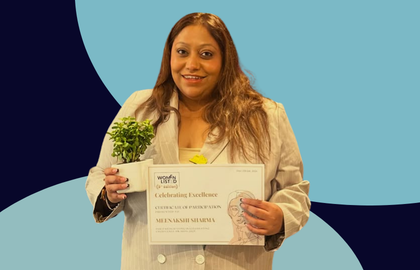
For service businesses especially, this shows up quickly in the kind of inquiry that comes in. Ritu Bakshi of Aarambh Leadership Institute, Madhurima Saigal, NLP and Neuro Somatic Coach, and Meenakshi Sharma of Learn ABOT Consulting all work in categories where buyers need clarity before they commit. A random social post rarely gives enough context. A proper profile can.
For founders weighing whether listing is worth the effort, this practical guide on how listing can help women entrepreneurs lays out the visibility-to-business connection in plain terms.
Core Features to Look for in a Platform
Not every platform helps in the same way. Some give visibility without trust. Some give listings without search quality. Some look polished but make it hard for buyers to contact a founder.
A useful evaluation starts with one question. Does this platform reduce friction for discovery and action?
Good platforms reduce effort for both founder and buyer
Platform breadth matters. Women Listed reports coverage across 200+ categories, 100+ cities, and 4,000+ member businesses in its write-up on India's dedicated visibility platform for women entrepreneurs. That matters because variety improves the chances of the right match, and city spread improves relevance in Indian search behaviour.
A founder should also pay attention to structure. Enterprise marketers compare search tools in detail when choosing systems. The same mindset helps small businesses too. Reading through comparisons of SEO platforms for enterprises can sharpen what to look for in any discoverability tool, even if the scale is very different.
| Feature | What It Does for You | What to Look For |
|---|---|---|
| Searchable profile | Helps buyers find you by category, city, and business type | Clear categorisation, keyword relevance, easy navigation |
| Photos and media | Builds trust faster than text alone | Real product or service visuals, not only logos |
| Business details | Cuts repetitive back-and-forth | Contact options, service area, offer clarity, social links |
| Lightweight storefront or showcase | Gives buyers a quick feel for what you sell | Product examples, service snapshots, clean presentation |
| Community or support layer | Helps founders improve visibility, not just upload a profile | Events, learning sessions, WhatsApp support, founder guidance |
| Credibility markers | Makes a new buyer more comfortable | Spotlights, awards, editorial mentions, active platform presence |
A few simple checks help before joining any platform:
- Test the search yourself: Try finding businesses by city and category. If it feels clumsy to you, it will feel clumsy to a buyer too.
- Check profile depth: If every listing looks thin, the platform may not support enough trust-building detail.
- Look at business variety: A healthy platform should feel alive across different categories, not limited to one narrow founder type.
- See whether learning exists: Good discoverability often needs better messaging, visuals, and digital basics. That's why related resources such as these digital marketing tools for women entrepreneurs matter alongside listing.
This is also the point where one factual mention fits. Women Listed is one such platform where women-led businesses can create searchable profiles with photos, a digital business card, and a lightweight storefront in a category-led directory.
Making Your Platform Profile Work for You
A platform gives the structure. The founder still has to do the basics well.
Many weak profiles fail for ordinary reasons. The photos are unclear. The description sounds generic. The service list is incomplete. The business name is there, but the buyer still can't understand what is being offered.

A complete profile does the trust-building before the call
Take food and gifting businesses. Seasonality matters. Presentation matters. Range matters. A founder should not make buyers guess.
Sudipta Gupta of For Cookies' Sake! benefits when a profile shows actual product style, order type, and occasion-fit clearly. Rakhi Sharma of Tasty Tadka needs a profile that quickly answers whether the business is suitable for events, gifting, daily orders, or special menus. Anjali Jain of Eraya works in a category where visual confidence shapes first impressions immediately. Vibhuti Jain of Pigment Lane benefits when creative style is easy to scan and share.
A practical profile usually gets stronger when it includes these pieces:
- A clear first line: Say what the business does in plain words. Don't hide the core offer behind brand language.
- Useful photos: Use real images of products, packaging, sessions, spaces, or work samples. Authentic beats over-designed.
- Specific service language: Mention custom orders, consultations, workshops, location coverage, or delivery model where relevant.
- One link path everywhere: Add your profile link to Instagram bio, email signature, catalogue PDF, and WhatsApp status so people land on the same structured page.
Practical rule: If a stranger reads your profile for thirty seconds, she should know what you sell, who it is for, and how to contact you.
Founders who struggle with wording usually don't need a copywriter first. They need clarity. This guide on how to write a business description helps turn vague text into language buyers can understand quickly.
Your Turn Your First Steps to Getting Seen
The most useful shift is mental. Visibility is not vanity. It is business infrastructure.
A founder doesn't need to rebuild everything this week. She only needs enough material to become easier to find and easier to trust. That starts small and gets stronger over time.
Start with assets you already have
Set aside half an hour and gather these three things:
- Five strong photos: Product shots, founder image, service-in-action, packaging, or workspace.
- A short business summary: Around fifty words that explain what the business does and who it serves.
- Top three offers: The products, services, or order types that matter most right now.
Then do one practical check. Send that summary to a friend who doesn't know your business well. If she still asks, “But what exactly do you do?”, tighten the wording.
A good visibility setup doesn't replace Instagram, WhatsApp, or your website. It gives them a proper centre.
Frequently Asked Questions
Do founders still need a website if they join a visibility platform
Not always at the start. Many early-stage and growing founders can do a lot with a strong profile, clear contact options, and active social channels. A website helps when the business needs deeper brand storytelling, more pages, or stronger direct search presence.
Can a founder from a Tier-2 or Tier-3 city benefit from this
Yes, often more than a metro founder because organised visibility helps overcome local network limits. As noted in the WEP community reference, internet use among women is still not universal, and many women-owned ventures are smaller and informal, which is why low-friction support like WhatsApp helpdesks matters. A good platform should reduce digital effort, not add to it.
How quickly does a profile start bringing business
There isn't one fixed timeline. Some founders get discovered quickly because their category has active buyer demand and their profile is complete. For many others, the profile works first as a credibility layer that improves conversion from all the traffic they already get through Instagram, WhatsApp, referrals, events, and Google.
What should go on a profile first
Start with what helps a buyer decide fast. Use a clear business name, category, city, short description, real photos, and direct contact details. If the founder has testimonials, media mentions, workshop topics, or bestselling products, those can come next.
Is a visibility platform only useful for product businesses
No. It can be very useful for coaches, consultants, legal professionals, designers, trainers, and creative service providers. Service businesses especially benefit because buyers usually need a quick trust signal before booking a call or sending an enquiry.
Women Listed helps women entrepreneurs across India get discovered, build credibility, and grow through visibility. List your business on Women Listed to showcase your work, connect with buyers and collaborators, and join a network built specifically for women-led businesses.