Only 13.76% of business establishments in India are owned and run by women, as noted in the Sixth Economic Census. That gap explains why women entrepreneur networking events in India matter. They aren't side activities. They help founders get seen, get referred, and get into rooms that shorten the path to partnerships and sales.
The challenge is that not every event delivers the same value. Some are better for visibility. Some are stronger for policy access, investor conversations, or peer referrals. This list focuses on fit, likely outcomes, and the trade-offs that matter before a founder spends time, energy, or membership fees. For readers also exploring broader event strategy outside India, this guide on finding DC networking opportunities offers a useful contrast in how local business communities are structured.
Table of Contents
- 1. Women Listed
- 2. FICCI FLO
- 3. TiE Women
- 4. HEN India
- 5. Women Entrepreneurs India
- 6. Ladies Who Lead
- 7. WICCI
- Comparison of 7 Women Entrepreneur Networks in India
- Making Your Next Connection Count
1. Women Listed

Women Listed works differently from a typical event brand. It combines a business directory, profile-based discovery, learning support, and founder events in one place. For women-led brands that need both visibility and relationships, that mix is practical because discovery doesn't end when the event does.
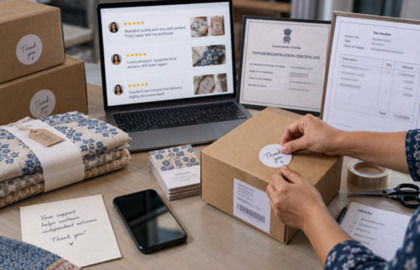
The platform has been active for 4+ years and includes 4,000+ member businesses across 100+ cities and 200+ categories. That makes it especially useful for founders who want a searchable presence, a digital business card, and a lightweight storefront that buyers, collaborators, and media can review quickly before reaching out.
Why it stands out
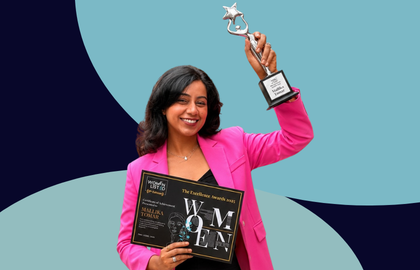
Women Listed is strongest when a founder wants multiple growth paths from one ecosystem. A member can build a profile, join expert-led sessions on marketing, branding, social media, and AI, use WhatsApp helpdesk support, and then step into events such as Business Lounge, conferences, The Feast, or the Excellence Awards.
That breadth matters because many networking spaces create a nice introduction but don't leave much behind. Women Listed keeps a founder visible after the room clears. Its own editorial perspective on growth-focused women's business communities reflects that shift from comfort-only spaces to commercially useful ones.
Practical rule: Founders who sell services, coaching, consulting, gifting, fashion, beauty, food, or lifestyle offers usually get the most value when they treat their profile and event participation as one system, not two separate tasks.
Best for
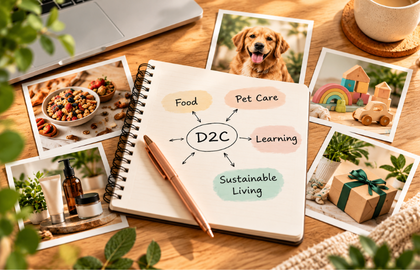
Women Listed fits D2C founders, consultants, freelancers, and mompreneurs who need low-friction discoverability across India, plus stronger in-person momentum in and around Delhi NCR. It also suits founders who want recognition and social proof, not just introductions.
A few trade-offs are worth knowing upfront:
- Strong digital discoverability: Searchable business profiles help people find and remember the brand after a first interaction.
- Useful learning support: Sessions on practical business topics are easier to apply than generic motivation-led talks.
- Event-to-opportunity flow: Business Lounge and related formats are built for conversation that can lead to referrals and collaborations.
- Delhi NCR advantage: Founders near Delhi, Gurgaon, or Noida can use more of the on-ground value than founders elsewhere.
- Paid layers matter: A founder can start free, but deeper promotion and some premium benefits sit behind paid plans from ₹3,999/year, with a separate Delhi Event Pass from ₹2,999/year.
Women Listed is one of the few entries on this list that serves founders who need both a place to be discovered and a place to show up live. For women entrepreneur networking events India searches, that's a meaningful distinction because many platforms offer one without the other.
2. FICCI FLO

FICCI FLO is the right pick for founders who want a chamber-style environment rather than a casual community. It operates through city chapters and tends to attract women looking for a more formal mix of entrepreneurship, leadership, industry access, and institutional credibility.
That structure helps when the founder's goal isn't only lead generation. FLO can be valuable for policy exposure, chapter events, exhibitions, mentorship, and access to established business circles. YFLO also gives younger founders a clearer entry point in major metros.
Where it works well
FLO is often most useful for founders who already have a functioning business and want stronger market positioning. A premium product brand, a service founder targeting corporates, or an entrepreneur who benefits from local chapter introductions may find the setting productive.
The main strength is reach across multiple chapters. The main weakness is inconsistency. Local leadership affects programming quality, member energy, and the practical value of each event.
Good networking behavior matters more in chamber rooms. A founder needs a concise introduction, a clear ask, and disciplined follow-up. This guide on networking event do's and don'ts for women entrepreneurs is especially relevant before joining more formal rooms.
A few practical trade-offs stand out:
- National chapter structure: Easier to find local access in several cities.
- Institutional credibility: Helpful for founders who want association with a known business body.
- Broader agenda: Good for policy and leadership exposure, not only founder friendships.
- Chapter variation: The experience can differ sharply by city.
- Limited pricing clarity: Membership details and event costs often require direct inquiry.
FICCI FLO isn't the easiest option for every early-stage founder. It is, however, a solid choice for entrepreneurs who want established networks and don't mind a more structured, chapter-driven format.
3. TiE Women

TiE Women is better suited to founders who want sharper exposure to startup ecosystems, mentors, and pitch-driven opportunities. Through Indian chapters such as Delhi-NCR, Mumbai, Pune, Bangalore, Coimbatore, and Hyderabad, it creates a stronger bridge between founder networking and investor-facing visibility than many general communities do.
Some founders don't need a broad social network; instead, they require informed feedback, stage time, and proximity to people who understand venture building.
Best use case
TiE Women tends to work best for founders with a scalable business story, especially those preparing for expansion, fundraising conversations, or ecosystem partnerships. Roadshows, mixers, chapter events, and pitch programs can create meaningful visibility when the founder is ready with a strong business narrative.
Research discussed by We-Fi on the power of structured networks for women entrepreneurs found that female entrepreneurs who joined structured networking programs were 25-31% more likely to introduce changes and improvements to their businesses one year later. That finding supports why a format like TiE Women can be useful. It isn't just about attendance. Structure matters.
- Investor and mentor access: Stronger than most general networking communities.
- Chapter-based activity: Helpful if the founder works across major startup cities.
- Pitch visibility: Better for businesses that can present a clear growth case.
- Frequency varies: Some chapter calendars are more active than others.
- Possible extra costs: Certain memberships or events may involve separate fees.
TiE Women isn't the best fit for every homegrown lifestyle brand or solo consultant. But for growth-focused founders who want startup-grade exposure, it can be one of the more commercially relevant women entrepreneur networking events in India.
4. HEN India

HEN India is built around collaborative growth. It feels more founder-first than institution-first, which often makes the conversations more tactical. For many women business owners, that's a good thing. They don't need another motivational panel. They need referrals, sharper positioning, and conversations grounded in sales, marketing, and operations.
Its women-only format can also make participation easier, especially for founders who prefer a more trust-based environment before discussing business constraints openly.
What makes it useful
HEN India's own ecosystem content points back to a wider structural gap. It notes that only 13.76% of business establishments in India are owned and run by women in the HEN India overview of women entrepreneur communities. That makes founder-specific communities important, especially when general business spaces don't always feel accessible or relevant.
Women Listed's own view on strategic events for women entrepreneurs aligns well with this. The best events don't just gather people. They make it easier for founders to explain their offer, identify the right contacts, and continue the conversation after the event.
In Tier 2 and Tier 3 cities, low-pressure trust building often comes before serious business discussion. That pattern matters for founders choosing between polished large events and smaller communities that feel safer to engage in.
HEN India is a strong fit when the founder wants:
- Peer-led business conversations: Better for practical exchange than high-level ceremony.
- Virtual and city touchpoints: More flexible for women outside the biggest metros.
- Collaboration potential: Useful for referrals, showcases, and partner discovery.
- Less public detail: Pricing and benefit tiers aren't always fully visible upfront.
- Participation-dependent results: The value rises when the founder shows up consistently.
For founders who dislike stiff business culture and still want commercially relevant connections, HEN India is one of the more grounded options on this list.
5. Women Entrepreneurs India

Women Entrepreneurs India is one of the more accessible options for founders who can't regularly travel for events. Its online business networking meets, recognition formats, and regional sessions make it easier to enter the ecosystem without waiting for the perfect in-person circle.
That matters because many women founders are building around business demands, home responsibilities, and location constraints. A digital-first network can lower the friction of staying visible.
Where it adds value
In 2021, Women Entrepreneurs India ran a calendar of virtual business networking events across 12 major cities, including Ahmedabad, Delhi, Mumbai, Chennai, and Kolkata, as shown on the organization's business networking page. That cross-city format is useful for founders who want exposure beyond one local market.
The platform's online meets, summits, and award programs can work especially well for consultants, coaches, service providers, and early-stage businesses that need introductions and visibility before they need deeper regional chapter life.
- Easy virtual entry: Good for busy founders across India.
- Structured networking format: Better than unmoderated open rooms.
- Recognition pathways: Panels, awards, and showcases can support credibility.
- In-person depth varies: Some cities may offer less offline momentum.
- Membership details require digging: Public pricing transparency is limited.
Women Entrepreneurs India is a practical choice when a founder wants regular networking without high travel dependence. It is less useful for someone who only values face-to-face dealmaking.
6. Ladies Who Lead

Ladies Who Lead sits in a more curated category. Its salons, roundtables, retreats, and marquee gatherings are designed for founders and leaders who want smaller rooms, stronger curation, and access to senior operators, CXOs, and investors.
This isn't a mass community model. That's both the appeal and the limitation.
Who should choose it
Ladies Who Lead is best for founders who already know what kind of room helps them. If the goal is high-signal conversations, brand positioning, and selective partnerships, this type of network can outperform larger, noisier groups. A founder doesn't need hundreds of weak introductions if five strong ones are more relevant.
The trade-off is accessibility. Selective membership and premium positioning can make it less suitable for founders who are still experimenting, need frequent grassroots exposure, or prefer open-door communities.
Smaller curated rooms often reward clarity over volume. Founders who do well here usually arrive with a precise ask, a polished brand story, and a strong sense of whom they want to meet.
Key strengths and limits include:
- Curated access: Better for senior-level conversations and brand credibility.
- Strong speaker quality: Useful for founders who learn through operator insight.
- Premium environment: Good for partnership-led growth.
- Selective process: Not ideal for every early-stage entrepreneur.
- Fewer broad city meetups: Less grassroots than open communities.
Ladies Who Lead can be highly effective when a founder is beyond basic visibility and needs sharper, more strategic relationships.
7. WICCI

WICCI is a strong option for founders who want sector alignment, not just general networking. Its council-based structure makes it easier to find conversations tied to a specific industry, geography, or trade interest.
That specialization can be useful for entrepreneurs who need market access, advocacy, or domain-specific contacts more than broad founder camaraderie.
Best fit
WICCI works best when the founder's business benefits from industry positioning. A food brand, consultant, educator, wellness founder, exporter, or creative business may find more relevance inside the right council than in a generic networking event.
This chamber-style format can also help founders who want to connect business development with policy discussions or cross-border opportunities. The challenge is decentralization. The quality of engagement often depends on the specific council and its leadership.
- Sector-specific access: Easier to find a relevant niche.
- Policy and trade orientation: Helpful for founders with larger market ambitions.
- Wide council network: Strong potential for category-aligned visibility.
- Decentralized experience: Activity levels vary by council.
- Details can be harder to track: Event and membership information often sits at the council level.
WICCI is a better pick for targeted industry networking than for casual founder community building.
Comparison of 7 Women Entrepreneur Networks in India
| Organization | Implementation complexity | Resource requirements | Expected outcomes | Ideal use cases | Key advantages |
|---|---|---|---|---|---|
| Women Listed | Low to moderate, simple online listing; optional in‑person event participation | Low base cost (free listing); paid tiers from ₹3,999/yr; optional Event Pass from ₹2,999 | Improved discoverability, leads, media exposure and local collaboration opportunities | D2C brands, service businesses, coaches, freelancers and mompreneurs seeking discovery + events | Pan‑India searchable profiles + Delhi NCR on‑ground events, learning hub and recognition pathways |
| FICCI FLO | Low, join local chapter and attend chapter events | Moderate, chapter membership and event fees vary by city | Institutional credibility, policy exposure and local buyer–seller networking | Founders seeking chamber access, policy engagement and multi‑city in‑person networks | Broad national footprint and strong institutional relationships via FICCI |
| TiE Women | Moderate, chapter participation and pitch program application | Moderate to high, some events/memberships may have fees | Investor visibility, mentorship and pitch outcomes | Startups seeking investor introductions, mentorship and high‑visibility pitching | Strong investor/founder interface and credible pitch platforms across chapters |
| HEN India | Low to moderate, community and cohort participation | Low to moderate, membership details vary | Practical business improvements, peer referrals and tactical collaborations | Founders wanting hands‑on, tactical programming and peer support (including non‑metro) | Founder‑led, entrepreneurship‑first focus with mix of virtual and city touchpoints |
| Women Entrepreneurs India (WEI) | Low, structured online meets and regional cohorts | Low to moderate, membership/events with variable pricing | Time‑boxed lead generation, visibility and regional partnerships | Busy founders nationwide preferring virtual, structured networking and recognition | Structured online networking formats and awards for visibility pathways |
| Ladies Who Lead (LWL) | Moderate to high, selective membership and curated salons | High, premium membership and event fees | High‑signal partnerships, brand building and senior‑level introductions | Senior founders/executives seeking small‑group, high‑signal interactions | Curated, invitation‑style salons with CXOs, investors and premium programming |
| WICCI | Moderate, identify and engage relevant council(s) | Moderate, decentralized council memberships and event fees | Sector‑aligned networking, advocacy and trade/market access | Founders seeking industry councils, B2B connections and policy engagement | Extensive sectoral councils and cross‑border trade/advocacy channels |
Making Your Next Connection Count
Choosing among women entrepreneur networking events India options isn't really about finding the most famous name. It's about finding the room that matches the founder's current bottleneck. Some founders need discoverability. Some need investor access. Some need a trusted circle where business conversations can become referrals, collaborations, or category insight.
The wider context makes this more urgent. More than 90% of companies run by women in India are microenterprises, and around 79% are self-financed, as discussed in the IMF article on women's entrepreneurship in India. That means wasted networking time is expensive. Founders need rooms that create practical next steps.
Women Listed sees the best outcomes when founders go in with a clear objective. A Women Listed Business Lounge works differently from a FICCI FLO chapter meet. A TiE Women pitch setting works differently from a virtual WEI networking session. A curated LWL salon works differently from a HEN India collaborative circle. The event should match the ask.
A few participation habits matter across almost every platform:
- Prepare a short business introduction: It should explain what the business does, whom it serves, and what kind of connection would help.
- Choose one event goal: Leads, partnerships, suppliers, visibility, or mentorship. One is enough.
- Follow up fast: Warm introductions cool quickly if a founder waits too long.
- Stay findable: A clear profile, catalog, website, or business page makes post-event discovery easier.
- Return to the same ecosystem: Repetition builds trust faster than scattered attendance.
Another point often gets overlooked. Rural and small-city founders may need more supportive entry routes before discussing pricing, cash flow, or family constraints. Trust-building still matters in many business communities. The right network doesn't just feel welcoming. It helps a founder speak more clearly about the business and move closer to revenue.
Readers looking for broader inspiration on event formats can also explore Legacy Builder's networking event guide. Then choose one Indian platform from this list and commit to it long enough for relationships to compound.
List a business on Women Listed to increase visibility, build trust, and connect with buyers, collaborators, and founder-focused opportunities across India.