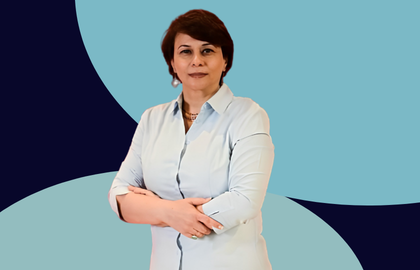
“The first store is won by your pitch. The next 499 are won by execution.” For Prabhjot Kaur, that line captures how quickly the founder problem at SNAAQZ has changed. She began by asking whether she could create snacks she genuinely wanted to eat; less than two years later, she is learning what it takes to keep a physical product available across hundreds of stores, quick-commerce platforms and other retail channels.
Prabhjot founded SNAAQZ in New Delhi in 2024 around a simple frustration: products marketed as healthier often seemed to ask consumers to compromise on flavour or enjoyment. She wanted to build a range that stayed close to familiar snacking behaviour—crunch, bold flavours, portable packs—while making different ingredient choices. The range now includes roasted makhana, ragi and beetroot chips, oat chips, millet puffs and natural peanut butter.
When a Snack Idea Became an FMCG Problem
The early work was product-led. Prabhjot experimented with formats and flavours, and shaped the brand around the belief that ‘better-for-you’ should not feel like a punishment. SNAAQZ positions several products around choices such as avoiding palm oil and keeping ingredient lists relatively simple; those are brand claims rather than medical promises, and Prabhjot has been careful to sell the experience as snacking first rather than as treatment or nutrition therapy.
The more difficult entrepreneurial lesson came after the product existed. Packaged food is a crowded category, and a founder is competing not only on taste or ingredients but on price, shelf space, retailer confidence and habit. Prabhjot says she repeatedly heard that some of her price points would struggle in channels such as vending machines because consumers would default to cheaper, familiar snacks.
Instead of accepting that as a fixed rule, she tested the assumption. The brand began moving into vending machines across gyms and colleges in Delhi NCR, and early response encouraged Prabhjot to separate industry convention from actual consumer behaviour. The lesson was not that price no longer mattered; it was that the founder needed evidence before redesigning the product around somebody else’s assumption.
Learning That the Product Is Only the Beginning
Distribution soon became the centre of Prabhjot’s work. By July 2026, she reported that SNAAQZ had reached more than 300 retail stores, built a 12-SKU portfolio and was generating roughly ₹5 lakh in monthly revenue. By September, Prabhjot said the figure had crossed 500 stores across Tier 1 cities, alongside quick-commerce growth and airport retail. These are founder-reported milestones, but the movement from 300 to 500+ stores in a short period shows why the business challenge could no longer be described simply as “making healthy snacks”.
Every new channel introduced a different operating question. Retail needed shelf movement and distributor relationships; quick commerce needed stock discipline and local availability; vending machines required the right pack-price equation; airports introduced another kind of consumer and purchase occasion. Prabhjot was increasingly learning that an FMCG founder has to design not only the product, but the route by which that product reliably reaches the customer. It also changed what a “good month” meant: not just a spike in orders, but cleaner replenishment, fewer stockouts and evidence that a channel could sustain repeat demand.
That changed how she thought about marketing. A campaign may create demand, but it cannot convert an out-of-stock product. A shopper who wants to reorder a pack does not care that the brand ran a good launch if the item is unavailable in her area. Prabhjot has begun describing the lesson in operational terms: fill rates, inventory, warehouse planning and retailer execution are part of the customer experience, not back-office concerns disconnected from brand building.
Why Availability Became Part of Marketing
Quick commerce made those weaknesses visible faster. On an app, a consumer compares price, pack, proposition, rating and availability within seconds, often without the browsing time a supermarket shelf offers. That has pushed Prabhjot to think more sharply about customer-acquisition cost, stockouts, pricing and contribution margins because the economics after listing matter as much as securing the listing itself.
The launch of SNAAQZ’s natural peanut butter offered a useful example. Prabhjot reported 500 units sold on Swiggy Instamart in the first 30 days. Her takeaway was less about adding more claims to the pack and more about clarity: a simple product proposition, a format customers already understood and enough availability for the product to be bought when interest appeared.
That experience is also changing Prabhjot as a founder. The excitement of launching a new SKU has to compete with a less glamorous question: should the next hour go into a new flavour, or into improving availability of the products already working? Moving from product creator to FMCG operator means learning that growth often comes from repetition, replenishment and channel discipline rather than constant novelty. It also means becoming more comfortable with numbers that are operational rather than glamorous—margins, fill rates, inventory turns and whether a retailer wants the product back after the first cycle.
Building a Product Brand That Can Earn the Next Purchase
SNAAQZ’s personality remains intentionally playful. The brand uses bold flavours, colourful packaging and language around crunch and enjoyment rather than making health the entire personality of the product. That choice gives Prabhjot room to compete for the same snacking occasions as conventional packaged foods instead of asking customers to enter a separate ‘healthy eating’ mindset every time they buy.
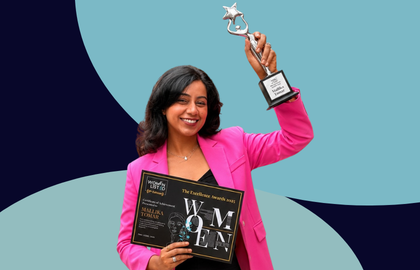
On 25 July 2026, Prabhjot received the Women-Led Product Business of the Year recognition at Women Listed The Excellence Awards 5th Edition at India Habitat Centre, New Delhi. At that point, she was already discovering that building a product business is not a single act of creation. The product has to survive pricing decisions, retail negotiations, fulfilment, inventory, repeat purchase and the founder’s own temptation to chase the next launch before the current system is strong enough.
Prabhjot is still early in that learning curve, and that is what makes the story useful now. She began with a personal search for a snack she wanted to eat; she is now building the commercial machinery that can make the brand easier to find and buy repeatedly. For product founders, the distinction is significant: product-market fit is not only whether someone likes what you made—it is whether the business around the product can keep earning the next purchase. Discover Prabhjot Kaur and SNAAQZ on Women Listed.