You already know the feeling. Orders come in through Instagram DMs, referrals are inconsistent, WhatsApp chats never stop, and the business depends too much on you remembering every lead, every follow-up, and every post. You're working hard, but growth still feels patchy.
That's where many women-led businesses in India get stuck. Not because the product is weak, but because visibility, systems, credibility, and partnerships haven't been built together. Business growth for women entrepreneurs usually doesn't come from one big breakthrough. It comes from a set of connected moves that make the business easier to discover, easier to trust, and easier to buy from.
The timing is right to take that seriously. Women-owned businesses in the United States have grown strongly in recent years, and women launched 49% of all new businesses in 2024, according to this 2025 overview of women-owned business growth. The same broader momentum matters for Indian founders too, especially those building lean, digital-first brands and service businesses.
If you're still early, start by tightening the offer before scaling the marketing. This creator's guide to idea validation is a useful place to do that. Once the basics are clear, these eight strategies will help you grow with more intention.
Table of Contents
- 1. Strategic Business Visibility & Digital Discovery Optimization
- 2. Community-Driven Networking & Relationship Building
- 3. Expert-Led Skill Development & Strategic Learning Programs
- 4. Strategic Media & Awards-Based Credibility Building
- 5. Direct Customer Feedback & Rapid Product-Market Iteration
- 6. Personal Brand & Founder-Led Content Marketing
- 7. Strategic Partnerships & Complementary Business Collaborations
- 8. Data-Driven Marketing & Customer Acquisition Optimization
- 8-Point Growth Strategy Comparison for Women Entrepreneurs
- Final Thoughts
1. Strategic Business Visibility & Digital Discovery Optimization
A good business can stay invisible for too long. That's especially true when your audience is searching across Instagram, Google, WhatsApp, marketplace directories, and city-based recommendations instead of one single platform.

For many women-led businesses India is a fragmented market. A customer in Delhi may discover you on Google, a buyer in Bengaluru may check Instagram first, and a corporate client in Pune may want a proper listing before they enquire. If your digital presence is thin or inconsistent, people lose trust quickly.
Make discovery easy across platforms
Start with your core business information. Your brand name, category, city, phone number, delivery areas, and offer description should match everywhere. If you sell artisanal snacks, bridal makeup, home décor, coaching, or consulting, write descriptions the way customers search, not the way you describe your work internally.
A strong listing should include clear visuals, straightforward pricing cues where possible, delivery or service coverage, and the easiest contact route. If your leads close best on WhatsApp, say that. If your service is online across India, say that too.
Practical rule: Don't make people guess what you sell, where you serve, or how to contact you.
Use professional-looking photos that show the product in use or the service experience. For storefront visuals, high-resolution images hold up better when platforms crop or resize them. Update your listing seasonally if your collections, services, or gifting options change around Rakhi, Diwali, wedding season, or year-end corporate gifting.
Choose visibility tools that support growth
If you want to sharpen search presence, these search engine ranking strategies for women-led businesses are worth applying to your listings and website copy. If you're a coach or consultant who still relies only on social media, a simple website builder for coaches can help you create a cleaner home base.
For brands that are already moving beyond the basics, the IMPACT Plan is built for brands ready to stand out and scale, with premium placements, richer content formats, expanded storefront, and dedicated support to drive stronger growth and recognition.
2. Community-Driven Networking & Relationship Building
Networking works differently when you stop treating it like random socialising. The founders who grow steadily usually build a circle that sends referrals, shares supplier contacts, opens event doors, and gives honest feedback when something isn't landing.

In India, this matters even more because business still moves through trust. A warm introduction from another founder often works faster than a cold message. A boutique founder in Gurgaon may meet a gifting curator at an event, then get introduced to a wedding planner, then land recurring festive orders from that one chain of relationships.
Network with a purpose
Go where your next opportunity is most likely to come from. If you run a food brand, consumer events and founder circles can be more useful than general startup mixers. If you're a service provider, focused communities with consultants, coaches, HR partners, and agency owners will usually produce better leads than large, unstructured gatherings.
Prepare a tight introduction. Keep it to who you help, what problem you solve, and what kind of connection you're looking for. That's much stronger than listing every service you offer.
A simple follow-up rhythm helps:
- Send a quick message: Follow up while the conversation is still fresh.
- Reference the context: Mention the event, the problem discussed, or the potential collaboration.
- Offer something useful first: Share a contact, resource, idea, or introduction before asking for one.
- Track the relationship: Save notes so you remember what matters to that person.
Some of the best partnerships start as one useful conversation, not one perfect pitch.
Stay visible in the same rooms
Consistency matters more than intensity. Show up repeatedly in the same communities so people remember your work and know how to place you. That's how referrals begin to feel natural instead of forced.
If you want structured options, these business networking groups for women entrepreneurs can help you find more relevant spaces and formats. Look for themed events, founder meetups, and peer circles where people do business together, not just exchange cards.
3. Expert-Led Skill Development & Strategic Learning Programs
A founder in Pune spends two hours every day posting on Instagram, replies to every enquiry herself, and still struggles to convert interest into sales. The issue usually is not effort. It is a missing business skill at the exact point where growth is getting blocked.
That is why structured learning matters. The right workshop, mentor session, or short program can fix a pricing mistake, tighten a weak offer, or improve a sales conversation faster than months of trial and error. For women building in India, this matters even more because many businesses are still run lean. Intuit reports that 42% of women entrepreneurs identify as solopreneurs in its 2026 survey on women entrepreneurs, which makes targeted, practical learning a smart growth investment.
Learn the skill that removes the current bottleneck
Start with the work that feels heavier than it should.
If you avoid numbers, learn enough analytics to track where enquiries come from and where leads drop off. If sales calls feel inconsistent, work on discovery questions, objection handling, and offer framing. If your brand feels scattered, fix message clarity before spending on design changes.
This is a trade-off founders often miss. General business content feels productive, but bottleneck-based learning gets results faster.
A Delhi consultant may need help packaging retainers and writing sharper LinkedIn content. A Jaipur D2C founder may need to improve product descriptions, catalogue structure, and ad creative feedback loops. A service business in Bengaluru may need better client onboarding before it spends more on lead generation. The right program depends on the next constraint in the business, not the most popular topic on social media.
Choose programs that lead to implementation
Good learning is specific. Great learning changes how you work next week.
Look for sessions that include live examples, worksheets, review opportunities, or direct feedback on your business. A mentor who can point out why your proposal is too vague or your landing page is trying to say five things at once will usually help more than a broad motivational talk.
After any workshop or masterclass, decide three things:
- What will change first: One offer, one page, one sales script, or one customer journey step.
- Where you will test it: Your website homepage, WhatsApp catalogue, discovery call, email sequence, or marketplace listing.
- How you will measure progress: Better lead quality, stronger conversion calls, fewer drop-offs, or faster close times.
Learning compounds when it changes behaviour quickly.
I have seen founders get more from one focused session they implemented within forty-eight hours than from a full course they only half-finished. Speed matters here.
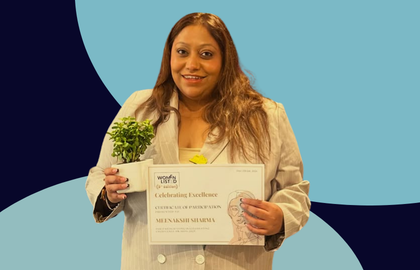
There is also a credibility angle. Programs that sharpen your positioning often make it easier to pitch yourself for features, collaborations, and recognition later. If that is part of your growth plan, these smart reasons to enter business awards explain when external validation starts making business sense. And if a training program includes PR or media outreach, it helps to understand what a press release covers before you spend time drafting one.
4. Strategic Media & Awards-Based Credibility Building
Credibility shortens the path to trust. When buyers, collaborators, and event organisers can see that your work has been recognised elsewhere, they need less convincing.
That's why media features, podcast appearances, curated lists, and awards matter. They don't replace solid business fundamentals, but they make your business easier to believe in. For a homegrown skincare founder, a strong profile feature can support retail conversations. For a consultant, a podcast appearance can make future clients take the first call more seriously.
Use third-party proof well
Most founders wait too long to apply for recognition. They assume they need to be much bigger first. In reality, a clear story, a defined niche, and visible customer impact are often enough to make a compelling submission.
When you apply, don't submit generic copy. Explain what problem you solve, who you serve, what makes your approach different, and how the business has evolved. Keep screenshots, testimonials, before-and-after examples, founder photos, and brand descriptions ready in one folder.
If you're considering awards, these smart reasons to enter business awards explain the business case well. If you're new to media outreach, this overview of what a press release covers can help you understand what journalists and platforms expect.
Recognition is most useful when you repurpose it. Add it to your website, listing, pitch deck, email signature, and social proof highlights.
Choose the right story angle
A founder story gets traction when it says something specific. “Woman entrepreneur building a brand” is too broad. “Mumbai founder helping working mothers build practical festive wardrobes” or “Chennai nutrition brand creating office-friendly healthy snack boxes” is clearer and more memorable.
Awards and features also create internal confidence. That matters. A founder who can articulate her journey clearly usually sells better, pitches better, and presents the business with more authority.
5. Direct Customer Feedback & Rapid Product-Market Iteration
A founder spends six weeks building a new offer, posts it twice on Instagram, gets a few polite likes, and hears nothing from buyers. Then one customer says, “I liked your old version better because I understood it in five seconds.” That kind of feedback can save months of wasted effort.
Direct customer input shortens the distance between what you think you're selling and what people are ready to buy. For women entrepreneurs building in India, that gap often shows up in practical places. Pack sizes, price clarity, delivery expectations, language, payment trust, or whether the offer feels simple enough to choose quickly.
A bakery founder in Noida may assume customers want more flavours. What they want is a smaller gifting box at a lower entry price. A styling consultant may suspect pricing resistance. The actual issue may be that prospects cannot tell the difference between a one-time session and a full wardrobe package.
Ask questions that reveal buying friction
Useful feedback rarely comes from “How was it?” Ask people what they were trying to solve, what they compared you with, what felt unclear, and what nearly stopped them from buying.
Speak to four groups regularly:
- Recent buyers: They remember what convinced them.
- Repeat customers: They can tell you what keeps working.
- Enquiries that did not convert: They often reveal confusion, hesitation, or missing trust signals.
- Customers who dropped off after one purchase: They show where the experience broke.
Keep notes in one place. A spreadsheet is enough. You are looking for patterns, not perfect research.
Make smaller changes, faster
Quick iteration matters even more in lean businesses. BMT notes that 88% of women-owned businesses in India and globally are solopreneurs or microbusinesses. If you run a small operation, a wrong offer, unclear message, or poorly priced package can drain time and cash quickly.
A monthly review usually works well. Check which products sold without much explanation, which enquiries repeated the same question, which pages or messages caused confusion, and which offer got attention but not conversions. Then change one thing with intent. Packaging. Naming. Price framing. Deliverables. Minimum order quantity.
Do not rewrite the whole business every time someone gives an opinion. One-off comments are noise. Repeated comments are direction.
The founder who listens closely and edits quickly usually reaches product-market fit faster than the founder who keeps polishing in isolation.
6. Personal Brand & Founder-Led Content Marketing
A founder records three Instagram stories between supplier calls, replies to customer DMs on WhatsApp at night, and postpones LinkedIn posts for another week because delivery issues came first. That is a common growth stage for women entrepreneurs in India. Personal branding has to fit the business you are running, not the polished version social media rewards.

Founder-led content helps people trust your judgement before they trust your offer. That matters in businesses where the founder shapes the customer experience directly, including consulting, coaching, beauty, wellness, education, food, and premium D2C brands. Buyers want signals of taste, consistency, and credibility. Your content can provide those signals long before a sales call or first order.
Useful founder content does four jobs at once. It teaches. It reduces hesitation. It shows standards. It makes the business easier to remember.
A nutrition coach in Hyderabad can explain how she builds realistic meal plans for working women, not just post client transformations. A fashion founder in Surat can show why one fabric drapes better in humid weather and why a certain cut works for repeat wear. A brand strategist in Bengaluru can explain the messaging mistakes that make small businesses sound interchangeable. That kind of content attracts better-fit customers because it filters for people who value your method, not just your price.
Build around repeatable content pillars
Content gets easier when you stop inventing from scratch every week. Use a small set of themes you can return to without sounding repetitive:
- Teach one practical point: answer a buyer question, correct a misconception, or explain a buying decision
- Show how the work happens: sourcing, testing, service delivery, quality checks, packing, or revisions
- Explain founder decisions: pricing changes, offer simplification, process improvements, or policy updates
- Bring in customer context: the situation, constraints, or goals that shape what you recommend
These pillars work because they connect visibility to sales. They are not random posting prompts. They help the right customer understand how you think.
Choose channels based on buyer behaviour, not pressure
You do not need to publish everywhere. You need to show up where your customers already pay attention and where you can maintain consistency without burning out.
For many founders in India, Instagram is strong for discovery, WhatsApp is where trust and conversion often happen, and LinkedIn works well for service businesses, consultants, educators, and B2B founders. Email is slower to build, but it gives you an owned audience that is not controlled by an algorithm. The trade-off is simple. More platforms can increase reach, but they also increase production load and response time.
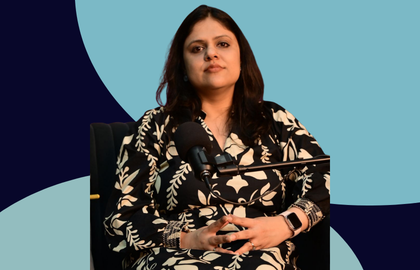
This conversation on founder visibility is worth watching before you map your content rhythm:
Content systems matter because founder time is uneven. The Global Entrepreneurship Monitor Women's Entrepreneurship Report 2022/23 from Babson College notes that women often carry a heavier share of household responsibilities alongside business building. In practice, that means visibility cannot depend on daily inspiration. Batch filming one afternoon a month, keeping 10 to 15 reusable caption starters, and maintaining a basic weekly content plan usually works better than trying to post in real time every day.
Keep the standard practical. One strong post a week, a few stories, and regular replies to inbound messages can outperform a high-volume content plan you abandon after two weeks.
Personal brand is not self-promotion for its own sake. It is a trust system. When done well, it supports the rest of your growth strategy, improves conversion from discovery channels, and makes partnerships, press, and referrals easier to earn.
7. Strategic Partnerships & Complementary Business Collaborations
Partnerships can accelerate growth faster than paid marketing when they're built well. The keyword is complementary. You want a business that serves the same customer, but solves a different part of her problem.
A wedding makeup artist can collaborate with a jewellery rental brand. A healthy snack label can partner with a fitness coach. A home organiser can work with an interior stylist. None of these businesses compete directly, but they can strengthen each other's sales process.
Start small and specific
The mistake founders make is jumping into vague collaborations. “Let's work together” isn't a plan. Start with one campaign, one bundle, one event, or one referral arrangement.
Be clear about the basics:
- Who the customer is: The overlap should be obvious.
- What each side offers: Don't leave responsibilities blurry.
- How promotion will happen: Posts, email, catalogue inserts, live session, or event table.
- What success looks like: Enquiries, bookings, bundles sold, or repeat leads.
A good India-specific example is festive selling. A gift hamper brand can partner with a candle maker, a baker, or a custom stationery founder for Diwali or wedding gifting. That creates a stronger overall offer without requiring any one founder to build every product category alone.
Protect the relationship with structure
Warm relationships help a partnership start. Clear terms help it last.
Write down timelines, responsibilities, pricing logic, and customer ownership. If a collaboration works, review it and improve it instead of assuming success will repeat automatically. If it doesn't work, end it cleanly and move on.
Partnerships grow when both founders make it easy for the other side to sell.
The best collaborators usually provide ready-to-use photos, a short brand description, pricing notes, and clear communication. That reduces friction and makes the partnership feel professional from the first interaction.
8. Data-Driven Marketing & Customer Acquisition Optimization
A founder runs three Instagram campaigns, gets decent reach, and still has no clarity on what brought enquiries. That is where marketing starts to drain cash. Growth improves when you stop judging activity by effort and start judging it by movement through the funnel.
For a bootstrapped business, every campaign should answer a practical question. Which message gets clicks? Which page gets enquiries? Which source brings customers who buy, not just browse? If you cannot answer those three questions, customer acquisition stays expensive.
Start by tracking the full path, not just top-line visibility. Reach and likes can be encouraging, but they do not tell you where revenue comes from. Track source, click-throughs, landing page visits, enquiry submissions, sales calls, conversions, and repeat purchases. Even a simple spreadsheet works if you update it every week.
Capstone Partners reported in its 2025 Women Entrepreneurs Report that many women business owners entered the year expecting stronger growth. The useful takeaway is not the headline number alone. It is the operating mindset behind it. Founders who review numbers regularly tend to make sharper calls on spend, offers, and sales priorities.
Measure the points where customers hesitate
In many Indian small businesses, the leak is not ad performance. It is the handoff after interest. A prospect clicks, lands on a cluttered page, sees no price guidance, fills half a form, then leaves. Or she sends a WhatsApp message and gets a reply six hours later.
Look at drop-off points with honesty:
- Ad to landing page: Does the page match the promise in the ad?
- Landing page to enquiry: Is the call to action clear and easy to complete on mobile?
- Enquiry to response: How quickly does someone get a reply?
- Response to conversion: Are you answering the actual buying objection, or just repeating features?
Small fixes often beat bigger budgets. Better page clarity, faster follow-up, and tighter offers can improve results faster than launching another campaign.
Test one variable at a time
Founders often change the creative, caption, offer, and landing page together, then cannot tell what worked. Clean testing is slower in the short term and far more useful over three to six months.
Test only one element at a time:
- Creative angle: Product-first versus outcome-first
- Offer framing: Free consultation versus paid starter package
- Landing page copy: Short copy versus detailed explanation
- Enquiry path: Website form versus WhatsApp button
- Follow-up script: Direct booking prompt versus educational first reply
I usually recommend a simple rhythm. Review campaign numbers weekly. Review channel performance and cost per acquisition monthly. Keep the winning version, remove the weak one, and run the next test.
If your business still needs a basic digital presence before you optimise acquisition, the START Plan helps you get listed, create a business profile, and establish a clearer online identity at zero cost.
Data does not need to be complicated. It needs to be used. The women founders who build steady growth usually do one thing well. They make decisions from patterns, not guesses.
8-Point Growth Strategy Comparison for Women Entrepreneurs
| Strategy | 🔄 Implementation Complexity | ⚡ Resource Requirements | ⭐ Expected Outcomes | 📊 Ideal Use Cases | 💡 Key Tips |
|---|---|---|---|---|---|
| Strategic Business Visibility & Digital Discovery Optimization | Moderate–High setup; ongoing profile maintenance 🔄 | Photography, copy, platform fees; 4–6 hrs initial, 2–3 hrs/mo ⚡ | High discoverability and inbound leads; platform credibility ⭐⭐⭐ | D2C retailers, local services, multi-city expansion 📊 | Use pro photos, keyword-rich descriptions, update seasonally 💡 |
| Community-Driven Networking & Relationship Building | Moderate: event curation, consistent follow-up 🔄 | Time, travel, event fees, CRM upkeep ⚡ | Strong warm referrals and long-term partnerships ⭐⭐ | Service providers, B2B/B2C sellers seeking collaborators 📊 | Prepare 60s pitch; follow up within 48h; attend regularly 💡 |
| Expert-Led Skill Development & Strategic Learning Programs | Low–Moderate: attend + implement learnings 🔄 | Time, occasional course fees, cohort collaboration ⚡ | Improved skills, better strategies; medium-term ROI ⭐⭐ | Founders needing marketing, AI, finance upskilling 📊 | Implement 1–2 actions per session within 48h; join cohorts for accountability 💡 |
| Strategic Media & Awards-Based Credibility Building | Moderate: application prep and PR outreach 🔄 | Time for storytelling, application effort, occasional PR costs ⚡ | High third-party credibility and shareable assets; variable direct sales ⭐⭐⭐ | Brands seeking authority, investor attention, media exposure 📊 | Highlight metrics in submissions; repurpose coverage across channels 💡 |
| Direct Customer Feedback & Rapid Product-Market Iteration | Moderate–High: set feedback loops and analysis 🔄 | Surveys, interviews, analytics tools, dedicated time ⚡ | Faster product‑market fit, higher retention, organic growth ⭐⭐⭐ | Product-led founders, D2C testing new SKUs/services 📊 | Run 3–5 interviews/month; test with 5–10 users; close the feedback loop 💡 |
| Personal Brand & Founder-Led Content Marketing | Moderate: sustained content cadence and engagement 🔄 | Time, content tools, production resources; consistency required ⚡ | Long-term audience, authority, diversified leads; slow build (6–12 months) ⭐⭐ | Coaches, consultants, founders building owned audiences 📊 | Focus on 2–3 platforms; batch-create and repurpose content; track metrics 💡 |
| Strategic Partnerships & Complementary Business Collaborations | High: partner vetting, negotiation, coordination 🔄 | Outreach time, legal/docs, co-marketing investment ⚡ | Expanded reach, shared costs, new revenue streams; margin trade-offs ⭐⭐ | Brands pursuing bundles, affiliates, event collaborations 📊 | Start small, document terms, set clear KPIs, review quarterly 💡 |
| Data-Driven Marketing & Customer Acquisition Optimization | High: tracking setup, testing discipline 🔄 | Analytics tools, ad spend, analytics skillset and time ⚡ | Improved CAC/LTV, higher ROI from channels, scalable growth ⭐⭐⭐ | Bootstrapped D2C and service businesses optimizing spend 📊 | Establish baselines, test one variable at a time, track CAC & LTV 💡 |
Final Thoughts
A common moment for many women founders in India looks like this. Orders are coming in, referrals happen inconsistently, Instagram is active, WhatsApp never stops, and yet growth still feels harder than it should. That usually means the business does not need more random effort. It needs a tighter system.
That is the point of these eight strategies. They work together. Better visibility helps the right people find you. Stronger credibility helps them trust you faster. Better feedback improves the offer. Better partnerships and sharper acquisition systems make growth less dependent on daily hustle.
For women entrepreneurs building with small teams, or no team at all, the trade-off is always capacity. Every new channel, event, collaboration, or content format costs time. So the goal is not to be present everywhere. The goal is to choose the next move that solves the current constraint.
Use a simple sequence. Become easy to find. Become easy to trust. Become easy to buy from. Become easy to recommend. Then make the business easier to run with repeatable processes and better numbers.
Start with one bottleneck. If discovery is weak, fix visibility. If interest is there but conversions are soft, improve messaging and feedback loops. If sales are steady but growth is flat, focus on partnerships, referrals, and channel performance. That is usually where steady traction begins.
Women Listed is one relevant option for founders who want business visibility, community access, learning, and recognition in one place. For many early-stage businesses, that kind of central support can save time and reduce trial and error.
Businesses that last are usually built by founders who keep improving how they are found, how they are trusted, and how they make decisions. Stay visible. Keep learning. Build relationships that compound. That is how growth becomes durable.
If you want a practical next step, explore Women Listed to create your business presence, improve visibility, and connect with a community built around women-led businesses in India.