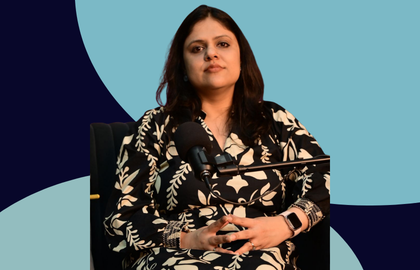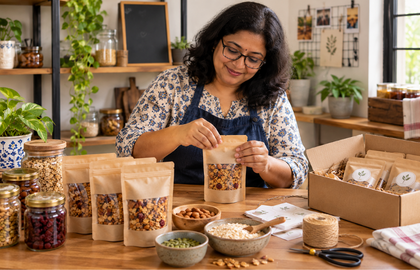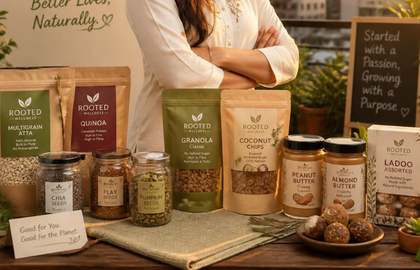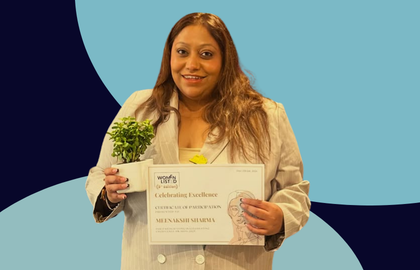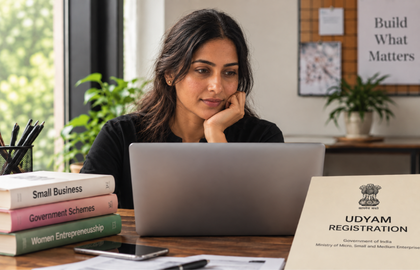
It's 10.30 at night. The kitchen is finally clean, your child is asleep, and your mind is louder than the house. You've had the business idea for weeks, maybe months. A home bakery in Pune. A kidswear label in Jaipur. Online counselling sessions from Kochi. A handmade gifting brand from Delhi NCR. The question isn't whether the idea is good. It's whether you're allowed to take yourself seriously while also being a mother.
You are.
A mompreneur isn't someone “trying to do it all”. She's a mother building a business in the middle of real life, with school runs, family expectations, interrupted calls, and very sharp time limits. In India, that reality has its own shape. It can be difficult, but it can also become your advantage if you build with the right tools, the right systems, and the right people around you.
Table of Contents
- You Can Be a Mother and a Founder
- What Being a Mompreneur in India Really Means
- Navigating the Path Challenges and Opportunities
- From Idea to First Sale A Practical Starter Guide
- Real Stories of Successful Indian Mompreneurs
- Building Your Support System and Business Visibility
- Growing Your Business for the Long Term
You Can Be a Mother and a Founder
If you've been waiting for someone to say your ambition is valid, take this as that moment. Motherhood doesn't cancel entrepreneurship. For many women in India, it reshapes it into something more grounded, more focused, and more resourceful.

A lot of women start their business journey after a major life shift. Childbirth often changes how you think about time, income, purpose, and flexibility. That's one reason the term mompreneur matters. It names a real working identity. It doesn't reduce you to motherhood. It recognises that you're building a business with a very specific set of responsibilities and strengths.
This is not a tiny movement. In India, women-owned businesses include over 20 million women entrepreneurs, and a 2023 report highlighted that around 30 to 35% of urban women entrepreneurs are mothers. The same data also notes that platforms such as Women Listed have onboarded 4,000+ women-led businesses (mompreneur statistics for India context).
Your starting point can be small
Many readers get stuck here. They think founder means office, staff, logo, GST confusion, and some dramatic launch on Instagram. It doesn't.
You can begin with:
- One service you can deliver from home, such as design, coaching, bookkeeping, or content writing.
- One product line you can test in a small batch, such as snacks, skincare, gifting, or kids' accessories.
- One channel where your first customers already know you, such as WhatsApp, Instagram, or your apartment community group.
Practical rule: Don't ask, “Can I build a business?” Ask, “What can I sell consistently in the hours I actually have?”
That question changes everything. It takes you out of fantasy and into design.
You don't need to look like someone else
The Indian market has room for businesses that begin from home and grow steadily. Plenty of successful women-led businesses start in bedrooms, dining areas, and shared family spaces. Your first version doesn't need to be polished. It needs to be useful, visible, and manageable.
You are not late. You are not “just” trying something on the side. You are building under real constraints, and that counts.
What Being a Mompreneur in India Really Means
Being a mompreneur in India isn't only about flexible working hours. It sits inside culture, family structure, money decisions, and daily negotiation. That's why generic business advice often feels off. It ignores the reality that many women here are building businesses while also being expected to remain fully available at home.
This identity is practical, not fashionable
In many Indian homes, a mother who starts a business is doing more than launching a product or service. She's often changing how the family sees women's work. Sometimes she gets encouragement. Sometimes she gets polite doubt. Sometimes she hears support only after the first paying customer arrives.
This identity also carries pride. Many mothers don't start only for “passion”. They start because they want an income stream with control, a professional identity that doesn't disappear after marriage or childbirth, and work that fits around school timings, elder care, or relocation.
A Western-style business story often focuses on independence at all costs. The Indian version can look different. You may rely on a grandparent for pickup, your sister for packaging, your spouse for weekend deliveries, and your own phone for everything from sales to customer care. That doesn't make the business less real. It makes it intelligently built around your actual environment.
Your home life isn't always a barrier. Sometimes it's the first ecosystem your business has.
Where Indian mompreneurs are building
You can see this clearly in the kinds of businesses mothers are creating.
| Business type | How it often starts | Why it fits |
|---|---|---|
| Home food brands | Small pre-order batches via WhatsApp | Familiar skill, repeat demand, low setup |
| Fashion and gifting | Instagram catalogue and direct messages | Visual products work well online |
| Coaching and consulting | Video calls from home | Time-efficient and location-flexible |
| Creative services | Referrals, freelance platforms, local networks | Low inventory, skill-led growth |
| Wellness and parenting services | Community trust and content-led visibility | Personal credibility matters |
Many Indian mompreneurs naturally build in categories where trust matters. Food, fashion, wellness, education, and services all reward personal connection. Buyers often prefer to know who is behind the brand. That works in your favour when your story feels honest and your communication is clear.
Your business model needs to match your season of life
People get confused when they choose a business because it sounds profitable, not because it suits their current capacity.
If your child is very young, a service business may be easier than a product business because it avoids inventory and dispatch stress. If you have household support and love making tangible goods, a small D2C brand may work well. If your available hours change every week, appointment-based work can be easier to manage than daily order fulfilment.
The strongest mompreneur businesses in India usually don't begin with scale. They begin with fit.
Navigating the Path Challenges and Opportunities
It is 2:15 pm. Lunch boxes are in the sink, your child may wake up any minute, and you are trying to reply to a customer who wants prices, delivery details, and a payment link right now. This is how many homegrown businesses in India begin. Not in a polished office, but in the middle of ordinary family life.

The challenges are significant. You are not only building a business. You are also building legitimacy around it. In many Indian homes, paid work done from home gets mistaken for a hobby until money starts coming in regularly. That social friction can slow decision-making, reduce confidence, and make even small business expenses feel difficult to justify.
Money is often the first pressure point. Many mothers start small because they have to. They use savings, family support, or income from early sales instead of outside funding. As noted earlier, research collected by The Positive Mom on struggles faced by mom entrepreneurs highlights how often mothers bootstrap and how strongly time, guilt, and limited support affect business growth.
A practical way to handle this is to separate problems into two buckets. One bucket is emotional noise. The other is operational friction. If you mix them together, everything feels heavy. If you separate them, you can solve one piece at a time.
Operational friction often shows up like this:
- Cash flow pressure: You need sales before you can spend on packaging, ads, stock, or a better phone.
- Broken work hours: School messages, cooking, visitors, and care work can split a two-hour task across the whole day.
- Low recognition at home: Family members may respect salaried work faster than self-employment.
- Too many roles at once: You are the founder, sales team, customer support desk, and operations manager.
Emotional noise sounds different. It says you should wait until life becomes calmer. For many mothers, that day never arrives. A better test is simpler. Can this business fit into the life you have now, with the support you have, using tools you can manage consistently?
That question changes everything.
Opportunity opens up when the business is designed for Indian home realities instead of copied from startup stories that assume full workdays, hired teams, and big budgets. WhatsApp can become your first sales desk. Instagram can become your catalogue, proof wall, and referral engine. A housing society group, school parent network, kitty circle, or local exhibition can become your first market research panel.
This is why small systems matter so much. A pinned WhatsApp message for prices. An Instagram Highlights section for testimonials, FAQs, and delivery timelines. A simple Google Form for orders. UPI for payment collection. These tools are basic, but basic is good when your day gets interrupted. A pressure cooker works because it is reliable. Early business systems should work the same way.
A few opportunity areas stand out for Indian mompreneurs:
- Low-overhead services: Tutoring, consulting, content support, design, bookkeeping, therapy-adjacent education services, and social media assistance can start from home with little upfront spend.
- Community-led selling: Apartment groups, resident welfare events, local flea markets, and parent circles can help you test offers faster than paid ads.
- Trust-based marketing: Buyers respond to clear communication, visible reviews, familiar language, and the feeling that a real person is behind the brand.
- Simple digital selling: WhatsApp Business, Instagram DMs, and repeat customer lists often work well before a full ecommerce setup.
If you are still deciding what kind of business fits your situation, these business ideas for aspiring mompreneurs can help you compare low-investment options with your available time and skills.
One more point often gets missed. Opportunity does not always mean speed. Sometimes it means resilience. A mother who builds a modest, repeatable business with clear margins and loyal customers is often in a stronger position than someone chasing fast growth without support. If you later want to formalise your store operations, product planning, and sales flow, a professional online store roadmap can help you organise that next stage without adding confusion.
Build for repeatability. A business that works on an ordinary Wednesday in an Indian household has a much better chance of lasting.
From Idea to First Sale A Practical Starter Guide
Starting gets easier when you stop treating the business like one giant task. Your job is not to launch perfectly. Your job is to move from idea to first sale with the least confusion possible.

Start with a problem you already understand
The best beginner business ideas often come from your own daily life. Maybe you struggled to find preservative-free snacks for children, practical return gifts, postpartum support, or a reliable online tutor. That's useful information. It means you already understand the buyer.
Write down these four points in one notebook page:
- Who is this for
- What problem does it solve
- How will they buy
- Why will they trust me
Keep it short. If you can't explain your business clearly, customers won't understand it quickly either.
A rough one-page plan is enough at the beginning. If you want a clearer structure for products, pricing, and launch basics, this professional online store roadmap is a useful reference.
Use simple digital tools first
You do not need a full website before your first sale. For many Indian mompreneurs, familiar tools work better in the beginning.
A 2023 NASSCOM report indicated that 68% of mom-led startups in Tier-2/3 cities use WhatsApp Business and Instagram Shops, achieving 40% higher customer acquisition rates compared to traditional e-commerce. The same verified data notes that authentic family narratives can see reach increase by up to 2.5x on Meta platforms.
That's why your first stack can be very basic:
- WhatsApp Business for catalogue, quick replies, labels, and customer follow-up
- Instagram for photos, reels, testimonials, and direct messages
- Google Forms for pre-orders or enquiry capture
- UPI payment options to keep checkout simple
- Canva for clean price lists, menus, or service cards
If you're still choosing a business direction, these ideas for aspiring mompreneurs can help you compare product and service options without overcomplicating the decision.
Start where your buyers already respond. A simple WhatsApp flow that gets orders is better than a beautiful system nobody uses.
A short explainer can also help if you're feeling stuck on the early planning stage:
Make your first sales process easy
Your first customer doesn't need twenty choices. Give them one clear offer.
Try this starter format:
| Part | Example |
|---|---|
| Offer | Weekend brownie box for families in Gurgaon |
| Price | One simple launch price |
| Order method | WhatsApp message with name and quantity |
| Delivery window | Saturday evening only |
| Proof | Real photos and two testimonials |
This works because it reduces decision fatigue for both you and the customer.
A few launch tips that help immediately:
- Batch your effort: Pick one or two fulfilment days instead of accepting orders every day.
- Write your FAQs once: Delivery area, ingredients, payment, booking policy, and timing should be ready to copy-paste.
- Ask for proof early: After every happy sale, request a review, a photo, or permission to share feedback.
- Keep your profile clear: Your bio should say what you sell, for whom, and how to order.
If you're ready for a more visible online presence later, the IMPACT Plan is described as built for brands ready to stand out and scale, with premium placements, richer content formats, expanded storefront, and dedicated support.
The first sale usually comes faster when the offer is narrow, the buying step is obvious, and people don't need to guess what to do next.
Real Stories of Successful Indian Mompreneurs
Most women don't need another giant success story. They need believable examples. Not unicorn founders. Not celebrity brands. Just women who began in ordinary circumstances and kept going.
The baker who began with weekend boxes
A mother in Pune loved baking but had no interest in running a daily kitchen operation. She started with one product only, a weekend dessert box for small family gatherings. Her challenge wasn't skill. It was energy. Weekdays were too fragmented for custom orders.
She solved it by limiting orders to one pickup window and one menu every week. That gave her consistency. Customers knew what to expect, and she wasn't redesigning her process every day.
Her best lesson is simple: standardise before you expand.
The consultant who stopped hiding her expertise
A Delhi-based mother had years of HR and hiring experience, but after a career break she kept calling her work “just freelance help”. That language hurt her pricing and her confidence. People saw her as available, not specialised.
Once she packaged her work into clear services such as interview support, hiring process setup, and CV review, enquiries became easier to handle. She also stopped apologising for working from home. Clients cared more about results and responsiveness than where she sat.
Speak about your work with professional clarity. If you sound unsure, buyers become unsure too.
Her advice is worth borrowing: name the outcome, not only the task.
The product maker who sold better after narrowing down
A Bengaluru mom started with handmade gifting across too many categories. Candles, hampers, stationery, décor, festive pieces. It looked creative, but customers were confused. She was also constantly sourcing new materials.
Things changed when she focused on one niche: thoughtful return gifts for children's events and small celebrations. Parents could understand the offer instantly. Referrals improved because people knew exactly what to recommend her for.
Her core lesson is one many mompreneurs need to hear: clarity sells better than variety at the start.
These stories matter because they show what success often looks like in the early years. It isn't dramatic. It's repeatable. A narrowed offer, a cleaner process, stronger language, and the courage to keep showing up.
Building Your Support System and Business Visibility
A good business can stay invisible for too long if nobody knows where to find it. That's one problem. The other is isolation. When you're building from home, it's easy to feel like you're doing every part alone.

Visibility matters because people can't buy what they can't find
Many women entrepreneurs focus only on creating the offer. Then they wait. But visibility is part of the business, not an extra task you do later.
Start with three visibility layers:
- Searchable identity: Make sure your business name, city, category, and contact details are easy to find.
- Shareable profile: Keep one clean link or digital presence you can send in WhatsApp chats, groups, and follow-ups.
- Recognisable personal brand: People often buy from founders they feel they know, especially in service businesses and trust-led categories.
If personal visibility feels awkward, reading about personal branding for career growth can help you think about it more practically. Personal branding isn't showing off. It's helping the right people understand what you do and why they should remember you.
Support systems reduce hesitation and isolation
A support system can include family, of course, but business support matters too. You need spaces where you can ask basic questions without feeling embarrassed, learn how other women are pricing or marketing, and get your business in front of relevant people.
That's where one structured option can help. Women Listed is a visibility and growth platform for women-led businesses in India. Its START Plan is described as a starting point to showcase your business online, create a digital identity, and access basic learning resources at zero cost.
That kind of support is useful when you need practical visibility tools rather than abstract motivation. A listing, a digital business card, expert sessions, and business conversations can reduce the lonely feeling of figuring everything out from scratch. If you want to understand how recognition and networking events can support discoverability, this Women Listed event perspective on visibility and recognitions gives a useful example.
A strong support system should help you do two things:
| Need | What helps |
|---|---|
| Be found | Listings, searchable profiles, consistent bios |
| Be trusted | Testimonials, photos, founder presence, recognitions |
| Keep learning | Practical sessions on marketing, branding, social media |
| Stay encouraged | Peer groups, events, founder conversations |
You don't need a huge network. You need a relevant one. A few real connections can open doors to referrals, collaborations, event invites, and repeat customers.
Growing Your Business for the Long Term
A lot of home businesses in India reach a tricky stage after the first few sales. Orders are coming in, WhatsApp keeps buzzing, Instagram DMs need replies, and family members start saying, “Business is going well now, na?” What they do not see is the hidden risk. If every order still depends on your memory, your phone, and your late-night energy, growth can become messy very quickly.
Long-term growth works like building an extra floor on a house. The foundation has to carry more weight first. For a mompreneur, that foundation is not only product quality. It is routine, clarity, and a way of working that survives school holidays, festival seasons, and the days when home responsibilities suddenly take over.
Protect your time before you expand
Your time is the first system to fix.
Start by noticing which tasks need your judgment and which only need a clear process. Customer complaints about a custom order may need you. Sending order confirmation messages does not. Posting the same payment instructions again and again does not. Following up on unpaid invoices usually does not.
A simple rule helps here. If a task repeats often and the steps are predictable, write it down once. Then hand it off, batch it, or automate it.
Look closely at tasks like these:
- Order confirmations
- Basic customer replies
- Packaging routines
- Calendar management
- Invoice follow-ups
For many Indian mompreneurs, delegation does not begin with a full-time hire. It often begins at home. A college-going sibling can help update order sheets. A part-time local helper can support packing for two hours in the afternoon. A freelancer can design Instagram creatives in batches. Small support counts.
Use digital tools your customers already use
You do not need a complicated tech stack. You need fewer repeated decisions.
WhatsApp Business is often the easiest place to begin. Set up quick replies for common questions, labels for new and repeat customers, and a product catalogue so buyers do not have to ask for the same details each time. Instagram can do a different job. Use it to show proof, such as customer testimonials, packaging videos, behind-the-scenes clips, and use-cases that help people trust a homegrown brand.
This combination works well in India because people often discover on Instagram and confirm on WhatsApp.
A few practical upgrades can save hours every week:
- Scheduling tools for calls, consultations, or pickup slots
- Template replies for pricing, delivery timelines, and payment details
- Simple bookkeeping tools to track sales, expenses, and cash flow
- Content batching so you create one week of posts in one sitting
- Customer labels or spreadsheets to separate leads, active buyers, and repeat clients
None of these tools makes a business successful on its own. They serve to remove friction, like clearing a crowded kitchen counter before you start cooking.
Grow through visibility, not only effort
Many mothers try to grow by working longer. That approach usually fails first during exam season, illness at home, or festival rush. A steadier approach is to build visibility systems that keep working even when your schedule gets interrupted.
That can mean asking happy customers for photo reviews, keeping your business profile updated across platforms, and showing up in the right communities. In India, local parent groups, apartment communities, school networks, hobby circles, and women entrepreneur groups often bring better leads than broad advertising.
Offline presence still matters too. If you want examples of how in-person connections can support a home-based business, these networking events for homepreneurs and founders show why relationships can turn into referrals, collaborations, and repeat business.
For businesses that are ready for more consistent visibility, the GROW Plan is described as a membership for growing brands that want stronger placement, ongoing social media promotion, community access, and expert support.
Long-term growth usually comes from quiet improvements that compound over time. Better follow-up. Clearer processes. Stronger visibility. Fewer tasks living only in your head.
That is good news for a mompreneur building from home in India. You do not need to become a different person to grow. You need systems that support the life you already have.
If you're building a business around school timings, family life, and your own ambition, you don't need to do it in isolation. Women Listed offers a practical way for women-led businesses in India to improve visibility, create a digital presence, connect with buyers and collaborators, and access learning and community support as they grow.