Beyond Passion: Hurdles for India's Women Entrepreneurs
You can have a good product, a clear vision, and the willingness to work harder than everyone around you, and still find entrepreneurship tougher than it should be. That is the experience for many women building businesses in India.
The biggest obstacle is still money. Globally, 78% of women entrepreneurs identify limited access to finance as one of their greatest challenges, according to the Cherie Blair Foundation’s overview of women entrepreneurs’ top challenges. In India, that problem often sits alongside family expectations, patchy access to networks, low digital confidence, and the constant need to prove credibility before people take your business seriously.
If you’re running a homegrown food brand in Jaipur, a design studio in Bengaluru, a coaching business on Instagram, or a boutique selling through WhatsApp in Kochi, these aren’t abstract issues. They affect inventory, cash flow, visibility, time, and confidence.
The good news is that most problems faced by female entrepreneurs can be handled more strategically once you name them clearly. This guide gets practical fast. Each challenge includes India-specific context, examples from everyday business life, and realistic actions you can take without waiting for perfect conditions.
Table of Contents
- 1. Limited Access to Funding and Capital
- 2. Societal and Family Pressures / Work-Life Balance Challenges
- 3. Lack of Business Knowledge and Skill Gaps
- 4. Networking Gaps and Limited Access to Market Opportunities
- 5. Gender-Based Discrimination and Bias
- 6. Digital Divide and Technology Adoption Gaps
- 7. Credibility and Trust-Building Challenges
- 8. Supply Chain and Supplier Relationship Challenges
- Comparison of 8 Key Challenges for Female Entrepreneurs
- Your Challenges Are Your Strengths in Disguise
1. Limited Access to Funding and Capital
Money problems slow women-led businesses early and often. You feel it when you want to buy inventory before festive season, hire one reliable team member, upgrade packaging, or finally build a proper website instead of selling through DMs.
In India, this is not just a perception problem. Women-led businesses represent 18% of India’s 63 million MSMEs but receive only 7.2% of total credit, and only 11.5% secured bank loans in FY2024 compared to 28% for men, according to the GEM report reference on women’s entrepreneurship and India finance barriers. When funding is harder to access, growth gets delayed even when demand exists.

Why funding feels harder than it should
Banks still prefer clean documentation, collateral, stable financial records, and familiar business models. Many women start with personal savings, family money, or informal borrowing, then get stuck at the stage where the business is too large to run casually but too small to look “fundable” on paper.
That creates a painful trade-off. If you bootstrap everything, you keep control but grow slowly. If you chase outside funding too early, you can spend months preparing pitches when your actual need is better bookkeeping, stronger sales records, and clearer proof of repeat demand.
Practical rule: Don’t apply for capital before you can explain three things clearly. How you earn, where the money goes, and what specific growth that capital will fund.
What works in practice
Founders usually improve their chances when they stop asking for “funding” in the abstract and start preparing for one funding route at a time.
- Build a lender-ready file: Keep GST records, bank statements, invoices, basic P&L, and customer proof organised in one folder. This matters whether you apply to a bank, a scheme, or a fintech lender.
- Match the funding type to the need: Inventory needs, equipment purchase, marketing spend, and working capital aren’t the same problem. Treating them as one big money problem leads to weak applications.
- Show traction publicly: A visible business profile, active customer engagement, and consistent branding help you look more credible before any call with a lender or investor.
- Use community introductions: Warm referrals often save time because someone else has already signalled that your business is real.
If you’re building traction and want discovery plus credibility signals in one place, Women Listed can help you create a visible business presence that’s easier to share with potential collaborators, customers, and funders.
2. Societal and Family Pressures / Work-Life Balance Challenges
Some of the most serious problems faced by female entrepreneurs don’t show up in a balance sheet. They show up in interrupted workdays, guilt, family negotiations, and the mental load of running a business while still being expected to manage home.
For Indian women, the pressure often has a very local shape. Joint family dynamics, school schedules, elder care, religious calendars, and expectations around availability can affect when and how a business runs. The challenge isn’t just “work-life balance”. It’s whether your business model respects the reality of your life.

The India-specific pressure
Global research often mentions caregiving, but it rarely captures the specific complexity Indian mompreneurs face. A founder may be packing orders between school pickups, taking supplier calls from the kitchen, and answering customer messages after everyone sleeps. That is not a time-management failure. It’s a structural burden.
The result is that many women choose business models that fit available time, not full potential. That can be wise in the short term, but it becomes limiting if the business depends entirely on the founder being personally available all day.
Indian women entrepreneurs don’t just need motivation. They need operating models that survive real family schedules.
What makes business manageable
The answer isn’t doing more. It’s designing differently.
A home baker in Pune may do better with pre-order slots than daily custom orders. A consultant in Gurgaon may need fixed client-call windows instead of being available on WhatsApp from morning to night. A product founder in Indore may need batch dispatch days instead of ad hoc shipping.
Try these shifts:
- Set customer boundaries clearly: Publish business hours on WhatsApp Business and Instagram. Customers usually adjust when expectations are consistent.
- Choose predictable offers: Subscriptions, pre-booked services, and batch production reduce daily chaos.
- Create a family operating conversation: Don’t ask vaguely for “support”. Ask for specific help such as school pickup, packing assistance, or uninterrupted work hours.
- Find peer support: Other women founders often have better solutions than generic productivity advice.
Women Listed’s community features can be useful here because they connect founders with other women, including mompreneurs, who understand these trade-offs and share practical ways to make business workable.
3. Lack of Business Knowledge and Skill Gaps
Many Indian women start a business because they already have a proven skill. They can bake, design, teach, consult, style, stitch, coach, or make a strong product. The harder part often begins after the first few orders. Pricing, bookkeeping, GST basics, vendor terms, customer retention, and digital marketing are separate skills, and many founders have to build them while the business is already running.
That creates expensive mistakes.

A homegrown founder in Jaipur may get steady enquiries on Instagram and still struggle to convert them because replies are inconsistent, prices are unclear, and follow-up depends on memory. A service founder in Bengaluru may be excellent at delivery but weak on contracts and payment terms, so cash gets delayed. A seller on marketplaces may see orders increase and still earn very little because packaging, commission, returns, and shipping were never built properly into the margin.
These are not talent problems. They are business system problems.
Where the gap usually appears
In practice, skill gaps show up in everyday decisions that directly affect profit and stability:
- Pricing without full cost visibility: Raw materials, delivery, platform fees, revisions, and founder time get missed.
- Weak financial tracking: Revenue is visible, but profit, repeat purchase rate, and slow-paying customers are not.
- Marketing without measurement: Time goes into reels and posts, but there is no clear view of what brings enquiries or sales.
- Limited compliance knowledge: GST, invoices, basic contracts, and business registration get postponed until they become stressful.
- No repeatable process: Orders, client onboarding, packaging, or follow-up live in the founder’s head instead of a simple system.
I have seen this pattern often. A founder assumes she needs more customers, but the actual issue is that the business is leaking money or running without clear processes. More demand does not fix that. It usually exposes it faster.
Build skills in the order the business needs them
The practical approach is to learn based on business stage, not based on what feels interesting online.
Start with cash control. Then fix conversion. Then improve visibility.
- Learn basic bookkeeping first: Track monthly sales, costs, payment delays, and best-selling offers in one sheet if needed.
- Correct pricing before spending on branding: If margins are weak, better visuals will not solve the core issue.
- Get clear on one acquisition channel: For some founders, that is Instagram. For others, it is WhatsApp, referrals, exhibitions, or marketplaces.
- Use expert help for specialised tasks: A part-time CA, lawyer, or ads freelancer is often cheaper than fixing a preventable mistake later.
- Document repeat tasks: Create templates for invoices, customer replies, quotations, and dispatch updates so the business does not depend on memory.
Women Listed is useful here because it connects this challenge to practical support, not generic inspiration. Founders can join learning sessions on marketing, branding, social media, and AI, then apply those lessons inside a business profile that improves discoverability. That combination matters. Learning one skill is helpful. Learning it and putting it to work in front of real customers is better.
A good benchmark is simple. If you cannot explain how you price, how you track money, and where your next 10 customers will come from, that is the next skill gap to close.
4. Networking Gaps and Limited Access to Market Opportunities
In India, many business opportunities still move through referrals, introductions, and closed circles. A founder may have a strong product, fair pricing, and happy customers, but still miss retail placements, corporate orders, event invites, and partnership leads because the right people do not know she exists.
As noted earlier, networking and mentorship gaps are among the most common barriers women founders report. The Indian version of this problem is practical and visible on the ground. Buyers often prefer known vendors. Communities pass opportunities internally. Local business groups can be useful, but access is uneven if you are new, based outside a metro, returning to work after a career break, or building without family business connections.

A weak network costs money.
Without trusted introductions, founders spend longer finding suppliers, pay more to acquire customers, and lose time chasing cold leads that rarely convert. I have seen this clearly with early-stage women-led brands. The product was ready, but growth stayed flat because the founder was trying to build visibility from scratch on social media while missing the offline rooms where stockists, collaborators, and bulk buyers were meeting.
What this looks like in real business
For an apparel founder in Jaipur, the gap may be access to stylists, exhibition curators, photographers, and boutique owners. For a home baker in Bengaluru, it may be corporate gifting contacts, apartment community leads, and event planners. For a service business in Delhi NCR, it may be the difference between random inquiries and repeat referral work from HR teams, wedding planners, agencies, or other founders.
This is why networking should be treated as a sales channel, not a social activity.
The trade-off matters. Attending every founder meetup wastes time. Attending the right room with a clear goal can shorten your path to revenue.
How to build a useful network in India
- Choose rooms with commercial intent: Prefer exhibitions, curated founder meets, buyer-seller events, local business communities, and niche industry gatherings over generic motivational events.
- Prepare a 20-second business introduction: State what you sell, who buys it, your city, and the kind of connection you want. Keep it specific enough that someone can refer you accurately.
- Carry referral-ready assets: Keep product photos, price ranges, your WhatsApp Business link, and a simple digital card ready on your phone.
- Follow up fast: Send a short message within 24 hours. Mention where you met, what you discussed, and the next step.
- Track contacts like business assets: Maintain a sheet with names, category, city, date met, and follow-up status. Good networking is often disciplined follow-up, not charisma.
- Build peer relationships, not only buyer relationships: Other women founders often become your first collaborators, referrers, pop-up partners, and sounding board.
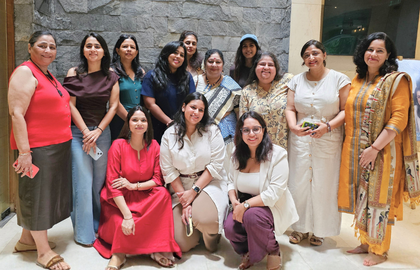
Women Listed connects this problem to practical action. Its pan-India business directory helps founders become discoverable beyond their immediate circles, and its founder community and on-ground experiences in Delhi NCR, such as Elevator Pitch Meets, The Feast, and The Excellence Awards, create structured ways to meet collaborators, customers, and ecosystem partners. That combination matters because visibility alone does not create trust, and events alone do not create ongoing discoverability.
A simple test helps here. If a stranger who wants to support your business cannot quickly understand what you offer, who it is for, and how to refer you, market access will stay narrower than it should be.
5. Gender-Based Discrimination and Bias
Gender bias in business often shows up as friction, not headlines. A supplier asks to speak to “the actual owner” when you are the owner. A prospect treats your company like a temporary project. A financier tests your seriousness before discussing growth. Each incident may look small on its own, but repeated often enough, it affects pricing, confidence, timelines, and access.
As noted earlier, discrimination is not always the highest-reported obstacle in surveys. Even so, for many Indian women entrepreneurs, bias becomes expensive when it affects who gets taken seriously first, who gets better terms, and who is asked to keep proving competence.
How bias shows up in Indian business settings
In India, credibility checks are often gendered before they become commercial. Women founders are more likely to face questions about family support, future commitment, mobility, or whether they can handle scale. A male founder selling the same product is often judged on traction first.
This matters in routine business moments. A boutique manufacturer may be pushed harder on pricing because the buyer assumes she will avoid confrontation. A service founder may be asked for extra reassurance on delivery capacity even after sharing a clear portfolio. A retail entrepreneur may find that vendors respond faster when a male relative is copied on the call.
Bias also changes behaviour. Some founders start over-explaining basic decisions. Others underquote to avoid being labelled difficult. I have seen women entrepreneurs prepare twice as much for meetings where they were given half the initial respect. That extra labour is rarely visible, but it is real.
What works in practice
Bias is easier to handle when the response is prepared in advance and tied to business outcomes.
- Lead with business evidence: Open with SKUs, order volumes, fulfilment timelines, client categories, repeat purchase rates, or service process. Specifics reduce room for dismissive assumptions.
- Set commercial boundaries early: Share payment terms, revision limits, delivery windows, and escalation points in writing. Clear structure reduces the chance of being tested informally.
- Separate tough scrutiny from biased scrutiny: A buyer asking about margins, quality control, or logistics may be doing their job. A buyer questioning whether you can stay committed because you are a woman is showing you the relationship risk.
- Price for value, not approval: Discounting too early often attracts more pressure, not more respect.
- Keep neutral response scripts ready: Short lines help. “I handle founder decisions directly.” “These are our standard commercial terms.” “Happy to discuss scale, if the requirement is confirmed.”
One practical filter helps. Ask whether this conversation is helping the deal move forward. If it is not, stop spending premium emotional energy on it.
External validation also reduces friction. Media mentions, podcast features, awards, testimonials, and a polished founder profile give prospects proof before the first call. That does not remove bias completely, but it shortens the credibility battle.
Women Listed supports this part of the journey in a practical way. Its media features, podcast spotlights, business profiles, and awards help founders present visible proof of work, not just self-description. For women who are tired of being underestimated in the first five minutes, that kind of third-party credibility can improve the quality of conversations they get.
6. Digital Divide and Technology Adoption Gaps
For many Indian founders, digital growth doesn’t fail because of laziness. It fails because the setup feels confusing, fragmented, and expensive in time. One person says you need Shopify. Another says focus only on Instagram. A third says automate everything with AI. Most small business owners just want more enquiries without breaking what already works.
The digital gap is visible in Indian data. Only 17% of women-led businesses in India were using advanced e-commerce platforms compared with 42% of male-led counterparts, according to the female entrepreneur statistics page citing the 2023 IFC We-Fi report on digital adoption in South Asia. That gap becomes a growth problem when customers expect smooth discovery, quick replies, and easy ordering.
A practical visual explainer can help if digital feels intimidating.
The digital gap is real
This challenge is sharper outside major metro ecosystems and for founders in non-tech sectors. A boutique in Lucknow may depend entirely on Instagram and WhatsApp because a full website feels too technical. A skincare founder in Coimbatore may delay online selling because catalogue management, payments, and shipping setup look overwhelming.
The issue isn’t whether digital matters. It does. The issue is sequencing.
The simplest adoption path
Don’t begin with advanced systems. Begin with the tools customers already use.
- Start with WhatsApp Business: Use catalogues, labels, auto-replies, and business hours.
- Clean up Instagram: Make bio, highlights, pricing cues, and ordering steps obvious.
- Claim your Google Business presence if local discovery matters: This helps service providers, studios, clinics, salons, and stores.
- Add one storefront layer: A simple digital storefront is often enough before a full custom website.
Women Listed can be useful for this stage because members can create a rich business profile, share a digital card, and set up a digital storefront without making digital adoption feel like a full tech project. Its learning sessions on marketing, social media, and AI are also practical for founders who want guided, gradual progress.
7. Credibility and Trust-Building Challenges
Trust decides whether interest turns into payment. In India, that decision is often delayed for women founders because buyers, vendors, and even referral partners may ask for more proof before they take the business seriously.
A first-time customer in Jaipur may like your product and still hesitate to place the order. A corporate client in Bengaluru may praise your proposal and then ask whether you have handled similar work before. A distributor may respond faster to a male-led firm with a thinner track record. This is not only a branding issue. It affects conversion, repeat business, pricing power, and referrals.
Why credibility takes longer for many women-led businesses
Part of the problem is how trust gets built in Indian markets. A lot of business still runs on introductions, visible social proof, and reputation passed through communities. If you are a newer founder, working from home, building online, or entering a category where buyers already have preferred suppliers, you start with less inherited credibility.
The trust gap shows up in small but expensive ways. Customers ask for COD instead of prepaid orders. Service prospects request extra calls before signing. Retail buyers delay decisions because they want more samples, more references, or more reassurance that you can deliver consistently.
These requests are normal to a point. The business risk starts when your credibility depends only on one-to-one explanations from you every time.
What buyers look for before they trust you
Buyers want evidence that the business is real, responsive, and consistent.
That evidence can be simple:
- A complete business presence: Clear category, pricing cues, contact details, location, and delivery or service information.
- Specific testimonials: “Delivered 200 gift boxes on time for our Diwali event” builds more confidence than “Great service.”
- Proof of work: Product photos, before-and-after results, case studies, client logos, or sample projects.
- Visible founder identity: A real name, face, story, and business context reduce suspicion, especially for online-first brands.
- Clear policies: Return terms, timelines, payment methods, and response expectations help buyers feel safer.
Indian customers are cautious for practical reasons. They have seen fake pages, delayed deliveries, inconsistent quality, and poor after-sales support. Trust is earned by reducing uncertainty at every step.
How to build trust without wasting months
Start by tightening the signals people check before they enquire.
Show real work, not polished claims. If you run a baking business in Pune, post bulk order photos, packaging shots, and event setup images. If you are a consultant in Gurgaon, publish short case summaries, client feedback, and your area of expertise. If you sell fashion from Surat, add fabric details, sizing clarity, dispatch timelines, and exchange terms.
Then make referrals easier. Ask happy customers for short, specific testimonials in text or video. Save them in one place. Use the same proof across Instagram, WhatsApp, your catalogue, and sales conversations so you are not rebuilding credibility from scratch each time.
Third-party presence also helps. A rich Women Listed profile gives buyers one place to verify who you are, what you sell, how to contact you, and what your business looks like. That matters for women founders who need discoverability and credibility together, not as two separate tasks.
Trust grows faster when the business looks organised. And organised businesses are easier to buy from.
8. Supply Chain and Supplier Relationship Challenges
Many women founders hit a wall at sourcing long before they hit a wall at sales. Orders start coming in, but raw materials arrive late, packaging quality drops, or a supplier pushes minimum quantities that your cash flow cannot support. The result is immediate. Margins shrink, dispatch timelines slip, and customer trust weakens.
In India, this problem shows up in very practical ways. A jewellery founder in Delhi may depend on one bead or plating supplier and have no backup when quality changes. A beauty brand in Mumbai may want better packaging but delay the switch because testing, sampling, and compliance checks take time. A home décor seller in Ahmedabad may agree to a large order quantity too early, then watch working capital get stuck in unsold stock.
Supplier problems are not a back-end headache. They affect growth, cash flow, and repeat business.
Why sourcing becomes a growth bottleneck
Early-stage founders often accept weak terms because they need stock quickly. That is understandable, but it creates risk. One unreliable vendor can disrupt your entire month. If you are still building confidence in wholesale conversations, it gets harder to push back on price changes, payment terms, or vague delivery commitments.
Bias makes this harder too. Some women founders are treated as hobby sellers, especially in male-dominated trade networks. That can mean slower responses, poorer credit terms, or less seriousness during negotiation.
The answer is not to become aggressive. It is to become prepared.
How to build stronger supplier relationships
Better supplier terms usually come from consistency, records, and options.
- Check multiple vendors before saying yes: Use platforms like IndiaMART, TradeKey, or Global Sources to compare rates, minimum order quantities, and timelines.
- Place small trial orders first: Test quality, packaging, response time, and delivery reliability before committing larger amounts.
- Keep a simple supplier scorecard: Track defects, delays, pricing changes, and communication quality in one sheet.
- Set terms in writing: Confirm specs, timelines, replacement rules, and payment expectations on WhatsApp or email so there is less room for dispute.
- Ask other founders for referrals: Peer recommendations can save weeks of trial and error, especially for packaging vendors, printers, fabric suppliers, and contract manufacturers.
Good sourcing runs on two things. Documentation and relationships.
Women Listed helps here in a practical way. Its founder community can help you find vetted service partners and supplier referrals faster, which matters when you do not have family business networks or years of industry contacts to fall back on.
Comparison of 8 Key Challenges for Female Entrepreneurs
| Challenge | 🔄 Implementation complexity | ⚡ Resource requirements | 📊 Expected outcomes | 💡 Ideal use cases | ⭐ Key advantages |
|---|---|---|---|---|---|
| Limited Access to Funding and Capital | High, complex approvals, investor bias, heavy documentation | High, strong financials, collateral or investor networks; time to raise | Enables scaling, inventory purchase and tech adoption if secured; otherwise constrained growth | High-growth startups, inventory-heavy businesses seeking VC or institutional loans | High growth potential when funded; growing women-specific funds and government schemes |
| Societal & Family Pressures / Work‑Life Balance | Medium–High, continuous role negotiation and boundary setting | Moderate, need for flexible models, childcare support or hired help | Sustainable income with flexible models; risk of slower growth or burnout if unmanaged | Home‑based/D2C businesses, early-stage founders balancing caregiving | Flexibility in operations; strong peer support networks and resilient business models |
| Lack of Business Knowledge & Skill Gaps | Medium, steep learning curve in finance, marketing, ops | Low–Medium, time investment; courses, mentors or consultants may cost | Improved financial management, customer acquisition and scalability after training | First‑time founders, bootstrapped ventures needing foundational skills | High ROI from targeted training and mentorship; many accessible learning programs |
| Networking Gaps & Limited Market Opportunities | Medium, requires proactive outreach and persistent participation | Low–Medium, time, event fees, quality profiles/listings | Better partnerships, B2B leads, distribution channels and referrals with effort | B2B sellers, scale‑ups seeking distribution, service providers | Access to buyers and partners; digital networks reduce geographic barriers |
| Gender‑Based Discrimination & Bias | High, systemic and situational; emotional and legal complexity | Medium, credibility-building, legal advice, community/legal support | Reduced barriers and better stakeholder treatment if addressed; otherwise stalled deals and stress | Any women‑led business interacting with investors, suppliers or customers | Increasing awareness, anti‑harassment policies and recognition programs; supportive communities |
| Digital Divide & Technology Adoption Gaps | Medium, selecting tools and training; connectivity constraints | Low–Medium, basic devices, internet, subscriptions, training time | Expanded reach, automation and online sales growth when adopted | D2C brands, small retailers and service providers moving online | Rapid scalability with affordable no‑code tools and abundant free resources |
| Credibility & Trust‑Building Challenges | Medium, consistent visibility and proof building required | Low–Medium, branding, testimonials, PR, awards and time | Higher conversion, stronger partnerships and pricing power over time | Service businesses, consultants and D2C sellers needing customer trust | Multiple digital channels and awards can accelerate trust and credibility |
| Supply Chain & Supplier Relationship Challenges | High, negotiation, quality control and logistics complexity | Medium–High, working capital, sourcing trips, MOQ management | Better margins and reliable supply if resolved; persistent bottlenecks otherwise | Product manufacturers, retailers and export‑oriented SMEs | Collaborative sourcing, B2B marketplaces and peer referrals can reduce MOQs and improve terms |
Your Challenges Are Your Strengths in Disguise
The problems faced by female entrepreneurs are real. They are not imagined, exaggerated, or signs that you’re somehow less capable. If funding feels hard, if family responsibilities cut into business time, if networking feels closed off, or if digital growth seems confusing, that doesn’t mean your business is weak. It means you’re building inside conditions that require more strategy than is widely acknowledged.
That’s also where your strength develops.
Women founders in India often become sharper operators because they have to. They learn to stretch cash carefully, build trust from scratch, create sales through community, and adapt quickly when support systems are missing. Those are not small skills. They are durable business advantages.
Still, resilience alone isn’t the goal. You shouldn’t have to survive everything manually. The better path is to reduce friction wherever you can. Make your business easier to discover. Make your offers easier to buy. Make your documents easier to share. Make your systems easier to repeat. Make your network stronger than your doubts.
If you’re feeling stuck, don’t try to solve every challenge this month. Pick the one bottleneck that is actively slowing growth right now.
If sales are coming but cash is tight, focus on funding readiness.
If people like your business but don’t remember you, focus on visibility and credibility.
If you’re overwhelmed every day, redesign the business model around your actual life.
If you feel isolated, prioritise community and networking before another random course.
This is the practical truth. Growth gets easier when the next move is specific.
For many Indian founders, support also works better when it is local, flexible, and built for women-led businesses rather than generic startup advice. That’s why platforms like Women Listed can be relevant. It combines visibility, founder community, learning sessions, and digital business tools in a format that fits women building across cities, categories, and life stages.
You don’t need to become fearless before you grow. You need systems, support, visibility, and a willingness to keep moving with clarity. The business you’re building deserves that. So do you.
If you want a practical next step, explore Women Listed to create your business profile, improve visibility, connect with other women founders, and access learning sessions designed for women-led businesses in India.