A founder friend in Mumbai once told me her “simple” gift hunt turned into a full research project. She wanted a dress for her sister that felt beautiful, was made in India, and came from a business she could feel good about supporting. After hours of scrolling, she still had the same question many of us have. Who is doing the work, and how do you tell the difference?
That confusion is real. “Sustainable” can refer to fabric choice, waste reduction, artisan partnerships, small-batch production, fairer working conditions, or sometimes just good branding. If you also want to back women-owned businesses, the bar gets higher. It should.
That is also what makes this category worth studying.
These brands are building in one of the world's most layered textile markets, where sourcing, production timelines, pricing pressure, and customer education all collide. A mission-led label has to make strong design decisions and hard operational choices at the same time. It has to explain why a garment costs more, why stock is limited, or why a fabric has natural variations and should still be considered desirable.
If you are building your own brand, there is a lot to learn here beyond the clothes. Each label on this list offers a useful lesson in business. How to show your waste stream without making the product feel like a compromise. How to stay niche without becoming invisible. How to build trust around process, not just aesthetics. For another example of this kind of founder-led thinking, see our piece on Payal Jaggi's ethical brand Kinche.
If you are also trying to sharpen your eye for understanding sustainable style, this list will help you shop better and think better. The seven brands ahead are worth knowing as a customer. They are also worth studying as a woman entrepreneur.
Table of Contents
- 1. Doodlage
- 2. Upasana
- 3. Ka-Sha and Heart To Haat
- 4. The Summer House
- 5. NorBlack NorWhite
- 6. MATI
- 7. Saltpetre
- 7-Brand Comparison: Women-Owned Sustainable Fashion in India
- Your Turn Discover and Support Women-Led Brands
1. Doodlage

If you've been around the Indian sustainable fashion space for even a short while, Doodlage usually comes up early. That's for good reason. Founded by Kriti Tula, the brand made upcycling visible before it became a neat buzzword on Instagram captions.
What stands out is how clearly the brand explains what it uses. You can shop by material, and the site makes it easier to understand whether a piece comes from post-production waste, post-consumer waste, kala cotton, Bemberg, or another lower-impact fabric route. That sort of clarity helps buyers trust the story.
What Doodlage teaches about showing your waste stream
The practical lesson here is simple. If your materials are your differentiator, don't hide them in a generic “about us” page. Put them where the buyer is already making the decision.
Doodlage also shows the upside and the constraint of true circular design. Small-batch production, visible mending, and a take-back approach all make the brand feel credible. The trade-off is real though. Waste-stream-led production can make restocks unpredictable, and if a drop works well, some pieces will disappear fast.
Practical rule: If your supply depends on reclaimed inputs, build customer education into the sell-out story. Scarcity feels intentional when you explain why it exists.
I also think Doodlage is useful for founders because it proves that sustainability doesn't need to look worthy or dull. The prints, coordinates, and dresses feel contemporary, but the cuts often lean casual. If you want office formals or occasionwear, the selection is narrower.
- Best for buyers: Contemporary everyday wear with a strong upcycling story.
- Business lesson: Material transparency on product pages does more work than vague claims about being conscious.
- Watch the trade-off: A reclaimed-fabric model can limit consistency in colourways, repeat styles, and restocks.
- Smart founder takeaway: A take-back or repair-minded system becomes more believable when it matches the brand's design language.
If this space interests you, Women Listed's feature on women-led sustainable fashion brands is a useful companion read.
2. Upasana
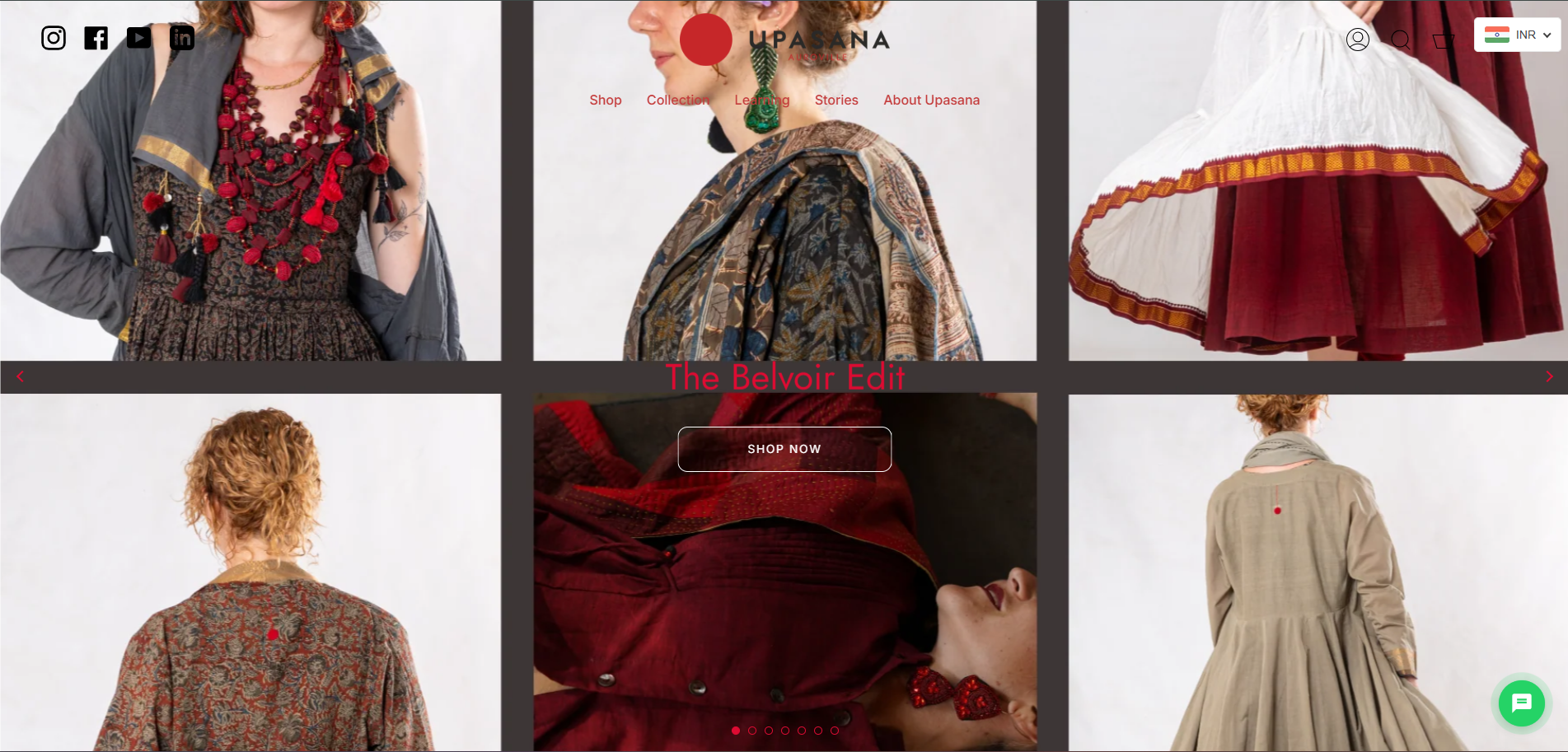
Upasana feels different from brands that discovered sustainability because the market moved that way. Founded and led by Uma Prajapati in Auroville, it carries the steadiness of a label that has spent years building around craft, community, and design as a way of life.
The site leans into stories, learning, and process. That matters. Plenty of founders talk about artisan partnerships, but fewer take the trouble to show the thinking behind handspun khadi, jamdani, natural dye work, and slower production rhythms.
What Upasana teaches about depth over trend
Upasana is a good reminder that not every sustainable fashion business needs to chase trend cycles. Sometimes the stronger move is to become unmistakable in one lane.
That does mean the brand won't suit everyone. The aesthetic skews artisanal, minimal, and thoughtful rather than trend-driven. Pre-order and small-batch approaches also mean you may wait longer than you would with a standard online fashion store.
Some brands sell clothes. Some brands sell a way of seeing clothes. Upasana is firmly in the second group.
For women entrepreneurs, there's a deeper lesson here about editorial content. Long-form storytelling is often dismissed because it doesn't look like a quick sales tactic. But in categories where trust, provenance, and craft value matter, that educational layer can do serious work over time.
- Best for buyers: Handcrafted clothing with strong links to slow production and artisan processes.
- Business lesson: Educational content can strengthen conversion when your customer needs context before she buys.
- Watch the trade-off: Mission-led storytelling is powerful, but it usually attracts a more specific customer rather than everyone.
- Smart founder takeaway: Pre-order works better when your brand already has enough trust to justify the wait.
If you like founder journeys that connect fashion and ethics, this Women Listed story on Payal Jaggi's ethical brand Kinche is worth reading.
3. Ka-Sha and Heart To Haat

Ka-Sha, founded by Karishma Shahani Khan, has a very clear design voice. It's colourful, artisan-led, and seasonless in a way that feels expressive rather than restrained. That alone makes it memorable.
Then there's Heart To Haat, its sister initiative, which takes the circular story further by upcycling in-house and industry textile waste into accessories and apparel. It also offers waste-management and upcycling services for other brands. That second layer is especially interesting if you run a product business yourself.
What Ka-Sha teaches about building a second engine
A lot of founders stop at “our own products are sustainable.” Ka-Sha shows a more layered model. One side builds a fashion brand. The other side turns operational capability into a service.
That's a smart business lesson. If your team develops real expertise in waste sorting, remnant handling, repair, repurposing, or artisanal construction, that knowledge may be valuable beyond your own catalogue. A second revenue stream can also reduce dependence on D2C fluctuations.
The trade-off is complexity. Once you combine craft-led fashion with circular services, assortment and pricing can feel less uniform. Upcycled capsules depend on available textile waste, so product consistency naturally shifts.
- Best for buyers: Distinctive, craft-rich garments and accessories with a visible zero-waste mindset.
- Business lesson: Operational strengths can become standalone services if they solve a real industry pain point.
- Watch the trade-off: The more artisanal and waste-led your production is, the harder it becomes to standardise.
- Smart founder takeaway: Seasonless design works better when the brand's visual identity is strong enough to hold repeat interest.
There's a related founder lesson in Women Listed's piece on building a fashion brand with purpose through Manvi Tejpal's journey.
4. The Summer House
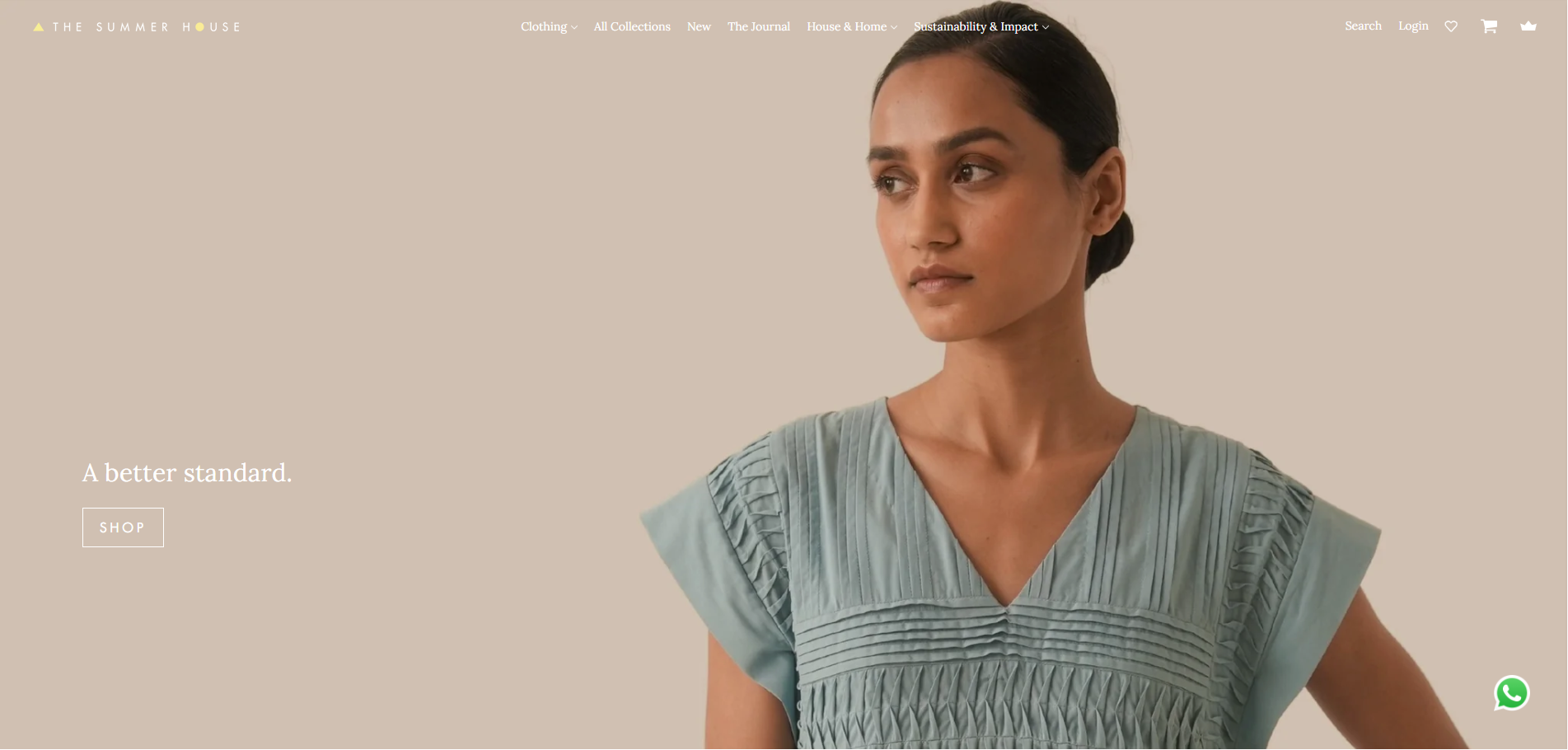
The Summer House sits in a useful middle ground that many founders struggle to reach. It feels thoughtful and low-impact, but it also looks polished enough for work, travel, and elevated everyday wear. That combination is harder to build than it sounds.
The brand works with handwoven and lower-impact fibres, and its fabric notes are clear without becoming preachy. The tailoring is part of the appeal. You can see why customers who want calm, refined wardrobes keep coming back to this kind of label.
What The Summer House teaches about polish
Sustainable fashion often wins praise for values but loses buyers on finish, fit, or repeat wearability. The Summer House understands that polish is part of sustainability too. If a garment integrates easily into real life, it's more likely to be worn often.
That practical side matters in a growing market. The Indian Women's Wear Market was valued at Rs 1,18,490.4 crore in 2023 and is projected to reach nearly Rs 1,66,727.9 crore by 2030 at about 5% CAGR, according to Maximize Market Research's Indian women's wear analysis. For women-owned sustainable fashion brands India, that suggests there's room for labels that offer not just ideals, but dependable wardrobe utility.
Buyers say they want conscious clothing. Many of them also want it to survive a workday, travel well, and not feel precious.
The trade-off is price. Premium staples can feel expensive upfront, especially if you compare them to mass-market basics. But that's exactly where this brand is instructive. It doesn't try to win on cheapness. It wins on refinement and repeat use.
- Best for buyers: Minimal, versatile pieces that can move between meetings, travel, and daily wear.
- Business lesson: Better finishing and fit can be as important as better materials.
- Watch the trade-off: Premium basics need stronger trust signals because the buyer can't rely on trend excitement alone.
- Smart founder takeaway: If your product is “timeless,” the construction has to support that promise.
For a wider consumer angle, Women Listed also has a useful piece on why you should buy from women-owned brands.
5. NorBlack NorWhite
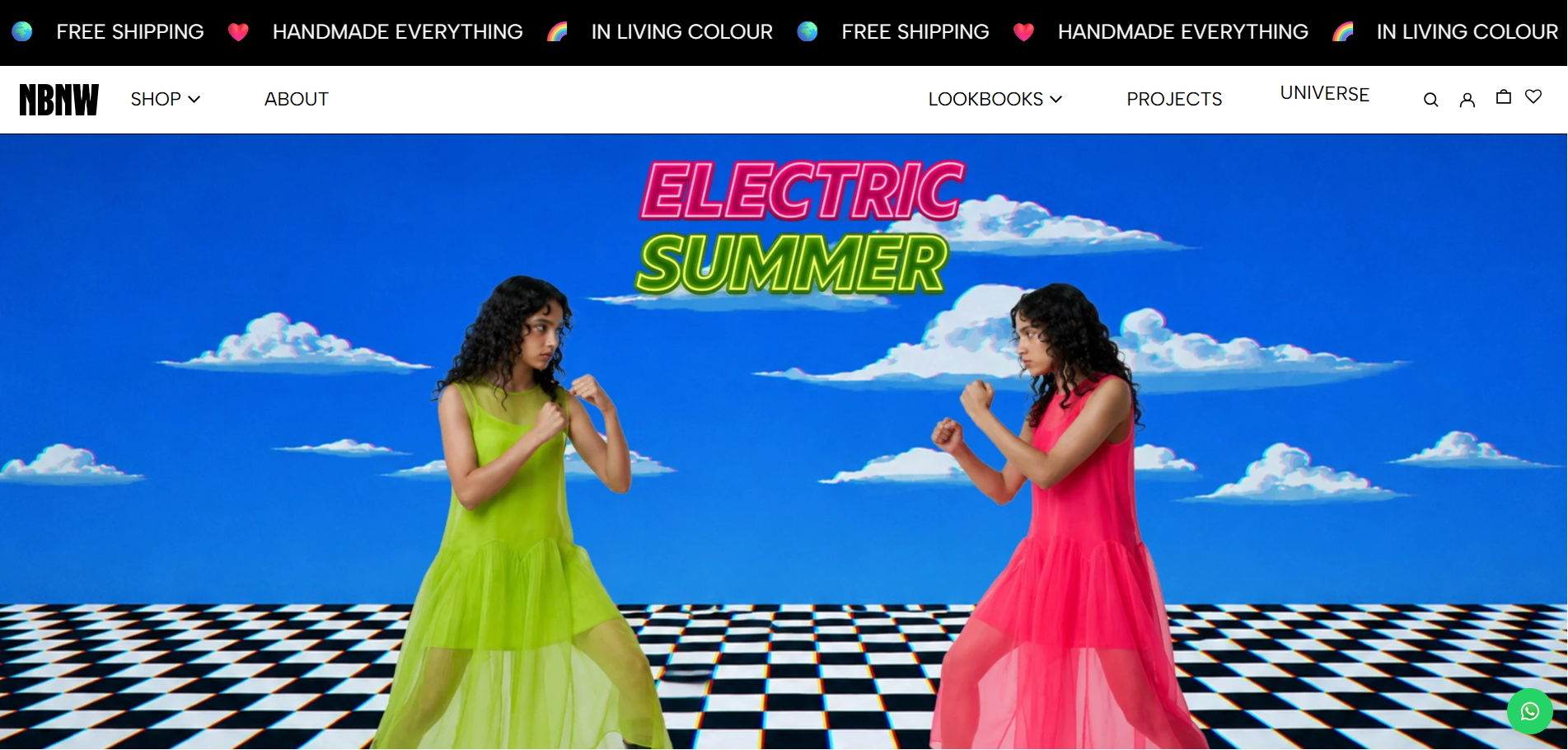
NorBlack NorWhite is the opposite of safe minimalism, and that's exactly why it works. Co-founded by Mriga Kapadiya and Amrit Kumar, the label remixes Indian crafts like bandhani, ikat, khadi, and hand-dye processes into bold, comfort-first silhouettes that feel rooted but not museum-like.
This is one of the clearest examples of a brand understanding its own visual point of view. You don't land on the site and wonder what it stands for. The colours, shapes, and craft references tell you quickly.
What NorBlack NorWhite teaches about a point of view
A strong brand point of view saves you from sounding generic. That's the business lesson here. When many sustainable labels use similar language about artisans, handwork, and conscious choices, design identity becomes a serious differentiator.
The brand also uses made-to-order and custom-fit options on many pieces, which is smart from a waste perspective and helpful for customers who are usually ignored by standard sizing. The trade-off is that this slower, more custom route asks for patience. The buying experience can also feel less straightforward when pricing isn't always immediately visible across every product surface.
There is a bigger market reason this kind of distinct positioning matters. A 2021 Statista Consumer Insights chart reported that 89% of Indians surveyed said they buy sustainable and eco-friendly fashion, according to Statista's chart on sustainable fashion purchasers. If buyers already have sustainability on their radar, a founder's next job is to stand out within that pool, not just announce she is sustainable.
- Best for buyers: Statement pieces with craft-led energy and comfort.
- Business lesson: A recognisable visual identity reduces the need to over-explain your brand every time.
- Watch the trade-off: Bold design narrows the audience, but it usually deepens loyalty among the right buyers.
- Smart founder takeaway: Made-to-order works best when customers feel they're getting something specific, not generic basics with a delay.
6. MATI

The first thing MATI gets right is relief. You land on the brand and understand the offer quickly. MATI, founded by Fatima K. Punjaabi, focuses on handwoven fabrics, easy shapes, and made-to-order clothing that fits Indian weather and everyday life.
That sounds simple, but simplicity is hard work.
What MATI teaches about clarity and size inclusion
A lot of founders, especially in fashion, keep adding messages. Craft. Comfort. Sustainability. Occasionwear. Everyday basics. Customisation. Inclusivity. After a point, the customer cannot tell what the brand wants to be known for. MATI avoids that trap by staying clear on a few things and repeating them well: relaxed silhouettes, breathable fabrics, and broader size access across actual products.
There is a practical business lesson in that. Customers who are open to paying more for slower fashion still want the buying decision to feel easy. They want to know how a garment will sit on the body, whether the fabric will work in heat, and if their size is really available. Clear product language does a lot of selling before any campaign does.
I have a soft spot for brands that understand this because size inclusion is often treated like a values statement when it is really an operations decision. It affects pattern-making, inventory planning, fit testing, returns, and customer trust. MATI shows what happens when that work is visible in the product line instead of being buried in the About page.
The trade-off is narrower aesthetic territory. MATI is building a strong everyday wardrobe proposition, not precisely cut attire or heavily embellished pieces. That choice may limit impulse buyers looking for eventwear, but it strengthens repeat purchase potential. For a mission-driven brand, that kind of focus usually creates a healthier business.
- Best for buyers: Everyday slow-fashion staples in relaxed silhouettes and broader size ranges.
- Business lesson: A clear promise, repeated consistently, makes it easier for the right customer to say yes.
- Watch the trade-off: Comfort-first design can reduce appeal for shoppers who want structure or occasion dressing.
- Smart founder takeaway: Size inclusion earns trust only when customers can see it in product availability, fit communication, and day-to-day shopping experience.
7. Saltpetre

Saltpetre doesn't shout. It sells what it calls calm clothing systems, and that phrase is more useful than it may sound at first glance. The brand focuses on modular, mix-and-match pieces in organic and natural fabrics, with small-batch production and practical care.
That practicality is the point. A lot of fashion brands talk about sustainability as a moral frame. Saltpetre translates it into use. Rewearable pieces. Easy-care garments. Packaging designed for reuse. Clothing that doesn't demand dry cleaning to survive.
What Saltpetre teaches about practical sustainability
This is a good lesson for founders in any category. Sustainability becomes easier to buy when it also makes daily life simpler.
The minimalist aesthetic won't work for everyone. If you love prints, embellishment, or festive dressing, the brand will feel restrained. But if you want wardrobe systems that reduce decision fatigue, it does that job well.
There's another useful angle here for women entrepreneurs trying to get found online. Existing coverage of women-owned sustainable fashion brands India often blurs the line between women-owned, women-fronted, and women-designed brands, as noted in Upcycleluxe's discussion of sustainable women's fashion brands in India. That confusion is exactly why visibility platforms matter.
If you run a fashion or lifestyle venture, getting listed alongside other women-led businesses on Women Listed makes it easier for buyers and collaborators to understand who is behind the business.
- Best for buyers: Minimal wardrobes, work-travel crossover dressing, and low-maintenance clothing.
- Business lesson: Practical convenience is one of the most underrated ways to sell a values-led product.
- Watch the trade-off: A very restrained aesthetic can limit impulse buying, even if it improves long-term wear.
- Smart founder takeaway: Make your ownership, product philosophy, and buying logic easy to verify.
7-Brand Comparison: Women-Owned Sustainable Fashion in India
| Brand | Implementation complexity 🔄 | Resource requirements ⚡ | Expected outcomes ⭐📊 | Ideal use cases 💡 | Key advantages ⭐ |
|---|---|---|---|---|---|
| Doodlage | Moderate, upcycling logistics, take‑back and zero‑waste cutting | Medium, sourcing textile waste, small‑batch production | Circular collections, visible‑mend aesthetic, limited restocks | Casual/upcycled wardrobe; bespoke/custom sizes | Strong material transparency; true upcycling; custom sizing |
| Upasana | High, handspun/dye processes and long‑term artisan coordination | High, skilled artisans, natural dyes, time‑intensive craft | Deep social impact, craft revival, durable slow pieces | Craft‑led purchases, mindful wardrobe investments | Traceable artisan links; founder‑led social enterprise |
| Ka‑Sha (Heart To Haat) | High, artisan production plus in‑house upcycling services | High, craft skills, waste‑processing infrastructure, B2B capability | Integrated circular programs; distinctive design language | Designer wear and brands seeking upcycling services | In‑house circular systems; strong craft aesthetic |
| The Summer House | Moderate, multi‑cluster partnerships and small‑batch tailoring | Medium‑High, craft clusters, quality control, premium fabrics | Polished, work‑friendly staples with reduced trend churn | Elevated everyday, work and travel wardrobes | Consistent finish; fabric transparency; pan‑India partnerships |
| NorBlack NorWhite | Moderate, made‑to‑order plus craft techniques | Medium, artisan collaborations, custom‑fit production | Statement craft pieces; lower inventory via MTO | Bold street silhouettes; size‑inclusive statement wear | Strong craft storytelling; size‑inclusive/custom fit options |
| MATI | Low‑Moderate, handwoven made‑to‑order with simple silhouettes | Medium, handweaving capacity, inclusive sizing production | Inclusive slow wardrobe staples; minimized overstock | Everyday handwoven comfort; extended sizing needs | Size range up to 7XL; consistent slow‑fashion value |
| Saltpetre | Low, modular capsule design, simple care garments | Low‑Medium, organic fabrics, reusable/biodegradable packaging | Affordable slow basics, low maintenance and travel‑ready | Minimal capsule wardrobes; practical work/travel basics | Accessible pricing; earth‑friendly packaging; easy care |
Your Turn Discover and Support Women-Led Brands
The best thing about following women-owned sustainable fashion brands India is that you're not just shopping. You're learning how good businesses are built. One brand teaches you how to explain materials properly. Another shows how to turn craft into a lasting point of view. Another proves that polish and practicality matter just as much as ideals.
That's why this list isn't only for buyers. It's for founders too. If you run a D2C label, a handmade business, or even a service brand, there's a lot to study here. Clear product pages. A memorable design language. Honest trade-offs. Strong founder-world fit. Those things travel well across categories.
I'd also keep one commercial reality in mind. Purpose matters, but it doesn't carry a weak business forever. The brands that endure usually do three things well. They know exactly what they stand for, they make the buying decision easier, and they don't pretend every customer is for them.
If you want to explore more stories of women building practical, values-led businesses, Women Listed's guides on business growth for women entrepreneurs and business management tools are useful next reads. And if you're building your own brand visibility, it's worth seeing how other founders present themselves on the platform.
This week, take one small step. Buy one better piece instead of three forgettable ones. Audit your own product page like a customer would. Or, if you run a sustainable venture, list your business on Women Listed so people can find you when they're looking to buy with more intention.
Women Listed helps women entrepreneurs get discovered, build credibility, and grow through practical visibility tools. Create your profile on Women Listed to showcase your business, connect with buyers and collaborators, and join a network built specifically for women-led businesses across India.
You can also borrow ideas from outside fashion, especially around partnerships and niche outreach, like this piece on reaching maker educators.
Women Listed is a practical option if you want more visibility as a women-led business in India. Explore Women Listed to discover founders, showcase your venture, and connect with a network built for women entrepreneurs.