You leave a South Delhi meetup with 18 new contacts, a tote bag full of brochures, and no clear next step. Two weeks later, nothing has moved. No client call. No partnership conversation. No follow-up worth chasing. I've seen that pattern too often, especially with women founders who are already stretched thin and cannot afford to spend half a day at an event that gives them visibility but no business.
Delhi offers plenty of rooms to show up in. The harder question is which rooms are useful for your stage, sector, and goal. A chamber event can help if you need policy access or industry credibility. A founder network can work better if you want referrals, collaborators, or investor introductions. A trade fair can be worth the effort if your product needs live demos and buyer conversations. The point is to choose with intent.
For women entrepreneurs, that choice matters even more. Time away from operations has a cost. So does showing up unprepared in spaces that reward confidence, context, and warm introductions. The women who get results from business events in Delhi usually do three things well. They pick the right format, go in with one specific outcome, and follow up fast.
That is the lens for this guide. It focuses on business events in Delhi that can lead to clients, channel partners, media visibility, industry access, and stronger founder networks. It also looks at how platforms like Women Listed can help you get into the right conversations sooner, with community context and better-fit introductions. If you want to build your event strategy around relationships that convert, start with these business networking groups for women founders.
Use this as a working playbook, not a social calendar.
Table of Contents
- 1. Events | Women Listed
- 2. TiE Delhi–NCR The Indus Entrepreneurs
- 3. FICCI Federation of Indian Chambers of Commerce and Industry Delhi HQ
- 4. FICCI FLO Delhi Chapter FICCI Ladies Organisation
- 5. CII Northern Region Delhi Confederation of Indian Industry
- 6. PHD Chamber of Commerce and Industry PHDCCI New Delhi
- 7. ITPO at Pragati Maidan India Trade Promotion Organisation
- 7-Host Comparison: Delhi Business Events & Women Listings
- Turn Your Next Event into Your Next Opportunity
1. Events | Women Listed
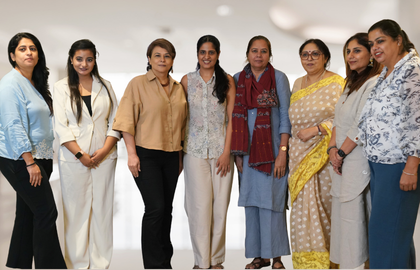
If you want a shorter path from visibility to actual business, start with Events | Women Listed. This is the one I'd point a Delhi founder to first because it's built around women-led businesses, not just event discovery. You're not scrolling a generic city calendar and guessing what might fit. You're looking at a Delhi NCR-focused mix of pitch meets, Business Lounges, conferences, awards, bazaars, and premium founder-facing experiences tied to a wider growth ecosystem.
That ecosystem matters. A listing alone rarely changes anything. Women Listed connects events with founder profiles, storefront visibility, expert sessions, recognition pathways, and WhatsApp-based support. So if you attend one event well, it can keep working for you after the room clears.
Why it works for women founders
The strongest advantage is curation. Delhi's event scene is broad and fragmented, and most public pages are heavy on listings but weak on helping you decide which format is worth your time. Women Listed is useful because it filters for outcomes that matter to women entrepreneurship. Buyers, collaborators, press visibility, community credibility, and referral potential.
Another plus is the archive effect. Past events help you judge the tone, the audience, and whether you'll fit the room before you spend on a ticket, stall, or membership. That's especially useful if you're balancing school pickups, client work, and a limited marketing budget.
Practical rule: Don't attend an event unless you can answer one question clearly. “Am I going there to sell, to learn, or to build a relationship that may convert later?”
Best for
- Early-stage founders: You can start small, test one event, and build confidence without pretending you're ready for every large-format business gathering in Delhi.
- Service businesses: Coaches, consultants, designers, marketers, and wellness founders often do well in curated conversation-led spaces where trust matters.
- Consumer brands: Bazaars, showcases, and premium community events can help you test messaging, packaging, and product-market fit in person.
There are trade-offs. It's most useful if Delhi NCR is relevant to your business. Some of the stronger visibility boosts sit behind paid options such as tickets, passes, or membership, so you need to match spend to your goal. But if your aim is business visibility with support around it, not just attendance, it's one of the more practical starting points in this city.
2. TiE Delhi–NCR The Indus Entrepreneurs

TiE Delhi–NCR is where I'd send a founder who's building for scale and wants sharper startup conversations. If your business sits in tech, SaaS, fintech, consumer internet, deeptech, or venture-backed territory, TiE usually gives you more signal than a broad networking mixer.
Its real strength is consistency. TiE doesn't depend on one annual splashy event. It runs through the year with founder meets, mentoring, workshops, pitch-focused sessions, and TiEcon Delhi. That steady cadence helps if you know business networking works best through repeated visibility, not one lucky conversation.
Where TiE works best
TiE is strongest when your ask is clear. Fundraising, partnerships, mentor access, pilot conversations, or hiring introductions. If you walk in saying, “I just want to network,” you'll probably leave with less than someone who says, “I'm looking for two retail-tech pilot partners and one investor conversation.”
For women founders in startup circles, TiE can also complement more focused business networking groups for women and founders. Use TiE for access to the startup ecosystem. Use women-first communities for warmer, more sustained relationship-building.
Go to TiE when your business needs momentum, not motivation.
The downside is fit. If you run a homegrown food label, boutique service brand, local studio, or brick-and-mortar MSME with no interest in startup language, TiE can feel overly investor-coded. Some premium rooms are selective, and if you're not prepared with a tight intro, a sharp deck, and a specific ask, you can easily feel invisible.
Still, for the right founder, TiE is one of the most useful business events in Delhi ecosystems to plug into.
3. FICCI Federation of Indian Chambers of Commerce and Industry Delhi HQ
You're at a polished Delhi event venue, coffee in hand, and the person beside you is not another early-stage founder. She's a senior executive from a large company, a trade representative, or someone involved in policy and industry bodies. That is the FICCI room.
FICCI works best for founders who need business credibility in the room from day one. I recommend it to women entrepreneurs who are pitching B2B services, exploring institutional partnerships, entering export conversations, or trying to be seen by larger corporate and government-linked ecosystems. These events can open better doors than casual founder mixers, but only if you arrive prepared for a more formal style of interaction.
When to choose FICCI
Choose FICCI if your next step depends on trust, positioning, and decision-maker access. The value here is not volume. It is relevance. One strong conversation with the right chamber member, buyer, or sector representative can move your business faster than a stack of vague introductions.
This is also a useful room for women founders who are ready to be taken seriously beyond “women entrepreneur” panels. FICCI can put you in broader industry conversations, which matters if you want contracts, channel partners, policy visibility, or cross-border opportunities. If you are still building confidence before entering formal rooms like this, these benefits of women-only networking events explain why many founders build their base there first, then step into mixed industry platforms with a stronger presence.
A practical caution. FICCI rewards clarity and polish. If your introduction is fuzzy, your company profile is outdated, or your ask is too broad, the room can feel cold very quickly.
- Best fit: Growth-stage firms, exporters, consulting businesses, sustainability brands, healthcare companies, and B2B service providers.
- Less ideal: Founders looking for informal community, quick validation, or low-pressure networking.
- Preparation needed: A sharp introduction, a credible company one-pager, and one specific outcome for the event.
I have found that FICCI works well when you treat the event like a business meeting, not a social outing. Research the session theme. Identify the kind of people you want to meet before you walk in. Follow up within 24 hours with a short, useful note, not a generic “great connecting.”
If you are part of a founder community such as Women Listed, use that support before and after the event. Ask for warm introductions if any member already knows the ecosystem, and sense-check your pitch before attending. In formal Delhi business circles, that extra preparation often makes the difference between being present and being remembered.
4. FICCI FLO Delhi Chapter FICCI Ladies Organisation
FICCI FLO Delhi Chapter feels more relatable for many women founders because the peer context is built in. You're often in a room with women balancing growth, family, teams, identity shifts, and the very real challenge of being taken seriously in male-dominated business settings. That shared context changes the quality of conversation.
FLO works especially well for founders in D2C, services, consulting, professional practices, design, wellness, education, and lifestyle-led businesses. It's also useful if you're rebuilding your business after a break, moving from side hustle to full-time, or trying to strengthen confidence before entering larger mixed-gender industry rooms.
What makes FLO different
The value isn't only in the event itself. It's in the peer network around it. Workshops, leadership conversations, chapter activities, mentoring-style interactions, and cross-city exposure can create a softer but stronger entry point into business visibility.
For women who still wonder whether women-only rooms are “less serious,” it helps to reframe the question. They're often more efficient because trust builds faster. This piece on the benefits of women-only networking events captures that well.
Some rooms give you access. Women-focused rooms often give you access plus context. That combination is powerful.
The trade-off is that many opportunities are member-first. If you're not part of the network, access may be narrower depending on the event. Event frequency can also vary across the year, so it helps to watch the chapter calendar instead of assuming something relevant will always be available next week.
For women-led businesses India over, FLO remains one of the more natural bridges between confidence-building and credible business networking.
5. CII Northern Region Delhi Confederation of Indian Industry

You walk into a CII event in Delhi and the room feels different straight away. Fewer casual chats. More founders, operators, industry representatives, and decision-makers who came with a reason to be there. If your business is at the stage where partnerships, procurement access, policy context, or institutional credibility matter, CII is one of the more useful rooms in the city.
CII works best for businesses with operational depth. I would put manufacturers, B2B service firms, industrial suppliers, tech companies selling into enterprises, MSMEs looking for stronger supply-chain links, and founders handling regulation-heavy categories near the top of that list. These events usually reward preparation more than personality.
That matters for women founders in particular. In Delhi, plenty of events are good for visibility. Fewer are good for being taken seriously in rooms where budgets, sourcing, expansion, and industry relationships are discussed. CII can help close that gap if you show up with a clear commercial goal and a crisp way to explain your business.
Who gets the most value
CII is a strong fit if your business depends on vendor development, institutional buyers, channel partners, compliance-led conversations, or North India industry networks. It is less useful for founders who are still testing an idea, building a personal brand, or looking for light-touch social networking.
The format is also more aligned with outcome-driven attendance. As noted earlier, in-person B2B formats continue to matter because they create better conditions for serious commercial conversations. That is one reason exhibitions and industry-led forums still work well for founders trying to build trust faster. If that is your goal, this guide to business benefits exhibitions can bring to your company is worth reading before you register.
A practical approach helps:
- Go for: Supplier discovery, industry introductions, market intelligence, policy-adjacent context, and credibility with larger players.
- Skip or deprioritise if you need: Fast social reach, casual founder energy, or consumer-facing exposure.
- Prepare before you attend: One sharp business question, one ideal contact type, and one sentence on what makes your company easy to work with.
I also tell women founders not to arrive hoping to “network.” Arrive ready to discuss a business problem, a use case, or a partnership angle. That shift changes the quality of conversations.
If you are attending through a trusted founder circle such as Women Listed, use that support well. Priority access, warm introductions, and post-event community follow-up can make formal rooms easier to handle, especially if CII feels intimidating at first.
CII is not the easiest room. It is often one of the more productive ones.
6. PHD Chamber of Commerce and Industry PHDCCI New Delhi
PHDCCI is one of those platforms that rewards founders who do their homework. It runs a busy Delhi-centric calendar with sector-led discussions, business forums, policy roundtables, and international-facing conversations. If your business sits in energy, trade, manufacturing, technology, professional services, or anything regulation-adjacent, this chamber can be very useful.
What I like about PHDCCI is that the sector focus is usually easier to read. You can often tell fairly quickly whether an event is relevant or whether it's going to be too broad, too policy-heavy, or too far from your actual sales path.
How to approach PHDCCI events
Treat PHDCCI as a targeted room, not a browsing room. You'll get more value if you choose only the events that clearly match your customer type, category, or expansion plan.
Delhi's event ecosystem already supports multiple live discovery channels, which is a strong practical signal for organisers and attendees alike. Active business listings appear across 10Times' New Delhi business events pages, conference calendars, and hybrid event formats. That means founders don't need more event volume. They need better selection. PHDCCI is useful when you want substance and sector relevance over social buzz.
If the event title sounds impressive but the attendee profile isn't right for your business, skip it.
The main drawback is density. Some sessions are packed with policy language, formal speeches, and institutional framing that can feel heavy for very early-stage founders. If you're still refining your offer or mostly trying to build Instagram visibility, this may not be your first stop. But if you want enterprise-facing credibility, it can open the right kind of doors.
7. ITPO at Pragati Maidan India Trade Promotion Organisation

It is 11:30 a.m. at Pragati Maidan. Your feet already hurt, two buyers have asked for distributor pricing, one retailer wants a faster turnaround than you can currently promise, and ten casual visitors have praised your packaging without placing an order. That is ITPO in real life. High visibility, fast feedback, and very little room to hide behind a polished Instagram page.
ITPO at Pragati Maidan suits women founders who need product-market proof in the physical world. If you sell packaged food, fashion, beauty, gifting, handicrafts, home products, or any category where touch, trial, or live demo influences buying, these trade fairs can produce sharper commercial signals than a month of online interest.
The upside is obvious. Buyers can inspect quality, compare pricing, ask about margins, and judge whether you are ready for scale. The downside is just as real. Large-format exhibitions attract everyone from serious stockists to casual walkers, so weak booth planning gets expensive quickly.
I usually tell founders to treat ITPO as a sales floor with filters.
Public discussion around business events in Delhi often gives too much attention to networking mixers and startup panels, while founder-friendly trade exhibitions get less practical coverage. That gap matters because some businesses get better results from buyer-heavy expo halls than from founder rooms. If you want a broader view of exhibition-led opportunities across NCR, the India Expo Centre & Mart event circuit is another useful reference point.
For women entrepreneurs, the smartest approach is outcome-first. Go only if you are clear on what success looks like. Orders. Distributor leads. Retail placement. Market feedback. Media discovery. Those are very different goals, and your stall, pitch, samples, and team setup should match the one you are chasing.
If you are attending through a founder community such as Women Listed, use that support well. Priority access, peer recommendations, and a trusted women-founder circle can make a big difference before a large exhibition. You do not need more introductions. You need the right ones, and you need a follow-up system that starts before day one.
How to get results from ITPO
- Before you book a stall: Check the last edition of the event if possible. Look at exhibitor mix, visitor type, pricing level, and whether businesses like yours appeared to get trade interest or only footfall.
- Before the event: Carry rate cards, MOQ details, wholesale terms, QR-based catalogues, and a simple order capture sheet. If a buyer shows interest, your team should be able to respond in two minutes, not twenty.
- During the event: Qualify fast. Ask what they buy, in what volume, for which city, and on what timeline. A warm conversation is not the same as a commercial lead.
- For women founders attending solo or with a small team: Keep one person on product storytelling and one on lead capture if possible. If you are alone, do not try to explain everything to everyone. Prioritise the buyer standing in front of you.
- After the event: Send follow-ups within 48 hours. Pragati Maidan creates lead volume, but actual business usually comes from disciplined follow-through.
One more trade-off is worth being honest about. A beautiful stall can attract attention, but operations close deals. If your backend cannot support fulfilment, retailer margins, or repeat supply, the event will expose that immediately. That is not a reason to avoid ITPO. It is a reason to arrive prepared.
ITPO works best for founders who are ready to sell, sample, quote, and follow up at speed. Treated that way, it can produce clients, channel partners, visibility, and blunt market feedback in the same week.
7-Host Comparison: Delhi Business Events & Women Listings
| Item | Implementation complexity 🔄 | Resource requirements ⚡ | Expected outcomes 📊⭐ | Ideal use cases 💡 | Key advantages ⭐ |
|---|---|---|---|---|---|
| Events | Women Listed | Low 🔄, browse, RSVP; tiered paid options | Low–Medium ⚡, time + optional membership fees | Targeted visibility, partnerships, sales; 📊⭐ | Women-led D2C/MSMEs in Delhi seeking markets, pitches |
| TiE Delhi–NCR | Medium 🔄, applications for pitching, event prep | Medium ⚡, membership/event fees; mentoring time | Fundraising, mentorship, investor intros; 📊⭐⭐ | Tech startups and founders seeking VC and mentors | Strong investor access; flagship TiEcon and sector tracks |
| FICCI (Delhi HQ) | Medium–High 🔄, formal registration and protocols | Medium–High ⚡, fees, travel, B2B prep | Policy exposure, B2B deals, institutional credibility; 📊⭐ | Mid‑market and growth firms targeting government/industry | Policy‑level visibility and broad sector reach |
| FICCI FLO (Delhi) | Low–Medium 🔄, chapter events; membership‑led access | Low–Medium ⚡, membership or event fees; networking time | Peer support, leadership visibility, trade/mentoring; 📊⭐ | Women entrepreneurs in D2C, services, professional practices | Women‑focused peer network and curated showcases |
| CII – Northern Region/Delhi | Medium 🔄, registration, vendor match processes | Medium ⚡, participation costs; formal processes | Industry insights, supply‑chain matches, policy briefings; 📊⭐ | Manufacturers, tech firms, MSMEs targeting North India | Balanced mix of knowledge sessions and matchmaking |
| PHDCCI – New Delhi | Medium 🔄, event selection and sector prep | Medium ⚡, fees, sector‑specific materials | Regulator exposure and enterprise buyer leads; 📊⭐ | Firms seeking sector‑focused B2B outreach and trade forums | Consistent cadence and clear sector focus |
| ITPO (Pragati Maidan) | High 🔄, booth logistics and advance planning | High ⚡, booth costs, inventory, staffing, travel | High visibility, bulk leads, distributor contacts; 📊⭐⭐ | D2C/F&B/MSMEs targeting large exhibitions and buyers | Massive footfall and concentrated buyer/retailer access |
Turn Your Next Event into Your Next Opportunity
You reach Pragati Maidan at 10 a.m., collect three brochures, exchange six business cards, sit through two panels, and return home wondering what moved. I have seen this happen to smart founders again and again in Delhi. The city offers plenty of access, but access without a plan usually turns into noise.
Treat each event like a sales channel with a different job. A TiE session can open founder-to-founder referrals. A FICCI or CII forum can put you in front of institutional buyers. A FLO gathering often works better for trust-led introductions, early collaborations, and visibility among women business owners who remember your work after the event. Pick one outcome before you register, then build your conversations around that outcome.
One event. One target.
If you want clients, prepare two proof points and one clear offer. If you want channel partners, carry margin details, sample timelines, and a short explanation of where your product fits on their shelf or in their portfolio. If you want speaking visibility, lead with your expertise, not your sales pitch. Delhi rewards clarity. People here decide quickly whether to continue the conversation.
Follow-up is where the event starts paying back. Send a message within 24 hours while they still remember your face and the context. I usually suggest WhatsApp when the interaction was warm and mutual, LinkedIn when you need a professional breadcrumb, and email when the next step involves decks, pricing, compliance, or a formal introduction. Do not send the same note to everyone. Refer to the exact conversation, the pain point they mentioned, or the person who introduced you.
A few habits save time and improve conversion:
- Keep a 20-second introduction on your phone and practice it until it sounds natural
- Carry a one-page service sheet, rate card, or product catalogue link
- Note where you met each person before the day ends
- Ask for one specific next step, such as a buyer call, sample review, store meeting, or podcast introduction
- Block 30 minutes the next morning only for follow-up
Hosted events need the same level of intention. If you are organising a roundtable, salon, or small founder dinner, room setup affects who speaks, who dominates, and who leaves feeling included. This guide to designing seating for galas is useful because table placement changes the quality of conversation, especially when you want guests to meet potential partners instead of clustering with people they already know.
Women founders often get better results from continuity than from sheer volume. Showing up once can bring a lead. Showing up consistently, in the right rooms, builds recognition, referrals, and trust. That is especially true in Delhi, where people often do business after the second or third meaningful interaction, not the first.
That is why I look at Women Listed as a support system, not just an event discovery platform. If you want priority access, community context, and a warmer entry into Delhi NCR business events, the Women Listed Delhi Event Pass can help you show up with more direction and less guesswork.
Your next event should match the stage and goal of your business. That is what turns attendance into opportunity.
If you want a more supportive way to grow your visibility, start with Women Listed. It's built for women-led businesses in India that want more than a directory listing. You can discover Delhi NCR events, build a searchable business presence, explore community-led opportunities, and find practical pathways to clients, collaborators, and credibility without figuring it all out alone.