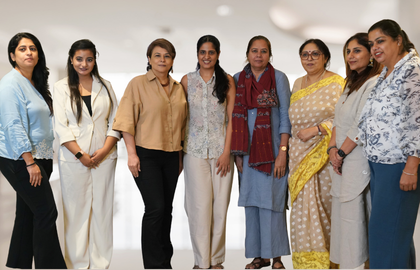
A founder in Bengaluru once told me her first big break didn't come from a pitch event. It came from one WhatsApp introduction to the right buyer. That's Bangalore in real life. Fast, networked, and full of women building serious businesses without waiting for permission.
Bengaluru has become a magnet for builders, and the city's scale is hard to ignore. It hosts over 2,467 startups, representing 23% of all Indian startups, and in H1 2025 it attracted $3.9 billion across 143 deals, which accounted for 40% of India's total startup funding, according to the IBEF overview of Bengaluru's startup ecosystem. For women-led businesses, that matters because visibility, capital, and talent tend to cluster in the same places.
This list isn't about celebrity alone. It's about strategy. These entrepreneurs in Bangalore show different ways to win: solve a painful customer problem, educate the market, build trust, create a category, stay close to operations, and use platforms well. If you're building in beauty, food, fashion, wellness, education, or services, there's something practical here for you. If you're also looking at the wider funding and ecosystem side, these featured Indian angel investor lists are a useful next read.
Table of Contents
- 1. Kiran Majumdar-Shaw - The Biotech Queen of India
- 2. Richa Kar - The Woman Who Revolutionised Lingerie in India
- 3. Divya Gokulnath - The Educator at the Helm of an EdTech Giant
- 4. Vani Kola - The Visionary Venture Capitalist
- 5. Rashmi Daga - The Master of Cloud Kitchens
- 6. Richa Singh - Making Mental Health Accessible for All
- 7. Falguni Nayar - The D2C Icon Inspiring a Nation
- 8. Case Study The Myntra Ecosystem as a Launchpad
- 8 Bangalore Entrepreneurs: Sector & Impact
- Your Turn: How to Build Your Business Story
1. Kiran Majumdar-Shaw - The Biotech Queen of India
No list of entrepreneurs in Bangalore feels complete without Kiran Majumdar-Shaw. She founded Biocon in 1978 with a modest ₹10,000 investment, and that origin story still matters because it shows what disciplined conviction looks like when the market doesn't immediately believe in you, as documented in the Biocon case study on women entrepreneurship and scaling.
What makes her journey useful for small business owners isn't just the scale Biocon eventually reached. It's the choice to enter a technical sector that many founders would avoid because it looked too difficult, too specialised, or too male-dominated.
Start where others hesitate
Biocon's early years were constrained by low scalability. The same case study notes production was limited to 5 kg per month, and rudimentary processes led to major yield loss before technical upgrades changed the business. Later, technology improvements lifted yield efficiency from 30% to 95% and reduced cost of goods by 60%, showing how process discipline can become a growth engine, not just a backend fix.
That lesson applies far beyond biotech. A skincare founder can improve formulation consistency. A home food brand can standardise prep and packaging. A service business can tighten onboarding, proposals, and follow-up.
Practical rule: Don't label a category “too technical” before you've learned its operating basics. Technical confidence often becomes your moat.
A few takeaways worth borrowing:
- Lead with expertise: If you know your craft better than competitors, say it clearly in your website, Instagram bio, and sales conversations.
- Invest in systems early: Spreadsheets, SOPs, compliance, and quality checks may feel boring, but they protect your brand.
- Use results as credibility: When people underestimate you, polished execution answers faster than argument.
Kiran Majumdar-Shaw's path is also a reminder that women founders don't have to stay in “comfortable” categories. If your strength is science, manufacturing, health, or deep product development, build there.
2. Richa Kar - The Woman Who Revolutionised Lingerie in India
Richa Kar built Zivame around a problem many Indian women understood immediately. Buying lingerie often felt awkward, rushed, and misinformed. She saw the discomfort, then built a brand that made privacy and education part of the shopping experience.
That's a strong playbook for women-led businesses India keeps rewarding. If a category carries hesitation, shame, confusion, or social awkwardness, the winning founder usually removes friction first and sells second.

She sold confidence, not just products
Zivame's real innovation wasn't only product range. It was the decision to educate customers on fit, comfort, and style while creating a safer buying environment. That's why the brand stood out. It didn't treat questions as a barrier. It treated them as the beginning of trust.
This is especially relevant if you sell fashion, beauty, wellness, coaching, or intimate services. Customers often need language before they need checkout.
If buyers keep asking the same basic questions, your content strategy is incomplete.
Use that in practical ways:
- Turn repeated doubts into content: Create Instagram reels, WhatsApp catalog notes, short guides, and pinned FAQs.
- Make buying private and easy: Offer direct message ordering, size guidance, discovery calls, or quiet consultation options when the category is sensitive.
- Stand for something specific: A brand becomes memorable when it helps the customer feel informed, not judged.
Richa Kar's story also highlights a trade-off. Educational selling takes more effort than pushing offers. It's slower upfront. But for women entrepreneurship, especially in categories where trust matters, it builds stronger retention and more word of mouth.
3. Divya Gokulnath - The Educator at the Helm of an EdTech Giant
A lot of women founders in Bangalore will recognise Divya Gokulnath's path. She built from the classroom outward. That matters because many strong businesses do not begin with visibility. They begin with clear customer understanding, repeated delivery, and one founder who takes full responsibility for a core part of the company.
Her story offers a practical lesson for co-founders. Growth gets messy when everyone wants to be involved in everything. It gets faster when each person is known for one area the business can rely on.
Master one function
Divya started as a teacher, and that foundation shaped how the company presented learning to students and parents. Founders who stay close to the actual user often make better product decisions because they hear the objections, the ambition, and the hesitation first-hand.
That is useful far beyond edtech. In a service business, one founder may lead delivery while another handles sales. In a product brand, one may own customer education while another runs operations. In a small family business, one person may take charge of vendor relationships and cash flow while another builds trust in the market.
The trade-off is real. Clear ownership creates speed, but it also demands discipline. If you own a function, you need to build judgment in that area and become the person others can depend on.
A practical way to apply this:
- Choose your strongest business function: Teaching, selling, hiring, operations, finance, or product.
- Become visible for that strength: Share useful insights through Instagram, LinkedIn, workshops, founder circles, or your business profile on Women Listed.
- Turn expertise into repeatable assets: Create guides, onboarding steps, FAQs, and simple systems that let your knowledge scale.
- Keep your message consistent: Customers should understand your promise quickly, even as your offers grow.
For women building small businesses, this is often the bridge between being good at the work and being known for it. If you need a practical framework for that shift, this guide to business growth strategies for women entrepreneurs is a useful next step.

Bengaluru also gives founders a practical advantage. The city has a strong base of educators, operators, marketers, and tech teams, which makes it easier to turn knowledge into a product, a platform, or a scalable service. That does not guarantee success. It does mean women entrepreneurs can build faster when they pair subject expertise with the right collaborators and a clear public identity.
4. Vani Kola - The Visionary Venture Capitalist
A founder in Bengaluru can spend weeks refining a pitch and still leave a room without interest. Another founder can describe the customer, the problem, and the business model in five clear sentences and get a second meeting. That gap is why Vani Kola belongs on this list.
Her influence goes beyond one venture. As an investor and operator, she has helped shape how founders present ambition in a way the market can trust. For women entrepreneurs in Bangalore, that makes her story especially useful. The lesson is not only about raising capital. It is about building a business that is easy to understand, easy to back, and easy to talk about.
Clarity gets attention before scale does
Early-stage founders often assume investors are hunting for polish. In practice, they look for conviction backed by evidence. A sharp problem statement, a specific customer, and proof that people are already responding usually matter more than a beautiful deck.
That principle helps even if outside funding is not part of the plan. The same clarity improves sales calls, partnership meetings, community introductions, and your Women Listed profile. If someone cannot repeat what your business does after one conversation, visibility gets harder than it needs to be.
One line matters here.
A business that is hard to explain is hard to grow through referrals.
Vani Kola's track record points to a pattern many small business owners can use. Strong founders do not just say the market is big. They show why their offer matters now, who needs it first, and what signals prove the demand is real.
Here are the habits worth borrowing:
- Lead with evidence: Bring repeat purchases, waitlist interest, enquiries, testimonials, or strong retention signals into important conversations.
- Make founder-market fit obvious: Explain why your background, skills, or lived experience gives you an edge in solving this problem.
- Build for repeatability: A business gets more investable when delivery, hiring, and decision-making do not depend on founder improvisation every day.
- Keep your market view wide: Start local if needed, but shape your offer so it can travel beyond one neighbourhood or one customer circle.
This matters for visibility too. Investors back stories they can quickly retell. Customers do the same. Community builders do the same. If you want practical help turning your business into something more referable and scalable, this practical resource on business growth for women entrepreneurs is worth reading.
For Indian women building from Bengaluru, the vital takeaway from Vani Kola is disciplined ambition. Stay grounded in the numbers, stay close to the customer, and present the business with enough precision that other people can see the scale before you get there.
5. Rashmi Daga - The Master of Cloud Kitchens
Rashmi Daga built FreshMenu in a category where customers notice everything. Taste, packaging, speed, consistency, freshness, and delivery experience all show up in the final review. Food punishes sloppy operations fast.
That's why her journey is useful even if you don't run a cloud kitchen. She built in a business where backend decisions directly shape customer perception. For many women-led businesses India overfocuses on marketing and underinvests in operations. That usually catches up.
Operations are part of the brand
FreshMenu's model showed that convenience alone isn't enough. A food business still needs product freshness, menu excitement, and repeatable quality. The same principle holds if you sell baked goods, skincare, jewellery, workshops, or custom gifting. The customer doesn't separate “brand” from “delivery experience.” She experiences both as one.
Think about the common breakdowns:
- late dispatch
- confusing packaging
- inconsistent product photos
- weak follow-up after purchase
- poor complaint handling
Those aren't small issues. They erode trust.
Here's what works better:
- Treat repeatability as strategy: Document recipes, packing steps, approval flows, and delivery timelines.
- Refresh your offer regularly: New menu drops, limited editions, festive edits, and seasonal bundles bring customers back.
- Own quality control: Even if you outsource logistics or production, keep clear checkpoints under your control.
A lot of networking for women founders in Bengaluru leads to practical collaboration here. One founder helps with packaging. Another with design. Another with sourcing. In Bangalore, the network advantage is real, but only useful if your operations are strong enough to convert attention into repeat business.
6. Richa Singh - Making Mental Health Accessible for All
Richa Singh built YourDOST in a category where a customer often arrives before she is ready to be seen. That changes everything about how a business should be built. In mental health and emotional support, growth follows trust, not the other way around.
That lesson matters far beyond therapy platforms. Women founders in coaching, wellness, education, and community-led businesses often serve customers who feel vulnerable, uncertain, or judged. In those businesses, trust is not a nice brand layer added later. It sits inside the product, the onboarding, the language, and the follow-up.

Trust has to be built into the product
In a Bengaluru study of women entrepreneurs, societal expectations and gender bias were cited by 85% of respondents as major barriers to starting and scaling a business, according to the Journal of International Women's Studies paper on women entrepreneurs in Bengaluru. That context helps explain why privacy, clarity, and emotional safety matter so much to women customers and founders.
YourDOST also offers a practical scaling lesson. Sensitive services can grow faster and more credibly through institutional partnerships with colleges, employers, and communities, instead of relying only on one-to-one retail acquisition. That route usually brings trade-offs too. B2B partnerships can lengthen sales cycles and require more process, but they can reduce customer hesitation and improve reach.
Useful principles to apply:
- Design for emotional safety: State confidentiality, response timelines, qualifications, and boundaries in plain language.
- Reduce first-contact friction: Starter resources, FAQs, or a low-commitment first step help hesitant customers engage.
- Use visibility to build credibility: Case studies, founder storytelling, expert profiles, and community education make trust easier to earn.
- Choose growth channels that fit the category: For high-trust businesses, partnerships and referrals often convert better than cold promotion.
That last point matters for small businesses using platforms such as Women Listed. Visibility works best when it is paired with proof. If you work in this space, these profiles of women mental health professionals, psychologists, therapists and coaches show how visibility and credibility can reinforce each other.
7. Falguni Nayar - The D2C Icon Inspiring a Nation
Falguni Nayar isn't Bangalore-based, but her influence on entrepreneurs in Bangalore is impossible to miss. Walk through beauty, fashion, or lifestyle founder circles in the city and you'll hear the same lessons repeated. Build authority with content. Build trust with curation. Build scale with a brand customers return to by choice, not just discount.
That's why Nykaa resonates so strongly with Indian women founders. It turned education and aspiration into commerce without making the customer feel sold to every second.
Content turned commerce into habit
The smart part of Nykaa's playbook is that content wasn't decoration. It did commercial work. Tutorials reduced hesitation. Recommendations simplified choice. Community signals reduced risk. The result was a shopping experience that felt more informed.
That model works beautifully for small businesses too, especially on Instagram, WhatsApp, and short-form video.
Try this approach:
- Teach before you pitch: Show how to use the product, how to choose it, or how to avoid common mistakes.
- Create recurring formats: Weekly skincare myth-busting, Friday sari styling, monthly founder notes, or customer spotlights build familiarity.
- Blend online with offline: Pop-ups, apartment showcases, studio visits, and small events help customers trust what they first discovered online.
Customers rarely say, “I bought because of content.” They say, “I felt sure this brand understood me.”
For women-led businesses in beauty, personal care, fashion, and wellness, that's the primary lesson from Falguni Nayar. Don't chase attention alone. Build informed attention.
8. Case Study The Myntra Ecosystem as a Launchpad
A Bengaluru founder I know began with a small line of jewellery, good taste, and very little margin for mistakes. A marketplace gave her national visibility in months, not years. What changed the business was not just traffic. It was the discipline she built around packaging, reviews, returns, and repeat demand once those first orders started coming in.
That is why the Myntra ecosystem matters as a case study. It shows women entrepreneurs in Bangalore how to use an existing platform to get distribution, test demand, and learn fast, while still building a business customers remember beyond one app.
What platform-led growth gets right
Marketplaces compress the early learning curve. A seller gets search demand, built-in buying intent, and operational structure that would take real money to create alone. For a fashion, beauty, or accessories founder, that can mean faster proof of concept and clearer feedback on pricing, product photos, assortment, and customer preferences.
The trade-off is real. Platform sales can grow quickly, but the platform owns much of the customer relationship. If a founder stops at listing optimisation, she may get revenue without building recall.
The stronger approach is to treat marketplace success as a launchpad, not the finish line.
- Use marketplaces to test what sells: Track which colours, price points, bundles, and categories move consistently before expanding inventory.
- Build brand recognition outside the app: Post customer stories, show the founder's point of view, and collect direct audience signals through Instagram and WhatsApp.
- Get fulfilment right early: Delivery quality affects ratings, returns, and repeat orders across every channel. This guide to choosing the best delivery partner for ecommerce in India is useful if you are balancing marketplace sales with direct website orders.
- Create a path to owned demand: Add inserts, encourage repeat purchases, and give customers a reason to follow the brand after the first order.
This is one of Bangalore's quiet advantages. Founders can find photographers, performance marketers, packaging vendors, freelance merchandisers, and early customers within the same city. That density helps women-led brands move from marketplace visibility to brand-building faster, especially when they pair platform reach with community trust on places like Women Listed.
The lesson is practical. Use the ecosystem for discovery. Keep building an audience you can reach directly. That balance is how a listing becomes a business.
8 Bangalore Entrepreneurs: Sector & Impact
| Founder / Case | Implementation Complexity 🔄 | Resource Requirements ⚡ | Expected Outcomes ⭐📊 | Ideal Use Cases 💡 | Key Advantages ⭐ |
|---|---|---|---|---|---|
| Kiran Majumdar-Shaw (Biocon) | High 🔄, long R&D cycles, heavy regulation | Very high ⚡, capital, labs, specialized talent | High ⭐📊, global leader, durable IP and social impact | Deep‑tech biopharma, high‑barrier science ventures | Scientific excellence, credibility, purpose‑driven legacy ⭐ |
| Richa Kar (Zivame) | Medium 🔄, tech + sizing + omnichannel ops | Medium ⚡, product development, logistics, customer support | High ⭐📊, category creation, strong community loyalty | D2C consumer products addressing sensitive needs | Market education, brand empathy, fit‑focused innovation ⭐ |
| Divya Gokulnath (BYJU'S) | Medium‑High 🔄, scaling content, tech and operations | High ⚡, content teams, platform tech, marketing spend | Very high ⭐📊, mass reach, strong monetization potential | EdTech, scalable content‑led learning platforms | Educational credibility, brand authority, global scale ⭐ |
| Vani Kola (Kalaari Capital) | Medium 🔄, deal sourcing, portfolio management | High ⚡, capital, network, mentorship resources | Variable ⭐📊, portfolio returns + ecosystem influence | Early‑stage funding, founder mentorship, ecosystem building | Network effects, investor mentorship, access to capital ⭐ |
| Rashmi Daga (FreshMenu) | High 🔄, complex supply chain and operations | High ⚡, kitchens, logistics, trained staff | High ⭐📊, scalable orders but margin sensitivity | Cloud kitchens, F&B brands needing operational control | End‑to‑end quality control, rapid menu iteration, speed to market ⭐ |
| Richa Singh (YourDOST) | Medium 🔄, platform design with privacy & trust needs | Medium ⚡, tech platform, expert network, B2B partnerships | High ⭐📊, social impact, repeatable B2B revenue | Tele‑mental health, scalable wellness services | Trust, anonymity features, scalable expert network ⭐ |
| Falguni Nayar (Nykaa) | Medium‑High 🔄, omnichannel + content + retail ops | High ⚡, inventory, stores, content creation, logistics | Very high ⭐📊, strong brand loyalty, diversified revenue | D2C beauty/lifestyle, content‑driven commerce | Content moat, community engagement, omnichannel reach ⭐ |
| Case Study: Myntra (Marketplace) | High 🔄, platform scale, seller ecosystem management | Very high ⚡, tech stack, logistics, marketing, analytics | High ⭐📊, broad market access for SMBs, discovery engine | Marketplaces enabling SMBs, platform builders | Distribution scale, backend services, data tools for sellers ⭐ |
Your Turn: How to Build Your Business Story
A founder in Bangalore can have a strong product, happy customers, and real expertise, yet still lose work to a business that explains itself better. I have seen that pattern often. Visibility is rarely vanity. It affects referrals, partnerships, investor interest, and day-to-day sales.
The women in this list built in different sectors, but they followed a few repeatable disciplines. They solved a clear problem. They earned trust early. They stayed close to their customer. They treated visibility as part of the business model, not as an afterthought once revenue arrived.
That matters even more in Bangalore. The city attracts ambitious founders, fast-moving markets, and constant new competition. It also creates real friction. Attention is scattered, warm introductions still open doors, and many capable women founders remain harder to find than they should be. One analysis on underreported women entrepreneurs in Bangalore points to the visibility and funding gap many women-led businesses still face. For a small business owner, the lesson is practical. If people cannot quickly understand what you do, who you serve, and why clients trust you, growth gets slower and more expensive.
Start with the basics and do them well. Write a one-line business description that a customer can repeat. Collect proof that reduces doubt, testimonials, results, before-and-after examples, founder story, press mentions, and clear service details. Show up regularly where your buyers already spend time. Then keep a simple weekly rhythm: one new connection, one follow-up, one customer check-in, and one useful post that answers a real question.
Community matters too. Several of the entrepreneurs in this article grew because people talked about them, recommended them, and returned to buy again. That kind of momentum does not come from posting more. It comes from being specific, reliable, and easy to remember.
If you are early-stage, do not wait to feel fully ready before building your public business story. Start while the business is still taking shape. A clear profile, a credible online presence, and steady participation in founder circles can create opportunities long before paid marketing starts working at scale. That is one reason platforms like Women Listed are useful in practice. They help women entrepreneurs become easier to discover, easier to trust, and easier to recommend.
Your business does not need to resemble Biocon, Zivame, FreshMenu, or Nykaa. It needs a clear point of view, visible proof, and a place where the right customers and collaborators can find it. If you are growing a women-led business in food, fashion, beauty, wellness, coaching, consulting, or services, put your story where discovery happens on purpose. If community is part of your growth plan, this guide on how to turn your Facebook group into a business is a practical next read.
Women Listed helps women entrepreneurs get discovered, build credibility, and grow through practical visibility tools. Create your profile on Women Listed to showcase your business, connect with buyers and collaborators, and join a network built specifically for women-led businesses across India.