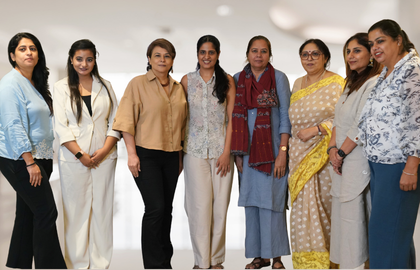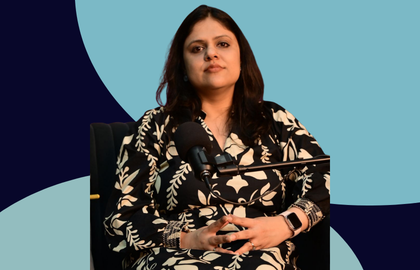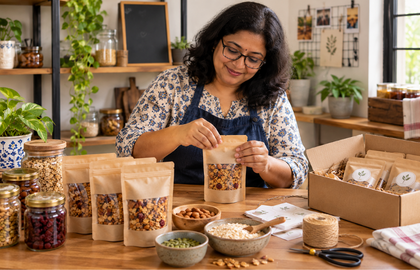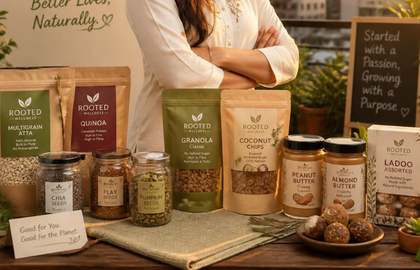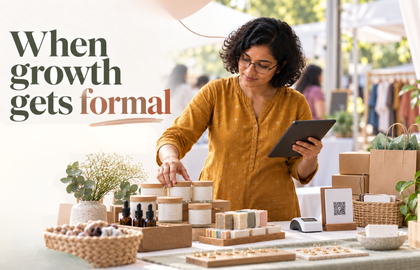
A woman in Indore sells handcrafted skincare through Instagram. Another in Kochi runs a consulting practice from her dining table and closes clients through WhatsApp voice notes. Neither story starts with a huge office or a big launch. It starts with visibility, consistency, and one decision to take the business seriously.
From Dream to Daring: Your Guide to Building a Legacy. Every big business started with a small step. For many women entrepreneurs in India, that first step was fuelled by a powerful idea and a refusal to give up. This isn't just a list of feel-good stories. It's a practical playbook. You'll see how well-known brands and relatable business models found customers, built trust, and kept going when growth became messy. If you're still shaping your offer, this guide on how to validate startup ideas is a strong place to begin.
These business success stories matter because women-led entrepreneurship in India already operates at real scale. The Sixth Economic Census reported 8.05 million women-run establishments, accounting for about 13.76% of all establishments in the country, and around 14.1% of those women-owned enterprises had hired workers, according to the summary cited by Flowlu's entrepreneurship statistics roundup. That tells you something important. Women-led businesses in India aren't a niche idea. They're already everywhere. The gap is often not ambition. It's visibility, systems, and access.
Table of Contents
- 1. Nykaa From Beauty E-commerce to IPO Success
- 2. Boat Building a Consumer Electronics Brand from Zero to Market Leader
- 3. Mamaearth Natural Baby Care to Profitable Scale
- 4. CoutLoot and Poshmark India Monetizing Community in Fashion
- 5. The Souled Store Brand Building Through Values and Community
- 6. Momints Motherhood Monetization and Community Building
- 7. Indus Valley Food and Beverage Leadership Through Women-Led Scaling
- 8. Beauty and Personal Care Startups From Instagram to Revenue
- 9. Service Professionals Building Personal Brands as Coaches and Consultants
- 10. Women-Led Manufacturing and Export Building Global Supply Chains
- Comparison of 10 Business Success Stories
- Your Turn Write Your Own Success Story
1. Nykaa From Beauty E-commerce to IPO Success
Nykaa is one of the clearest Indian business success stories because it didn't try to be everything at once. It chose beauty, built authority, and treated trust like a product. In categories like skincare and makeup, customers don't just buy a bottle or lipstick. They buy reassurance.
That matters for women-led businesses in India, especially in beauty, wellness, and personal care. When buyers are confused, they don't choose the cheapest brand. They choose the one that explains better, looks more reliable, and feels easier to trust. That's why curated education often works better than noisy promotion.
What made Nykaa hard to ignore
Nykaa built a strong content-and-commerce loop. A customer discovers a tutorial, reads a product guide, sees the brand again on social media, then buys. That path is highly relevant for smaller founders selling through Instagram, marketplaces, or their own site.
If you're in beauty, study how niche positioning creates authority before expansion. This piece on building an Indian beauty business is useful because it grounds that idea in a category many women founders already understand.
- Curate before you scale: Start with a narrow product range buyers can understand quickly.
- Educate before you discount: Use reels, FAQs, and comparison posts to reduce hesitation.
- Bring offline proof into online selling: A pop-up, studio day, or market stall gives you content, reviews, and customer language you can reuse.
Practical rule: If buyers keep asking the same three questions on Instagram DM, those questions belong on your homepage, WhatsApp catalogue, and product packaging.
Nykaa's lesson isn't "become huge." It's simpler. Own a category so clearly that customers remember your name first.
2. Boat Building a Consumer Electronics Brand from Zero to Market Leader
Boat isn't a women-led company, but its playbook is still useful for women founders building D2C brands in crowded markets. It sold more than utility. It sold identity. Earphones became part of a lifestyle story.
That shift matters because many founders spend too long polishing features customers barely notice. Buyers often respond faster to a brand that feels current, relatable, and easy to talk about with friends.
What women founders can borrow from Boat
For founders selling accessories, home products, gifting, wellness tools, or fashion, Boat offers a clear lesson. Position the product in the customer's life, not just on a specification sheet.
Think of a founder in Jaipur selling laptop sleeves or desk accessories. If she posts only materials and dimensions, the brand feels replaceable. If she shows workday routines, creator desks, travel setups, and gifting moments, the product becomes part of an aspiration.
- Lead with use case: Show where the product fits into daily life.
- Use creator voices: Micro-influencers often explain products in a more believable way than polished ads.
- Launch fast, improve fast: Early customer comments on Amazon, Instagram, and WhatsApp tell you what to fix next.
A lot of founders wait for perfect branding before selling. Boat-style growth says the opposite. Launch a clear promise, listen hard, and keep the market conversation alive.
3. Mamaearth Natural Baby Care to Profitable Scale

Mamaearth became memorable because it entered a high-anxiety category and spoke in a language parents could understand. Baby care buyers are careful, emotional, and loyal when trust is earned. That combination creates room for strong repeat business, but only if the brand communicates clearly.
Many Indian women founders have an advantage here. They already understand the customer problem from lived experience. That insight can become your strongest marketing asset if you package it properly.
Why the founder story mattered
The founder narrative worked because it connected personal need with product intent. That kind of story is effective when it's backed by consistent messaging, visible product education, and proof that the founder understands the buyer's daily concerns.
If you run a parenting, wellness, or family-focused brand, the bigger lesson is to make emotional relevance practical. This guide on business growth for women entrepreneurs is a helpful next step when you're moving from founder story to growth systems.
- Use milestone marketing: New parent, toddler stage, school start, and festive gifting are natural campaign moments.
- Teach in plain language: Ingredient explainers, storage tips, and usage demos build trust.
- Design for repeat buying: Refills, reminder messages, and WhatsApp reorder links remove friction.
Parents don't want more information. They want less confusion.
One more operational lesson matters here. The Harvard Business School example on Blue Apron's analytics notes that its engineering team achieved demand forecasting models with root-mean-square error consistently below 6%. For a women-led D2C business managing a growing catalogue, that kind of forecasting discipline matters because it helps control stockouts and over-ordering as the brand expands.
4. CoutLoot and Poshmark India Monetizing Community in Fashion
Fashion resale and social commerce work when selling feels social, not corporate. That's what platforms like CoutLoot and the broader Poshmark-style model understood well. The buyer wants discovery, personality, and confidence that the product is real and worth the money.
This is especially relevant for women-led fashion businesses in India because trust is often the bottleneck. Not design. Not ambition. Trust.
What social commerce gets right
A seller profile, customer comments, styling videos, and a fast DM reply can do more for conversion than an expensive website. In fashion, hesitation usually comes from fit, authenticity, and fear of disappointment.
That means community features aren't extras. They're part of the sales engine. The same logic powers women-focused business ecosystems too, which is why this essay on the power of women's business communities resonates beyond fashion.
- Lower the first step for sellers: Easy onboarding creates supply.
- Let buyers see real people: User-generated try-ons, reviews, and repeat customer posts reduce doubt.
- Create live moments: Drops, festive edits, and live sale sessions give buyers a reason to act now.
A strong fashion business rarely grows from product photos alone. It grows when women see other women using, recommending, and re-buying with confidence.
5. The Souled Store Brand Building Through Values and Community

The Souled Store shows what happens when a brand feels like a club. Customers don't just buy a T-shirt. They buy belonging. That's a powerful lesson for women entrepreneurs building lifestyle brands in India, where communities form quickly around fandom, humour, causes, and shared identity.
A values-led brand can grow fast, but it can also drift if every new launch is designed only to chase what looks trendy. That trade-off is real. Short-term relevance can weaken long-term recall.
How to build culture into the product
Culture-based businesses work best when product, voice, and audience all match. If your brand sounds playful online but the packaging feels generic, the experience breaks. If your values are visible only in founder captions, customers won't remember them.
A founder selling illustrated stationery, merch, or indie apparel can learn from this. Don't treat content and product as separate jobs. Let your designs, captions, customer reposts, and launches all reinforce the same point of view.
- Create recurring themes: Weekly prompts, fandom edits, or community challenges keep people involved.
- Use limited releases carefully: Scarcity works when it fits the brand, not when it feels artificial.
- Celebrate customer creativity: Reposts, styling photos, and community spotlights help buyers feel seen.
A strong brand voice saves money. It makes every product launch easier to understand.
This is one of those business success stories that reminds founders not to chase everyone. A well-loved niche beats a forgettable mass market brand.
6. Momints Motherhood Monetization and Community Building
Mom-focused businesses grow differently from generic consumer brands. Their buyers are time-poor, emotionally stretched, and highly recommendation-driven. Momints represents a useful model because it treats community as infrastructure, not decoration.
That approach works for many women-led businesses India is seeing now, especially among mompreneurs building from home. The business often grows around flexible hours, WhatsApp conversations, school schedules, and trust circles.
What works for mom-focused businesses
The strongest mom-centred ventures solve for convenience and reassurance at the same time. A product alone isn't always enough. Buyers want curation, peer validation, and a sense that someone understands their daily reality.
If you serve mothers, your marketing shouldn't sound like a brochure. It should sound like help.
- Build recommendation loops: Testimonials from other mothers carry more weight than polished ad copy.
- Offer small convenience wins: Bundles, reminders, simplified checkout, and direct reorder links reduce drop-off.
- Create gentle community touchpoints: Expert sessions, WhatsApp groups, and practical content keep people engaged between purchases.
Many founders in this space also need better visibility-to-revenue guidance. That's a real gap in mainstream coverage, especially for women outside major metros. The note on converting visibility into revenue and cross-city collaboration highlights why these practical stories matter for underserved founders building beyond local word of mouth.
7. Indus Valley Food and Beverage Leadership Through Women-Led Scaling
Food businesses often look simple from the outside. They aren't. Margins can be tight, supply quality can swing, and one weak batch can hurt repeat demand. That's why a women-led food brand that scales well usually gets three things right. Sourcing, trust, and repeatability.
Indus Valley-style growth in food and beverage works because it respects tradition without packaging it as nostalgia alone. Buyers want authenticity, but they also want reliability.
What traditional categories still reward
In spices, health foods, mixes, and pantry products, storytelling matters. So does operational discipline. If your product promise is purity or traditional preparation, every touchpoint has to support that claim, from label design to customer education.
A founder in Coimbatore selling masalas or snack mixes can grow steadily if she starts with clarity. What problem does the product solve? Convenience, taste, health positioning, or regional authenticity?
- Teach customers how to use it: Recipe reels and storage tips help first-time buyers feel confident.
- Protect sourcing quality early: Vendor discipline matters before expansion.
- Expand channels slowly: Online, specialty retail, and gifting can validate demand before mass distribution.
One weak habit hurts many food founders. They add too many SKUs too soon. A tighter range is easier to produce, explain, and restock well.
8. Beauty and Personal Care Startups From Instagram to Revenue
Some of the most practical business success stories today don't begin with a storefront. They begin with a phone camera, a decent window for natural light, and a founder who replies quickly. That's especially true in beauty and personal care.
Instagram creates discovery. Revenue usually closes elsewhere. Often on WhatsApp, sometimes on a website, and sometimes through repeat reorder messages.
A practical Instagram to WhatsApp flow
The winning flow is usually simple. A reel creates interest. Stories answer objections. DMs capture intent. WhatsApp handles product questions, payment, and reorder convenience.
For women entrepreneurs, this works because it doesn't require a large team. It requires consistency and a clear handoff from content to conversation.
- Use reels for problem awareness: Focus on skin concern, hair issue, or routine gap.
- Use stories for proof: Show testimonials, shelf life, texture, packing, and dispatch.
- Move warm leads to WhatsApp: A catalogue, quick replies, and saved answers make sales easier.
If you want to grow without sounding pushy, keep the tone helpful. A beauty founder in Pune selling lip tints doesn't need to hard-sell every post. She needs to make shade selection, usage, and buying frictionless.
Platform visibility can matter. Women Listed's national directory and profile format can support discoverability across cities and categories, which is useful for founders who want buyers, collaborators, and referrals to find them beyond social media alone.
9. Service Professionals Building Personal Brands as Coaches and Consultants

A service business often grows faster when the founder stops hiding behind a vague business name and starts showing up as the expert. That's especially true for coaches, consultants, designers, nutritionists, and trainers.
Clients don't buy services the way they buy a product. They buy confidence in your thinking. They want to know how you solve problems, how you communicate, and whether you understand their context.
What service founders often miss
A polished logo won't fix unclear positioning. Many talented women founders post motivational content for months but never make the offer easy to understand. If a stranger can't tell what you do, who you help, and what the next step is, your content is not doing its job.
This category also benefits from steady authority-building. LinkedIn posts, webinars, testimonial screenshots, and WhatsApp communities all help. If you're in beauty education or adjacent services, this HiveHQ list of top-tier makeup affiliates may spark ideas on partnerships and adjacent revenue channels.
- Name the problem clearly: "Interview coaching for women returning to work" is stronger than "career transformation support."
- Sell a first step: Audit calls, workshops, or starter packages reduce buyer hesitation.
- Use proof well: Share outcomes qualitatively when you can't publish client data.
Your personal brand isn't self-promotion. It's sales clarity.
India's startup ecosystem also shows that formalisation matters. Under Startup India, more than 1.67 lakh startups were recognised by 2022 and had generated over 17 lakh direct jobs, as cited by Shopify's entrepreneur facts roundup. For service founders, that broader shift matters because clients, partners, and institutions increasingly take structured businesses more seriously than informal side hustles.
10. Women-Led Manufacturing and Export Building Global Supply Chains
Manufacturing success doesn't look glamorous day to day. It looks like samples, revisions, packaging approvals, shipping coordination, and supplier follow-up. But some of the strongest women-led business stories in India come from this discipline-heavy world.
Women building in textiles, handicrafts, home décor, and export-oriented product lines often win through patience. Not speed alone. They learn buyer requirements, protect quality, and build supply relationships that can survive scale.
Where operational discipline wins
Founders in export and manufacturing have to think beyond product beauty. A lovely catalogue means little if lead times slip or quality changes batch to batch. Reliability is part of the brand.
This is also where capital questions become sharper. Inventory, raw material, packaging, compliance, and payment cycles all affect growth. The discussion of capital access gaps for underserved entrepreneurs is especially relevant here because mainstream success stories often ignore how founders fund early production and expansion.
- Start with a tight range: Buyers respond better to a clear collection than a scattered catalogue.
- Document processes early: Sampling notes, materials, finishing standards, and packaging rules save future chaos.
- Build buyer confidence: Good product sheets, clean photos, and fast communication matter as much as craftsmanship.
A Delhi NCR founder supplying handcrafted table linen to boutiques, hotels, or global buyers doesn't need to look huge. She needs to look dependable.
Comparison of 10 Business Success Stories
| Example | Implementation Complexity 🔄 | Resource Requirements ⚡ | Expected Outcomes ⭐ / 📊 | Ideal Use Cases 💡 | Key Advantages ⭐ |
|---|---|---|---|---|---|
| Nykaa: From Beauty E-commerce to IPO Success | High, omnichannel ops, inventory & offline integration 🔄 | Very high, capital, logistics, data & retail teams ⚡ | Large national scale, strong brand loyalty, IPO-level growth ⭐⭐⭐⭐ 📊 | Premium beauty marketplaces; scaling women-led consumer platforms 💡 | Curated selection, personalization, membership-driven LTV ⭐ |
| Boat: Building a Consumer Electronics Brand | Medium‑High, rapid product cycles, influencer ops 🔄 | High, marketing spend, supply chain, product dev ⚡ | Fast market share capture; strong youth brand perception ⭐⭐⭐ 📊 | D2C lifestyle electronics; audience-driven product lines 💡 | Influencer-driven growth; product velocity and category reach ⭐ |
| Mamaearth: Natural Baby Care to Profitable Scale | Medium, product safety, community & D2C focus 🔄 | Medium, R&D, DTC infra, community management ⚡ | Profitable growth, emotional customer loyalty, repeat purchases ⭐⭐⭐⭐ 📊 | Natural baby/clean beauty brands targeting millennial parents 💡 | Transparency, strong community engagement, subscription retention ⭐ |
| CoutLoot / Poshmark India: Social Commerce in Fashion | Medium, UGC moderation, trust & payments systems 🔄 | Medium, platform, payment security, verification ⚡ | Community-driven sales, lower CAC for sellers, high engagement ⭐⭐⭐ 📊 | Resellers, small fashion brands, creator‑seller marketplaces 💡 | Low entry for sellers, authentic UGC discovery, viral WOM ⭐ |
| The Souled Store: Brand-Building Through Values | Medium, limited drops, creator collaborations 🔄 | Medium, design, social community, small‑batch supply ⚡ | Strong emotional connection, rapid sell-outs, profitable niches ⭐⭐⭐ 📊 | Youth culture apparel; mission-led lifestyle brands 💡 | Values-driven positioning, scarcity mechanics, creator collabs ⭐ |
| Momints: Motherhood Monetization & Community | Low‑Medium, community platform + curated marketplace 🔄 | Low‑Medium, community managers, curation, content ⚡ | High LTV via repeat purchases; word-of-mouth growth ⭐⭐⭐ 📊 | Mompreneurs, parenting services, mom-focused commerce 💡 | Niche trust, member benefits, high community retention ⭐ |
| Indus Valley: F&B Category Leadership | Medium‑High, quality control, certifications, scaling production 🔄 | High, sourcing, manufacturing, compliance, distribution ⚡ | Premium margins, repeat buyers, category credibility ⭐⭐⭐⭐ 📊 | Premium food & spice brands; health‑conscious positioning 💡 | Authentic sourcing, certifications, farmer partnerships ⭐ |
| Beauty & Personal Care Startups (Instagram → Revenue) | Low‑Medium, content-first marketing and product iteration 🔄 | Medium, content production, influencer seeding, product R&D ⚡ | Rapid traction, scalable margins, international expansion potential ⭐⭐⭐ 📊 | Indie beauty DTC brands; social-native product launches 💡 | Organic social growth, fast feedback loops, community loyalty ⭐ |
| Service Professionals (Coaches, Consultants) | Low, personal brand development and programization 🔄 | Low, time, content tools, networks; minimal inventory ⚡ | High gross margins, recurring revenue via groups/memberships ⭐⭐⭐⭐ 📊 | Coaches, consultants, freelancers seeking scalable offers 💡 | Low startup cost, high margins, direct client relationships ⭐ |
| Women‑Led Manufacturing & Export | High, artisan coordination, export compliance, quality systems 🔄 | Very high, working capital, certifications, inventory management ⚡ | Premium global pricing, social impact, durable B2B contracts ⭐⭐⭐⭐ 📊 | Textiles, handicrafts, home furnishings for export & premium retail 💡 | Social impact narrative, premium pricing, durable brand value ⭐ |
Your Turn Write Your Own Success Story
The strongest business success stories don't follow one formula, but they do share patterns. The founder gets visible. The offer gets clearer. The customer journey gets simpler. The business moves from hustle to system.
That's an encouraging truth for Indian women entrepreneurs. You don't need to copy Nykaa or turn your brand into a national name overnight. You need to understand what made these ventures work in their own categories, then apply the parts that fit your stage. In beauty, trust and education matter. In fashion, community reduces hesitation. In services, clarity sells. In food and manufacturing, process discipline protects growth.
There is also a bigger ecosystem shift working in your favour. Women-led entrepreneurship in India already exists at meaningful scale, and the country has a formal startup culture that increasingly values recognition, employment, and structured growth. But many founders still face practical gaps. Funding pathways aren't always clear. Discoverability is uneven. Women in tier-2 and tier-3 cities often have strong products but limited reach. And a lot of networking still happens through fragmented personal circles rather than accessible business platforms.
That is why visibility isn't vanity. It's infrastructure. When people can find your business, understand what you do, and trust that you're active, more opportunities become possible. Referrals become easier. Collaborations become more likely. Media mentions, B2B enquiries, and customer leads stop depending only on who already knows you.
If you're deciding what to do next, keep it small and specific. Rewrite your Instagram bio so your offer is unmistakable. Build a WhatsApp catalogue. Ask three past customers what nearly stopped them from buying. Create one founder introduction post on LinkedIn. Reach out to one complementary business in another city and explore a collaboration. Those actions may look modest, but that is how most durable businesses move forward.
Women Listed can fit naturally into that process for founders who want broader visibility and a more structured growth environment. Its platform combines a national directory with learning, community, and events for women-led businesses across categories and cities. Used well, that kind of presence can support discovery, networking, and credibility alongside your own website, Instagram, and WhatsApp sales flow.
Your success story doesn't have to begin with a dramatic leap. It begins when you make your business easier to find, easier to trust, and easier to buy from.
If you want more visibility for your women-led business, Women Listed offers a practical place to start. You can create a presence that helps buyers, collaborators, and peers discover your brand, while also accessing learning, community, and founder-focused opportunities built for women entrepreneurs in India.