When a good month stops feeling good enough, the problem usually isn't effort. It's direction. A founder I know in Pune, running a skincare brand from a small studio and two very full spreadsheets, told me over chai that she had hit her targets for three straight quarters and still felt lost. She knew how to make a strong product. She didn't yet know how to build the machine around it.
That's the point where coaching starts making sense. Not as a vanity buy, and not as a motivational add-on. As practical help with decisions you now have to make quickly: pricing, hiring, positioning, systems, margins, visibility, and what to stop doing yourself.
That need is especially real for women entrepreneurs in India. Women-owned enterprises represent only about 20% of all MSMEs in India, and access to formal finance remains one of the biggest barriers to growth, according to the NITI Aayog Women Entrepreneurship Platform context cited here. When capital, networks, and market access are uneven, a good coach can help turn scattered effort into lender-ready, market-ready growth.
This guide gets to the point. These are seven useful options for women business coaches in India, grouped by the kind of founder they're best for. If you're also tightening your online presence before reaching out, this guide for optimized social profiles is worth a quick read.
Table of Contents
- 1. All Listings – Coaching & Learning Women Listed
- 2. Nishita Mantry
- 3. Sailaja Manacha / Physis
- 4. Success With Savitha Savitha Nanjappa
- 6. Indra Dhar
- 6. Indra Dhar
- 7. Deepti Pathak
- Comparison of 7 Women Business Coaches in India
- Your Turn Find Your Growth Partner
1. All Listings – Coaching & Learning Women Listed

If you're not sure whether you need a startup coach, leadership coach, mindset coach, or a sharp operator who can fix your workflows, starting with a directory is smarter than starting with Instagram.
The Women Listed Coaching & Learning section works because it narrows the field quickly. You can look by city, browse profiles, compare how clearly each coach explains her offer, and contact people directly instead of spending days bouncing between social posts and half-filled websites.
This matters more than it sounds. One of the biggest gaps in the Indian market isn't just advice. It's discovery and credibility. For many women founders, especially outside the biggest startup circles, visibility is the bottleneck. Practical platforms that combine learning, community, and discovery can matter as much as one-on-one strategy, as noted in this context on visibility and coaching for Indian women entrepreneurs.
Why this works when you don't know where to start
A directory is not the same as a recommendation. That's the trade-off. You still need to assess fit.
But it does save time. If you're a consultant in Delhi looking for a positioning coach, or a home baker in Jaipur trying to find someone who understands local selling, WhatsApp follow-ups, and profile credibility, this route is often cleaner than broad Google search.
You can also spot useful signals fast. Does the coach explain outcomes clearly? Does she mention stage, niche, or format? Is the profile written like a real business or just vague inspiration?
Practical rule: If a coach can't explain who she helps and what changes after working together, don't book the call yet.
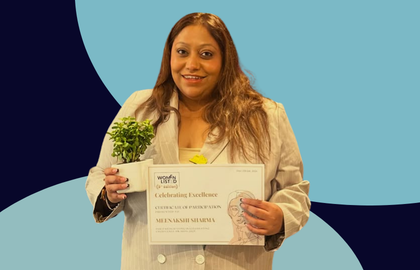
A few examples from the wider Women Listed community show why niche clarity matters. Meenakshi Sharma of Learn ABOT Consulting has a clearly defined coaching identity. Madhurima Saigal positions herself around NLP and neuro-somatic work, which suits a different kind of client. Ritu Bakshi at Aarambh Leadership Institute signals leadership development more than broad business handholding. That difference is exactly what you want to see before you enquire.
Practical upside and limitation both matter here:
- Best for comparison: You can review multiple women business coaches in India in one place instead of depending on algorithm luck.
- Best for local relevance: City filtering helps when you prefer someone who understands your market, language mix, and buyer behaviour.
- Best for direct outreach: Profiles make it easier to ask the right questions on format, availability, and fit.
- Watch for thin profiles: Some listings will be richer than others, so you may still need one extra call to assess depth.
If you're still building core founder capability, the Women Listed post on top skills for women entrepreneurs in India pairs well with this directory-first approach.
2. Nishita Mantry

Nishita Mantry is a good fit for the founder who says, "I have an idea, maybe even some paying clients, but my business still feels patchy."
Her work leans toward early-stage brand building, validation, messaging, and sales basics. That's useful when you're still figuring out what exactly you're selling, to whom, and how to say it without sounding like everybody else in your category.
One practical detail I like: she makes entry easier with a visible low-cost starting point. That reduces the awkwardness many founders feel when they want help but don't want to commit to a big programme blindly.
Best for first-time founders who need structure fast
Early-stage coaching often fails for one reason. It stays too abstract.
Founders don't need a lecture on "mindset" when the actual issue is that their Instagram says one thing, their brochure says another, and their pricing makes no sense. Nishita's style appears more useful for that messy middle. Especially for solopreneurs, service businesses, and smaller D2C brands trying to move from hobby energy to business discipline.
You don't need a ten-page strategy deck first. You need one clear offer, one buyer, and one repeatable sales conversation.
This kind of coach is usually most valuable before scale, not after it. If you're already managing larger teams, distributors, or complex operations, you'll probably outgrow this layer and need a different kind of advisor.
A few practical takeaways:
- Good entry point: Publicly visible starter access makes it easier to test fit before a bigger commitment.
- Strong for clarity work: Messaging, offer design, early go-to-market, and founder confidence usually improve together.
- Better for small businesses: Service founders, creators, and early D2C operators are likely to get more value than late-stage scale-ups.
- Bandwidth is the trade-off: Solo-coach models can be excellent, but they don't always suit larger teams.
If you're in that awkward stage where leadership suddenly matters because clients, freelancers, and junior hires now depend on you, this Women Listed piece on why women entrepreneurs need leadership too is a useful companion to Nishita's more tactical work.
You can explore her work directly on Nishita Mantry's website.
3. Sailaja Manacha / Physis

Some founders don't need help choosing fonts, fixing reels, or writing a better caption. They need to become a stronger leader because the business has started reflecting their weak spots back at them.
That's where Sailaja Manacha sits. Her work through Physis is more leadership-oriented and psychology-informed. The flavour here is less "launch your offer next week" and more "grow into the kind of leader your next stage requires."
Best for founders growing into leadership
This is especially relevant for women founders moving from individual contributor mode into team management. The shift is more demanding than commonly acknowledged. Suddenly you're setting expectations, handling conflict, giving feedback, and making decisions with incomplete information.
That route brings trade-offs too. Leadership coaching can feel less immediately tangible than marketing or sales coaching. You may not walk away with a new funnel by Friday. But you may start making better hiring calls, communicating with more authority, and wasting less energy on indecision.
A founder who has grown her practice largely on referrals often reaches this stage. Someone like Deepra Gagneja, who works in image consultancy, or Ishita Mehrotra, who runs a legal-focused business, would likely need leadership depth at a different point than a product seller does. The coach has to match that complexity.
A business plan is only useful if the founder can lead people through it.
If your current problem is not "what should I post" but "how do I lead without second-guessing everything," this category makes sense.
- Best for transition stages: Useful when your business has outgrown founder-only decision making.
- Strong on self-awareness: Psychology-backed methods help when patterns, not tactics, are blocking growth.
- Less tactical day-to-day: Not the best fit if your main pain is immediate sales execution.
- Expect enquiry-led pricing: You may need a call before understanding format and commitment.
If you need to tighten the business side alongside leadership, the Women Listed guide on crafting a winning business plan helps bring the operational piece into focus.
You can review her approach on Sailaja Manacha's website.
4. Success With Savitha Savitha Nanjappa

Some founders don't need more information. They need accountability.
Savitha Nanjappa's platform seems built for that founder. The one who has ideas, notebooks, saved posts, half-finished funnels, and maybe even a team, but still struggles to execute consistently. Her mix of one-to-one coaching, workshops, group formats, and founder community makes this feel more like an ongoing support environment than a one-off coaching intervention.
Best for accountability with community
Community-led coaching can work very well for women founders in India because the journey is often isolating in very ordinary ways. You're making decisions alone. Family may be supportive but not always business-literate. Peers may be in completely different industries. A coach plus a room of other ambitious founders can reduce that friction.
The trade-off is that community isn't automatically depth. Some founders thrive in group energy. Others hide inside it. If you're avoiding difficult decisions, a private coach who pushes you hard may still be the better choice.
For founders who sell through trust and referrals, though, these communities can be valuable. Event access, peer proof, introductions, and visibility often matter more than another Canva template. That's also why Women Listed's own network effects matter. Posts like business success stories and the broader business growth advice for women entrepreneurs reflect that same truth.
- Good for momentum: The mix of workshops, coaching, and community can keep founders moving.
- Useful for isolated founders: Especially helpful if you're building mostly from home or without a peer circle.
- Discovery is easy: A free initial conversation lowers the barrier to trying it.
- Check your learning style: If you need highly customised tactical support, group formats may feel too broad.
You can explore the platform on Success With Savitha.
6. Shweta Handa Gupta

Shweta Handa is a better fit for founders, CEOs, and business leaders who have already achieved a certain level of success but need stronger leadership capacity to scale further. The focus here is strategic thinking, decision-making, organizational transformation, leadership effectiveness, and long-term business impact. For many women-led businesses in India, this becomes the next challenge after initial growth.
I see this pattern often in growing companies. Revenue is increasing, teams are expanding, and the business appears successful from the outside. Yet the founder is still carrying the weight of every major decision, struggling to align senior leaders, or finding that growth has become more complex than expected. The business is moving forward. Leadership capacity is not keeping pace.
Best for founders and leaders navigating growth and complexity
This category matters because business growth eventually becomes a leadership challenge. A founder who once succeeded through personal hustle may now need to influence through systems, people, and strategy. A leadership team may be technically capable but not aligned around common goals. A growing company may have opportunities in front of it, yet struggle to execute because decision-making remains concentrated at the top.
That is where a leadership-focused coach can help. The work is less about business tactics and more about how leaders think, influence, communicate, and create sustainable performance. The conversations often center on strategic clarity, organizational change, executive presence, leadership effectiveness, and the ability to navigate complexity with confidence.
A common Indian example is a founder who has built a successful business and now manages multiple teams, senior managers, and external stakeholders. The company may have customers, revenue, and a growing workforce, but the founder feels stretched by constant decision-making and competing priorities. In that situation, strengthening leadership capability can unlock more growth than simply adding another operational process or marketing initiative.
The trade-off is straightforward. This style of coaching may feel less tactical than operations consulting or business execution coaching. It also requires deep self-reflection and a willingness to challenge existing leadership habits. But when business growth is limited by leadership effectiveness, this kind of work often creates lasting impact.
Practical realities to keep in mind:
Strong fit for established founders and executives: Especially useful for leaders managing teams, organizational change, business transformation, or strategic growth.
Useful if leadership is the next bottleneck: Good for founders who want to improve decision-making, influence, delegation, and leadership effectiveness.
Less suited to early-stage founders: If you are still searching for product-market fit or your first customers, revenue generation and market validation usually need attention first.
Expect mindset and leadership work: This is likely to involve self-awareness, strategic thinking, leadership behavior, organizational alignment, and change management rather than hands-on business execution.
You can learn more through Shweta Handa's coaching website.
6. Indra Dhar

Indra Dhar stands out because the emphasis is operational. Systems, automation, profitability, leadership clarity, and MSME growth. That matters because plenty of founders don't have a demand problem first. They have a chaos problem.
Orders come in. Follow-ups get missed. Inventory is unclear. Team communication lives in ten WhatsApp threads. Cash flow feels fuzzy. The business is moving, but the founder can't breathe.
Best for MSMEs that need systems, not slogans
For many women-led MSMEs in India, coaching proves very practical. Not glamorous. Very useful.
Government programmes such as Stand-Up India and Mahila E-Haat exist to improve access to capital and market linkages for women founders, as noted in the same NITI Aayog and women entrepreneurship context. But to benefit from those opportunities, founders often need better documentation, sharper unit economics, clearer positioning, and cleaner systems. An operations-first coach can help prepare the business for that.
I also like this category because it respects the founder who is already selling. She doesn't want endless inspiration. She wants process.
Think of a food founder managing repeat orders, delivery coordination, and festive spikes. Or someone like Sudipta Gupta at For Cookies' Sake! or Rakhi Sharma at Tasty Tadka. Businesses like these don't just need branding. They need repeatable backend discipline.
- Excellent for growing MSMEs: Especially useful when demand exists but execution feels inconsistent.
- Strong on implementation: Systems and automation support can reduce founder overload.
- Broader than women-only coaching: The upside is practical relevance. The downside is less niche handholding for women-specific founder experiences.
- Expect programme variation: Workshops and events may differ in depth, so assess format before joining.
You can review current programmes and resources on Indra Dhar's website.
7. Deepti Pathak

Deepti Pathak sits closer to executive coaching and people development than startup hustle coaching.
That's useful for a certain kind of founder. Maybe you've built a solid service business. Maybe you're leading a team now. Maybe clients are bigger, stakes are higher, and your role requires stronger communication, decision-making, and professional presence than before.
Best for executive presence and performance
This type of coaching can be especially helpful for women who are no longer asking, "How do I start?" but are asking, "How do I lead at a higher level without burning out or sounding uncertain?"
The value here is often less visible from the outside. Better performance in meetings. Stronger stakeholder communication. More grounded delegation. Clearer boundaries. More confidence in high-stakes conversations. Those changes can materially improve how a founder runs the business, even if they don't show up as flashy marketing outcomes.
This can also suit women founders who work with corporate buyers, institutions, or professional services clients. If your business depends on trust, presence, and authority, executive coaching has a place.
A founder like Bhavika Agarwal from TheGiftHaus or Anjali Jain of Eraya might eventually need very different support depending on whether their next challenge is team leadership, category positioning, or client communication. Deepti's kind of offer is strongest when the founder herself has become the next growth layer.
- Best for mature operators: Useful for founders managing teams, clients, and a larger professional identity.
- Strong for communication and influence: Especially relevant if your growth depends on stakeholder trust.
- Less about tactical marketing: Don't choose this if your immediate pain is lead generation mechanics.
- Enquiry-led fit matters: You will likely need a conversation to know whether the engagement is individual or team-based.
You can explore her coaching and workshops on Deepti Pathak's website.
Comparison of 7 Women Business Coaches in India
| Item | 🔄 Implementation complexity | ⚡ Resource requirements | 📊 Expected outcomes | Ideal use cases | ⭐ Key advantages / 💡 Tips |
|---|---|---|---|---|---|
| All Listings – Coaching & Learning (Women Listed) | Low–Moderate: platform handles discovery and filters | Low for users; coaches may need paid tiers for fuller profiles | Faster discovery of women coaches; variable profile depth | HR teams, learners, founders seeking local women coaches | Curated, searchable marketplace + community features; tip: verify profiles via direct outreach |
| Nishita Mantry | Low: 1:1 calls and structured programs | Low–Medium: affordable discovery call and paid programs | Practical brand & GTM playbooks for early startups | First‑time women founders, solopreneurs, small D2C/service brands | Transparent pricing and practical templates; tip: use Mini‑MBA for structured learning |
| Sailaja Manacha / Physis | Moderate–High: leadership programs and org engagements | Medium–High: credentialed coach; pricing on inquiry | Leadership transformation and executive presence | Senior and emerging leaders, enterprise leadership tracks | ICF PCC + author credibility for women's leadership; tip: define outcomes before inquiry |
| Success With Savitha (Savitha Nanjappa) | Low–Medium: mix of 1:1, cohorts and events | Low–Medium: free discovery session; program fees vary | Mindset shift + execution support with community accountability | Women founders seeking mentorship, community and execution support | Blend of mindset and execution with easy entry; tip: try free discovery session first |
| Shweta Handa‑Gupta / QuadraBrain | High: bespoke, research‑based C‑suite coaching | High: premium, selective engagements | Measurable leadership transformation at executive level | Venture‑backed founders, complex scaleups, Fortune‑100 leaders | MCC credential and applied neuroscience methods; tip: expect bespoke assessment & ROI metrics |
| Indra Dhar | Medium: workshops, masterclasses and implementation work | Medium: event‑based fees and program registration | Improved systems, automation and profitability for MSMEs | Women running MSMEs needing processes and operational clarity | Operations‑first, implementation focus; tip: attend workshops for hands‑on tools |
| Deepti Pathak | Medium–High: 1:1 executive coaching + team interventions | Medium–High: corporate engagements, pricing on inquiry | Executive performance, productivity and influence gains | Corporate women leaders and organizations seeking performance outcomes | Recognized coach with cross‑industry credibility; tip: request case studies and metrics |
Your Turn Find Your Growth Partner
The best women business coaches in India don't all solve the same problem. That's the part many founders miss.
If you're early, you probably need clarity, positioning, and a simple sales process. If you're growing, you may need systems, hiring judgement, and cleaner decision-making. If you're already leading a serious team, the core work may be executive presence, behaviour change, and leadership maturity. A coach who is brilliant for one stage can be the wrong fit for another.
So don't choose based on popularity alone. Choose based on the bottleneck.
If your bottleneck is confusion, shortlist someone like Nishita. If it's leadership transition, look harder at Sailaja or Deepti. If it's accountability with community, Savitha may feel more natural. If it's systems and MSME discipline, Indra Dhar is worth a close look. If you're already in a high-complexity scale-up, Shweta Handa-Gupta is playing in a different lane entirely. And if you still need to compare before deciding, the Women Listed directory of women-led businesses is the most practical place to start.
One more thing matters. Discovery and credibility are not side issues anymore. For many women founders, especially in city-specific or trust-led categories, the coach who helps you turn visibility into referrals, enquiries, and real conversations can be more useful than the coach who only gives advice. That's why it also helps to study how you're showing up online, in rooms, and in founder communities. The Women Listed reads on business events in Delhi and how listing can help women enterpreneurs are practical next steps if that part feels underbuilt.
Pick one coach. Book one discovery call. Ask better questions than "What do you charge?"
Ask what stage of founder they work with best. Ask what kind of businesses they tend to help. Ask what will likely change in the first month. Ask what they don't help with. You'll get to clarity faster.
If you want a second opinion before choosing, this guide to selecting a business coach is also useful.
Women Listed helps women entrepreneurs get discovered, build credibility, and grow through practical visibility tools. Create your profile on Women Listed to showcase your business, connect with buyers and collaborators, and join a network built specifically for women-led businesses across India.
Women Listed helps women-led businesses become easier to find and easier to trust. If you're ready to build visibility that leads to real enquiries, list your business on Women Listed or explore the wider Women Listed platform.