A business founder in Mumbai once shared that her largest corporate client began with a simple chat at a local pop-up. A WhatsApp message followed, then a quick profile review, and finally, a meeting. This buying journey is quite typical in India, especially for women-led businesses where trust, visibility, and credibility often develop through multiple small interactions before a deal progresses.
This is why much of the B2B lead generation advice seems disconnected. It often presumes large sales teams, extensive budgets, or buyers who respond predictably to one channel. In reality, a founder in Pune or Kochi might get leads through a directory profile, a webinar chat, a referral from another woman founder, a LinkedIn message, or a community event. It's usually a combination of these.
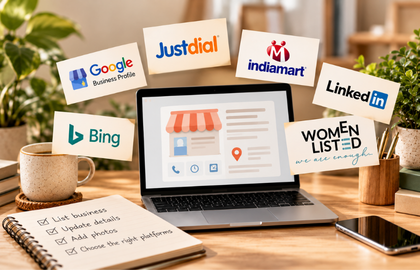
For women-led businesses, visibility is key to lead generation. If potential buyers can't quickly understand what you do, who you help, and why they should trust you, outreach becomes more challenging. A solid profile on a business platform focused on women can be beneficial even before you make the first pitch. This guide on how business listings help women entrepreneurs get discovered explains this well.
Below are 10 strategies that focus on initiating conversations in the Indian B2B market. Some work quickly but require manual effort, while others take longer but build momentum over time. A few are especially useful for those using Women Listed, where listings, events, and podcast visibility can support your lead generation practically.
If you're building a women-led business in India, the question isn't about which channel is the smartest. It's about which one you can consistently manage to turn interest into meetings.
Table of Contents
Directory Listings & Search Optimization
Virtual Networking & Expert-Led Webinars
Strategic Referral Partnerships
Email Marketing & Lead Nurturing
Community Building WhatsApp etc
- [Go narrow when deal value is high](#go-narrow-when-deal-value-is-high)
Directory Listings & Search Optimization
Many B2B buyers don't immediately inquire after discovering you. They might hear your name, forget it, recall part of it later, and search for you. If your business isn't easily found at that moment, the lead may slip away.
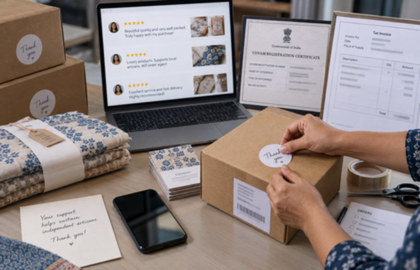
For women-led businesses, a clear directory presence is essential, especially for consultants, coaches, studios, gift brands, service firms, and niche specialists who need to establish credibility before the first call. A searchable profile on the Women Listed directory is beneficial because it provides buyers with a single place to understand what you do, where you are based, and if you seem reliable.
Show up before you pitch
Your listing should not just be a filler profile. It should serve as a quick guide for buyers. The guide on how business listings can help women entrepreneurs explains this well.
Take examples like Ishita Mehrotra of Areness or Deepra Gagneja. If someone is seeking legal or image consulting support, category-led discovery is crucial. Buyers often look for specialists, not just any agency that pops up in a noisy search.
Practical rule: Your profile should address three questions in under a minute: What do you solve, for whom, and why should someone trust you?
Name your niche clearly: Avoid "solutions for all businesses." Specify the service, audience, and city.
Use buyer language: Include terms prospects search for, like corporate gifting, leadership coaching, legal consulting, brand shoot styling, or workshop facilitator.
Add proof assets: Photos, service snapshots, founder intro, and clear contact options reduce hesitation.
Keep it updated: Outdated phone numbers, inactive Instagram links, and vague descriptions can kill inquiries.
Directory listings might not bring a flood of leads overnight, but they aid in warm discovery.
Virtual Networking & Expert-Led Webinars
A founder hosted a free session on vendor contracts and payment terms for women business owners. It wasn't flashy. About forty people joined, several stayed with questions, and two corporate retainer discussions emerged within weeks. Webinars often work this way in India. They may not be dramatic initially, but they build trust quickly when they address genuine business problems.
This format suits women-led B2B businesses needing buyers to understand the founder's mindset before signing. Consultants, coaches, legal advisors, HR partners, branding experts, finance professionals, and workshop-led businesses usually gain better-quality conversations from focused sessions than from generic social media posts.
A useful webinar should teach one thing clearly.
Focus on providing practical answers to problems buyers already face, such as hiring the first sales manager, fixing low-conversion LinkedIn profiles, setting corporate gifting prices, or managing GST and contract basics for service businesses. Indian buyers respond well to specifics. A session titled "How women founders can pitch to enterprise clients without sounding like freelancers" will attract more interest than a broad "B2B growth tips."
Women Listed can play a direct role here. Use your listing to promote the session, leverage community visibility, and turn the webinar into a repeatable lead source. For extra promotion support, women-focused business networking groups can help fill the room with your target audience. The platform's events and podcast ecosystem offer more ways to stay visible post-webinar.
Content Marketing Institute analysts note that buyers appreciate thought leadership when it helps them understand a problem or evaluate a provider more confidently. Founder-led sessions often outperform polished decks filled with jargon because buyers listen for judgment, not presentation design.
A straightforward structure is most effective:
Choose one buyer problem: Keep your promise narrow and practical.
Teach from experience: Share client patterns, common objections, and real mistakes you've observed.
Keep Q&A open: Questions often reveal purchase intent, budget hesitancy, or team readiness.
Offer one next step: Share a recording, checklist, or consultation link. Avoid bulky company decks.
Reuse the session: Turn clips into LinkedIn posts, podcast snippets, event follow-ups, or updates on Women Listed.
Webinars require preparation, promotion, and follow-up. Attendance can vary, especially if the topic is too broad or the time clashes with commitments. However, when the session is sharp and the audience is right, you usually get fewer junk leads and more serious conversations. For many women-led B2B businesses, this is a better outcome than chasing reach for its own sake.
Strategic Referral Partnerships
Some of the best B2B leads don't come from your marketing—they come from someone connected to your work.
A brand photographer might refer a web designer. A leadership coach could refer an HR consultant. A wedding gifting founder might refer a corporate hampers specialist when a company needs festival gifts. These leads come warmer because trust has already been transferred.
Borrow trust, don't just borrow reach
Many partnership ideas fail because founders chase “collabs” for visibility, but visibility without fit doesn't drive revenue. The most effective partnership is where both sides serve the same buyer at different times.
An excellent example is category proximity within women-led communities. Bhavika Agarwal of TheGiftHaus and Ritu Bakshi of Aarambh Leadership Institute address very different needs but can both be part of business ecosystems where referrals naturally occur through events, training, gifting, and founder circles.
Warm leads often originate from three places: past clients, peers who serve the same audience, and organizers who see buyer demand before you do.
Choose complementary partners: Look for non-competing businesses that solve the next problem your client faces.
Make referrals easy: Share a positioning note, ideal client fit, and preferred introduction format.
Reciprocate properly: Referral loops survive when both sides benefit, even without formal commissions.
Review lead quality: Not every partner sends the right buyer. Protect your time.
Partnerships require patience. You won't build them by sending one “let's collaborate” message. But once they click, they often outperform colder channels.
Content Marketing & SEO
Content can be slow to gain traction. But once a useful page starts attracting the right people, it can do so for months.
This strategy works well for businesses where buyers research independently before reaching out, like legal services, B2B design, training, consulting, software implementation, packaged services, and specialist product suppliers. If a buyer is comparing options, your content can be their first trust signal.
Write for the buyer who is researching quietly
According to Leadfeeder's B2B lead generation strategies, buyers complete most research before contacting vendors. The strongest strategies combine SEO pages, gated assets, webinars, visitor identification, LinkedIn outreach, and lead scoring. This aligns with what many founders observe: people read, save, and reach out only when they feel informed.
The mistake is writing blog posts that sound nice but answer nothing. Effective content addresses specific buying questions. If you run a consulting business, write about “How to prepare for a POSH policy review” or “What a brand strategy retainer includes.” If you run a gifting company, write about “How to plan employee welcome kits without operational chaos.”
Start with sales questions: Note what prospects ask during calls. That's your content plan.
Build service pages, not just blogs: A focused page converts better than a beautiful article with no offer.
Add trust markers: Include the founder bio, process, sample deliverables, and common objections.
Refresh old pages: Update pages if your offer, city focus, or category has changed.
For a practical companion piece, business growth for women entrepreneurs is a useful internal read. Content won't replace relationships, but it makes them easier to start.
LinkedIn B2B Outreach
A founder in Gurgaon showed me her LinkedIn inbox: forty connection requests and twenty pitch messages, most of which sounded the same and were ignored.
This is a common LinkedIn issue in B2B. Access is easy; gaining attention isn't.
For women-led businesses in India, LinkedIn can still generate strong leads because buyers often want to see the founder before trusting the company. This is especially true in consulting, HR, training, design, compliance, recruitment, and corporate gifting. Your profile, comments, and DMs often do the early credibility work before any call happens. LinkedIn itself positions the platform as a core channel for professional selling and account research through tools like LinkedIn Sales Navigator.
Treat LinkedIn outreach like warm prospecting
Cold outreach is more effective when it doesn't feel cold. This means having a clear profile, tight targeting, and a first message that sounds like it's from someone who has done their homework.
For founder-led brands, the profile usually matters more than the company page. A vague headline like "Helping businesses grow" gets skipped. A sharper version such as "POSH trainer for mid-sized companies in Bengaluru" or "Corporate gifting partner for employee onboarding and festive hampers" gives the buyer something concrete to act on.
Women Listed members have an advantage here if they use the platform properly. A listing, event appearance, or podcast feature gives you credible context to mention in outreach without sounding forced. "We met briefly at a Women Listed event" or "I host workshops for women founders and noticed your team is expanding in India" is stronger than a generic intro.
Fix the profile before sending requests: Your headline, banner, About section, and Featured links should explain who you help, what problem you solve, and what proof backs it up.
Build a small target list: Start with 25 to 50 ideal accounts by city, industry, team size, or hiring pattern. Broad outreach wastes time fast.
Use context in the first message: Mention a hiring update, event, post, podcast appearance, or business trigger. Keep it specific.
Wait before pitching: Comment, reply, or exchange one useful message first. The meeting ask lands better after that.
Write for Indian buying reality: Decision-making is often shared across the founder, ops head, HR, procurement, or finance. One good contact may still need internal buy-in.
A practical message can be as simple as: “Hi Ritu, saw your post about scaling L&D across three offices. I run leadership workshops for growing teams and noticed this usually gets messy once managers are promoted faster than they are trained. Happy to share a 3-point framework if useful.”
No fluff. No brochure language. No “end-to-end solutions.”
There is a trade-off, though. LinkedIn rewards consistency, and consistency takes founder time. If you cannot spend three to four focused blocks a week on profile updates, commenting, outreach, and follow-up, keep the system small. Ten relevant conversations are worth more than a hundred random connection requests.
In-Person Events & Meetups
Online discovery is useful, but many Indian B2B deals still happen because someone met you in person and remembered you later.
This is more relevant for founder-led businesses where credibility, personality, and chemistry matter. If you sell services, training, partnerships, bulk orders, workshops, or collaborations, a single good event can open multiple doors. Not instantly, but faster than a cold sequence.
Rooms still convert better than feeds
India had about 751 million internet users in 2024, and mobile remains the dominant access point, according to the Chili Piper article on lead generation strategies. This makes it clear that buyers move across mobile, social, and messaging touchpoints. In-person events often start the trust, and WhatsApp finishes the follow-up.
For Delhi NCR founders, Women Listed events are a practical route because they create the kind of compact networking where introductions happen naturally. The same goes for city-specific rooms and founder circles. If you're local to the capital, business events in Delhi can help you choose where to show up.
The best event metric is simple: Did you leave with three people who can clearly say what you do and whom to introduce you to?
Choose events by buyer density: A small room with relevant people beats a large crowd with vague fit.
Prepare one crisp intro: Not your life story. One sentence on problem, audience, and outcome.
Follow up within a day: Send the promised note while they still remember the conversation.
Track repeat rooms: Lead quality improves when people see you more than once.
Events cost time, money, and energy. But for many Indian SMB founders, they're still one of the most practical lead generation strategies B2B because they compress trust-building.
Email Marketing & Lead Nurturing
Email may not be the first contact point now, but it's one of the best places to continue a conversation you've already started.
A webinar attendee, a referral intro, a form fill, an event contact, a LinkedIn connection, a directory enquiry—all of these need follow-up. Many small businesses falter at this stage because they rely on memory.
Follow-up is where most leads are lost
A Digital Applied benchmark roundup indicates the median MQL-to-SQL conversion is 13%, while top-quartile teams reach 28%. It also notes that 61% of B2B teams now use AI for lead scoring, up from 23% in 2024. Even without fancy systems, the principle is useful: not every lead deserves the same follow-up.
Simple sequences prove effective. One thank-you email. One useful resource. One reminder. One invitation to talk. If you need help with writing, tips for writing an effective product marketing email as a business woman is worth reading. If your emails aren't landing, this guide on improving email deliverability for agencies can help troubleshoot.
Segment lightly: Separate event leads, referrals, inbound inquiries, and cold prospects.
Send value, not pressure: Share one relevant idea or resource, not a repeated “just following up.”
Use clear next steps: Ask for a call, a reply, or a document review. Don't ask for everything.
Set a nurture rhythm: Weekly might be too much for some lists; quarterly is too little for active prospects.
Email rewards consistency, not bursts of enthusiasm. But when paired with other channels, it reliably keeps good leads alive.
Community Building WhatsApp etc
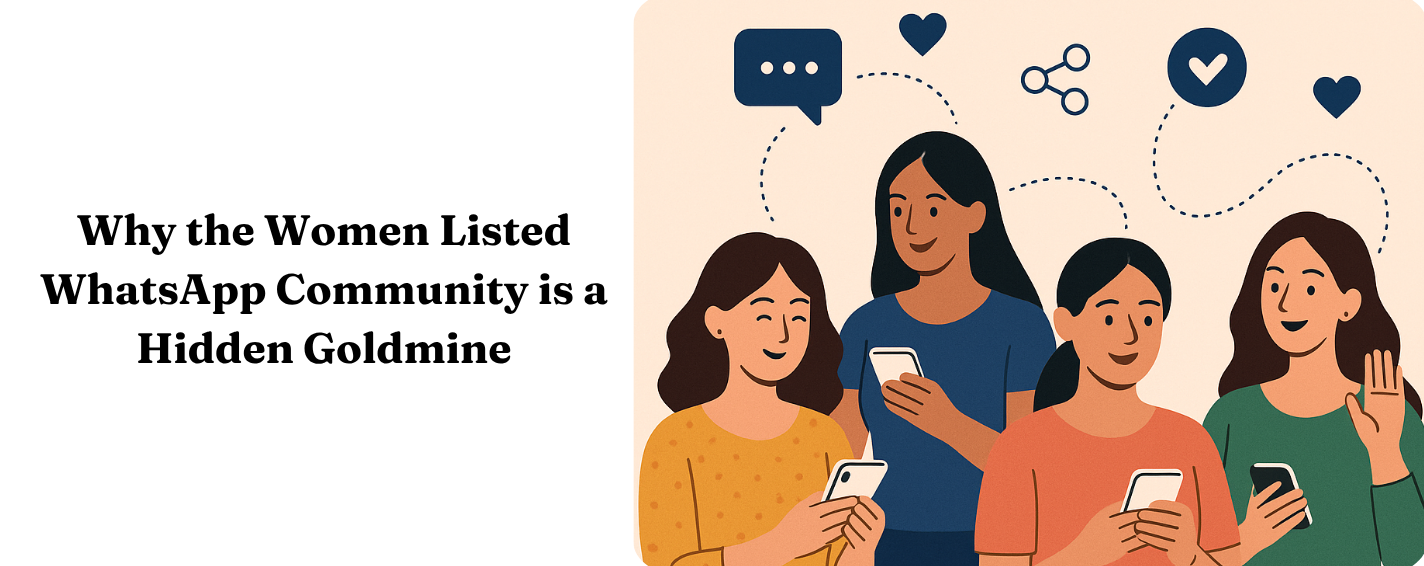
In India, B2B often continues on WhatsApp, whether marketers admit it or not. A prospect sees your Instagram, checks your profile, attends your event, asks for your deck, and then says, “Can you WhatsApp me?”
That shift matters. It's one reason desktop-first funnels often underperform for smaller firms here. A lighter path is often more practical.
Keep the conversation easy to continue
The Salesgenie article on B2B lead generation strategies highlights a useful angle for Indian small businesses. Many can't build expensive acquisition engines, so lead generation works better as reputation infrastructure. Searchable profiles, community validation, founder visibility, networking, and referral loops often beat generic top-of-funnel efforts.
That's why community can outperform audience. A small WhatsApp group for workshop alumni, clients, or local founders may create better business than a large passive following elsewhere. If you're trying to build local connection, social groups in Delhi shows how offline and online circles can overlap.
Choose one primary channel: WhatsApp, Telegram, LinkedIn group, or private Instagram broadcast. Don't try all at once.
Make it useful fast: Share templates, reminders, event notes, or opportunities. Don't fill it with promotions.
Set boundaries: Business hours, posting rules, and response expectations matter.
Use it for nurture, not spam: Community breaks when every message is a sales message.
Even a simple WhatsApp habit works for support and continuity. You can also keep WhatsApp as your easy follow-up tool. If email deliverability is an issue, this explainer on checking if emails are going to spam is handy.
Strategic Podcasting
Podcasting might seem like a branding exercise until it starts building trust.
For service businesses, founder-led brands, coaches, educators, and niche experts, voice does something text often can't—it lets people hear how you think. That familiarity can make later sales calls much easier, especially for offers needing confidence, not just information.
Use voice to build familiarity
You don't need a giant studio setup. You need a consistent point of view. Short founder conversations, client education episodes, and practical industry breakdowns can all work if they're focused.
Women Listed's platform includes the podcast format as part of founder visibility, and that's the right way to think about it. Not as entertainment first, but as trust media. A founder like Vibhuti Jain or Sudipta Gupta can use voice-led storytelling differently, but both can build recognizability through it.
If people regularly say, “I feel like I already know your work,” your content is doing lead generation even before the inquiry comes in.
Pick a niche angle: Don't launch a general business podcast. Pick a buyer problem or founder lens.
Repurpose smartly: A webinar can become an audio episode, clips, quotes, and a follow-up email.
Invite adjacent experts: Guests bring credibility and fresh distribution.
Add one CTA only: Point listeners to one clear next step, like a profile, consult call, or event.
The pace is slow, but podcasts can attract high-trust leads over time.
Account-Based Marketing ABM
A founder in Pune selling leadership workshops to companies doesn't need 500 leads. She needs 15 right accounts, the right HR or L&D contact, and a message that shows she understands what that company needs to fix this quarter. That's ABM in practice.
ABM suits women-led businesses in India when the ticket size justifies the effort. Corporate training mandates, diversity consulting, employee gifting, design retainers, SaaS contracts, hotel or retail supply deals, and recurring advisory work fit this model. A low-ticket product usually doesn't. The math gets uncomfortable fast if every prospect needs custom research and follow-up.
Go narrow when deal value is high
The mistake is treating ABM like regular outreach with a fancier label. It's a small-account pursuit plan. Pick a set of companies, study what matters to each, and build outreach around a specific business problem.
For example, if you run an HR consultancy in Bengaluru focused on women returnee hiring, your account list might include mid-sized tech firms, GCCs, and venture-backed startups scaling teams. Your message to each account should reflect that company's hiring stage, employer brand gaps, or DEI goals. A recycled pitch deck won't suffice.
Women Listed can support this practically. Your listing helps a target account verify your activity and credibility. Events give you a reason to start or restart a conversation. The podcast format can warm up decision-makers before a direct pitch, especially if your service depends on trust and expertise.
A simple ABM setup is enough to begin.
Define the account list: Industry, company size, city, buying trigger, and the likely decision-maker.
Write one account-specific angle: Start with the problem they are likely facing, not your full company story.
Use 3 to 4 touches: LinkedIn, email, a referral intro, and one event invite are usually enough to test interest.
Create one relevant asset: A short case note, sample plan, or sector-specific landing page often works better than a broad brochure.
Review the economics every month: If the sales cycle is long and deal value stays modest, shift back to a wider demand-generation approach.
ABM provides better-fit conversations, but the volume is lower and the preparation work is significant. For a women-led business selling considered B2B services in India, that trade is often worth making. Fewer accounts, better context, stronger close rate.
10-Strategy B2B Lead Generation Comparison
| Strategy | Implementation complexity | Resource requirements | Expected outcomes | Ideal use cases | Key advantages |
|---|---|---|---|---|---|
| Directory Listings & Search Optimization | Low–Medium: profile setup + SEO optimization | Minimal budget, photos, copywriting, periodic updates | Passive organic B2B leads; improved local discoverability (weeks–months) | D2C brands, local retailers, service providers | Low cost, credibility via verification, geographic targeting |
| Virtual Networking & Expert-Led Webinars | Medium: program planning, speaker coordination, tech | Time for prep, webinar platform, promotion, guest experts | Qualified leads, authority building; immediate engagement, content for repurposing | Coaches, consultants, SaaS, knowledge businesses | Builds thought leadership, scalable repurposable content |
| Strategic Referral Partnerships | Medium–High: partner identification and agreements | Time to cultivate relationships, possible revenue share/commissions | Warm, pre-qualified leads; steady referral stream over time | Service firms, complementary product companies, B2B platforms | Low CAC, trust transfer, scalable via network effects |
| Content Marketing & SEO | Medium–High: strategy, production, SEO discipline | Content creators, SEO expertise, editorial calendar, time | Evergreen organic traffic and leads; measurable growth over months | Consultants, B2B SaaS, educators, thought leaders | Long-term authority, lower CPL over time, repurposing potential |
| LinkedIn B2B Outreach | Medium: targeting, personalized messaging, follow-up | Time-intensive manual outreach or paid Sales Navigator, strong copywriting | Direct meetings and pipeline; fast lead generation if scaled | B2B service providers, recruiters, SaaS sellers | Access to decision-makers, precise targeting, relationship-building |
| In-Person Events & Meetups | Medium–High: event logistics and pitching skills | Higher costs (travel, booths, materials), time, presentation skills | High-quality leads and partnerships from face-to-face interactions | Local service providers, retail, trainers, event-focused brands | Strong relationship building, memorable brand impressions |
| Email Marketing & Lead Nurturing | Medium: segmentation, automation, content flows | CRM/email platform, content creation, list-building effort | Highly measurable, high ROI nurturing; converts over nurture cycles | SaaS, consultants, B2B services with longer sales cycles | Scalable, personalized outreach, excellent ROI and tracking |
| Community Building (WhatsApp, etc.) | Medium: ongoing moderation and engagement | Community manager time, platform tools, content cadence | High engagement, referrals, retention; slower acquisition growth | Memberships, coaches, niche professional communities | Strong loyalty and advocacy, peer support, low marginal cost |
| Strategic Podcasting | Medium–High: production, guest booking, consistency | Recording equipment, editing/time, promotion, hosting fees | Deep audience engagement and authority; slow initial growth | Thought leaders, founders, coaches, B2B brands targeting professionals | Intimate format, repurposable audio, SEO from transcriptions |
| Account-Based Marketing (ABM) | High: account research, personalization, coordination | Significant data, martech, CRM integration, cross-team effort | High ROI for target accounts, higher win rates and deal sizes | Enterprise SaaS, consulting, high-value B2B deals | Highly personalized outreach, efficient spend, stronger sales-marketing alignment |
Your Turn: Pick One Strategy This Week
It's not about choosing the "wrong" lead channel first. The bigger mistake is trying five channels poorly, getting exhausted, and deciding none work.
Most women-led businesses don't need a massive funnel from the start. They need one reliable entry point, one trust builder, and one follow-up habit. This could mean a well-written directory profile plus WhatsApp follow-up. Or LinkedIn outreach plus a monthly webinar. Or city events plus simple email nurturing. The mix changes, but the pattern remains.
If you sell expertise, start with visibility and trust. If you offer a higher-value B2B service, add LinkedIn and referral partnerships. If your sales cycle is longer, build content and email nurturing. If your buyers are local and relationship-driven, don't underestimate events, founder circles, and community-led discovery.
There's a practical reality in India's small-business market. Many buyers won't move through a neat funnel. They'll find you on search, ask around, look at your profile, view your content, and message you later on WhatsApp. That's why the strongest B2B lead generation strategies are usually not single tactics but connected systems with low friction.
Start small this week:
Pick one discovery channel: Directory listing, LinkedIn, content, events, or referrals.
Pick one trust asset: Webinar, article, podcast episode, case-style page, or founder profile.
Pick one follow-up method: Email sequence, WhatsApp note, or scheduled check-in.
Set one weekly metric: Number of quality conversations started, not vanity reach.
For a practical first step, list your business on Women Listed. Then refine your profile, identify three referral partners, or send three thoughtful LinkedIn notes. Any of these is better than spending another week “planning.”
Women Listed assists women entrepreneurs in getting discovered, building credibility, and growing through practical visibility tools. Create your profile on Women Listed to showcase your business, connect with buyers and collaborators, and join a network designed specifically for women-led businesses across India.
Women Listed serves as a practical home base for visibility, credibility, and lead flow. If you want buyers, collaborators, and communities to find your business more easily, create your presence on Women Listed.
FAQs
1. How can I improve my business visibility as a woman entrepreneur in India?
Start by creating a strong online presence with directory listings, participating in webinars, and engaging in community events. Use platforms like Women Listed to enhance credibility.
2. What is the most effective lead generation strategy for a women-led business?
The most effective strategy combines visibility, trust-building, and consistent follow-up. Choose a mix of channels that works best for your business type and market.
3. How do I decide which lead generation channel to focus on first?
Consider your business goals, the nature of your offerings, and where your potential buyers are most active. Start with one channel and refine your approach based on results.
4. Why is follow-up important in lead generation?
Follow-up ensures that potential leads don't slip away and helps maintain engagement. It allows you to build relationships and convert interest into actual meetings or sales.
5. How can Women Listed help my business?
Women Listed offers practical tools for visibility and credibility. By creating a profile, you can connect with buyers, collaborators, and a network specifically for women-led businesses.