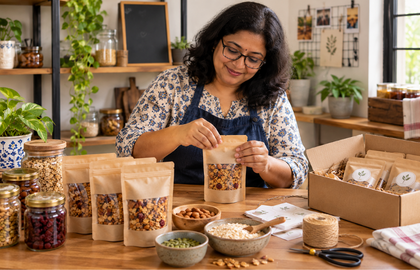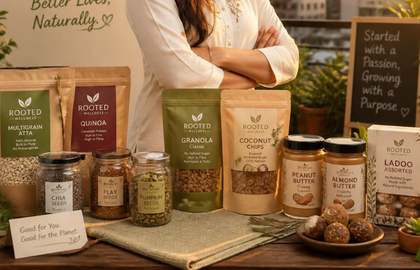
A founder in Delhi told me her Diwali season begins while everyone else is still clearing Rakhi inventory. By the time a buyer asks for “something premium but not generic,” the good brands have already tested box sizes, locked vendors, checked shelf life, and priced courier risk into every hamper.
That is how festive gifting works on the ground in India. A Diwali hamper succeeds when the products feel considered, the packaging survives shipping, and the recipient uses what is inside.
For buyers, hampers from women-led brands often bring stronger curation and more accountability than a generic catalogue order. For founders, this season deserves real planning, because festive sales can shape the year. If you care about the wider business case as well as the gift itself, this guide to why buying from women-owned brands matters adds useful context.
This article looks at both sides of the table. If you are buying, it will help you judge quality, budget, and bulk-order practicality. If you are building a women-led brand, it will help you design hampers that look good, travel well, and still leave you with a margin.
Table of Contents
- Why Choose a Hamper from a Woman-Led Brand This Diwali
- How and Where to Find Authentic Diwali Hampers
- What to Look For in a Standout Diwali Hamper
- A Buyer's Guide to Budgets and Bulk Orders
- Founder Playbook Part 1 Designing Your Diwali Hamper
- Founder Playbook Part 2 Pricing Packaging and Delivery
- Choosing Your Hamper Style A Quick Comparison
Why Choose a Hamper from a Woman-Led Brand This Diwali

Thoughtful beats generic
A few Diwalis ago, I watched two hamper orders land very differently. One was a standard corporate box with dry fruits, a mug, and a plastic diya set. It was polite, forgettable, and looked like it had been approved by committee. The other came from a founder-led brand. It had clean packaging, mithai that people finished, and small details that made sense together. That gift stayed on desks and dining tables for days.
That difference matters.
A woman-led hamper brand often sells with sharper judgment because the founder is still close to the product. She is choosing combinations, adjusting colours, testing packaging, handling customer requests, and worrying about whether the box will survive a courier ride from Jaipur to Bengaluru. Buyers get a better gift. Founders build trust order by order.
The appeal is not sentimental. It is practical. Smaller founder-led brands often make stronger choices on curation, custom notes, festive styling, and useful add-ons because they cannot afford to hide behind volume. If the hamper feels mismatched or flimsy, the customer notices immediately and the founder pays for it in repeat business.
That creates a real advantage for both sides. Buyers get options that feel more personal. Founders get room to stand out on taste instead of competing only on price.
A good Diwali hamper should feel considered.
In India, that usually means moving beyond the old formula of dry fruits plus sweets plus token décor. A well-built box might pair small-batch snacks with a brass diya, a hand-poured candle, and packaging the recipient can reuse. Or it may keep things tighter and do one theme properly, such as wellness, festive hosting, regional treats, or premium desk gifting for clients.
That focus is where many women-led brands do well. They are often better at restraint. They know every box does not need six product categories to look expensive.
For buyers, the practical upside is clear:
- Stronger curation: The products usually belong together in taste, look, and use, instead of feeling picked from a wholesale list.
- Better customisation: Founder-led businesses are often more open to name tags, regional preferences, dietary changes, company inserts, and colour edits.
- Higher perceived value: A Rs 1,500 hamper can feel more premium than a Rs 2,000 generic box if the contents and presentation are better judged.
- A more credible story: If you are gifting clients, teams, or wedding guests, supporting a founder-led business adds meaning without making the gift preachy.
For women founders, Diwali hampers are more than a festive product. They are often the first serious test of product-market fit, margins, packaging discipline, and fulfilment capacity. If a founder can design a box people remember and deliver it on time during peak season, she is not just selling a hamper. She is proving she can run a business under pressure.
That is one reason buying from women-led brands has value beyond one festival. It keeps money, visibility, and customer feedback circulating within businesses that are still building. Women Listed explains that broader case well in its piece on why buying from women-owned brands matters.
There is a trade-off, and it is worth stating plainly. Smaller brands may have tighter production limits, longer lead times for custom work, or less room for last-minute changes on very large orders. But if the founder is organised, that trade-off usually buys you something better: a hamper with intent, not just inventory.
How and Where to Find Authentic Diwali Hampers
Last Diwali, I saw two very different gifting decisions play out in the same week. One company placed a large order from a page that looked polished on Instagram, then spent the final five days chasing dispatch updates. Another buyer chose a smaller woman-led brand that had fewer posts but clearer proof of work, clear timelines, and a catalogue that matched what she could deliver. The second order arrived on time. In festive gifting, that difference matters more than aesthetics.
A lot of authentic hamper brands in India are still discovered the old-fashioned way. Instagram, WhatsApp catalogues, founder referrals, and repeat customer circles. That does not make them less reliable. It means the buyer has to verify execution, not just taste.
Start with what the brand shows in public. Look for recent Diwali work, actual hamper combinations, packing clips, delivery updates, and customer reposts that mention the experience, not only the final photo. A founder who has handled 30 boxes well will usually show signs of that discipline. A page with one styled shoot and no operational evidence needs more checking.
Curated discovery helps. The Women Listed directory lets buyers search women-led businesses by category and city, which is more useful than scrolling through festive hashtags for an hour. That matters if you want sampling in Mumbai, easier coordination in Bengaluru, or local vendor partnerships in Pune.
You do not need a founder profile link to judge this. As noted earlier, reviewing an actual founder listing can still help because it gives context beyond the box itself. You get a better sense of category focus, brand maturity, and whether the business is built for occasional gifting or serious seasonal volume.
For buyers, the shortlist should be practical:
- Ask for the current catalogue. Old PDFs create confusion on pricing, packaging, and what is still in stock.
- Request one unedited packing or dispatch video. It tells you more than a studio photograph.
- Check customisation limits early. Some founders can change sleeves, tags, inserts, and colour palettes. Others stop at name cards.
- Ask who makes each component. If sweets, candles, and packaging come from three vendors, lead time risk goes up.
- Confirm festive capacity. A founder may do beautiful work but cap orders to protect quality. That is good discipline, but you need to know it before you commit.
For founders, discovery works differently. The buyer is scanning for trust signals. Clear highlights, a dated catalogue, honest MOQ details, city location, and real packing footage do more selling than generic festive captions. If your page also shows products beyond Diwali, such as wedding favours or unforgettable birthday gifts, it helps buyers understand your design range, but your festive offer still needs its own clear presentation.
If you want a faster starting list, Women Listed has a useful roundup of women-led gift hamper brands for different occasions. Use that as a source list, then do the essential work of checking fit, fulfilment, and communication quality before placing the order.
What to Look For in a Standout Diwali Hamper

Judge the hamper as a product system
A standout hamper isn't just a list of items. It's a system. Product mix, packaging, protection, and use-case all have to hold together.
In the Indian corporate market, premium and practical choices are increasingly shaping festive gifting. According to Pebel.in's analysis of Diwali corporate hamper trends, assortments now often include tumblers, glass bottles, and herbal teas alongside traditional diyas and candles. The same analysis notes growing traction for copper bottles, organic skincare, and soy candles in eco-friendly options. That's useful because it tells you what buyers now value. Utility and retention.
If a hamper looks great on Instagram but half the contents feel like filler, it's not a good hamper.
Use this checklist when evaluating Diwali hampers from women-owned brands:
- Product logic: Do the contents belong together? Cookies, tea, and a mug make sense. Random sweets plus a notebook plus a keychain often don't.
- Retention value: Ask what the recipient is likely to keep using after Diwali. Utility lifts perceived value.
- Packaging strength: Rigid boxes, dividers, sealed jars, and protected glass matter if the hamper is shipping across cities.
- Festive personality: Diyas, candles, mithai, artisanal snacks, and décor should feel intentional, not token.
- Personalisation: A small custom note, branded sleeve, or festive insert can make the gift feel far more considered.
A food-led hamper can work especially well when one product becomes the anchor. Founders like Sudipta Gupta of For Cookies' Sake! show why specialised products matter. A memorable edible item often gives the whole hamper its identity.
This visual summary is worth keeping in mind while you shortlist options.
One more useful trick. If you're buying for multiple occasions through the year, looking at gift curation outside Diwali can sharpen your eye. This guide to unforgettable birthday gifts is helpful for understanding how presentation, sentiment, and category-fit change by occasion.
A Buyer's Guide to Budgets and Bulk Orders
One Diwali, a founder told me she lost a promising corporate order after six rounds of calls. The buyer kept asking for something “premium but not too expensive.” The founder kept sending options that looked festive and well-made. The problem was simpler than either side admitted. Nobody had defined budget, quantity, delivery scope, or what “premium” meant.
That confusion is common, and it wastes time on both sides.
For buyers, the cleanest starting point is this. Set your per-hamper budget first, then decide what that budget needs to achieve. A family gift, an employee hamper, and a client box may all sit in the “Diwali gifting” bucket, but they are judged very differently once they reach the recipient.
A practical budget split usually looks like this:
- Entry-level gifting: Works well for neighbours, apartment committees, teachers, or casual festive gestures. Keep the selection tight. One strong product, one festive touch, and tidy packaging usually lands better than stuffing the box.
- Team gifting: Reliability matters more than surprise. If you are ordering for 50 or 500 people, consistency in product quality, shelf life, and dispatch discipline matters more than adding extra fillers.
- Client gifting: Finish starts to matter. Better presentation, a sharper product mix, and thoughtful branding can justify a higher spend, especially if the gift represents your company as much as the festival.
For personal gifting on a smaller budget, fewer better items usually win. A good tea, handmade mithai, and a diya set can feel more considered than a crowded basket with five forgettable products.
Bulk orders need a proper brief. Small women-led brands are often handling sourcing, curation, packaging, and dispatch with lean teams. A vague message asking for “rates” puts the founder in guessing mode, and that is how mismatched quotes happen.
Send these details in your first enquiry:
- Quantity range: Even a bracket helps, such as 25 to 40 or 200 plus.
- Budget per hamper: Share whether this includes shipping and GST.
- Delivery plan: One city, multiple cities, or individual addresses across India.
- Branding needs: Logo sleeve, custom card, company colours, or no branding at all.
- Product preferences: Vegetarian only, no dry fruits, no glass jars, premium Indian snacks, or wellness-focused items.
- Deadline: Mention the delivery date, not just when you want the hamper to be “ready.”
A founder can quote faster and more accurately with that information. A buyer gets fewer revisions and fewer last-minute surprises.
Lead time is where many Diwali orders slip. Handmade food products, custom sleeves, printed inserts, and sourced packaging all add days. Production time and shipping time should be discussed separately. If the order includes fragile items such as mugs, candles in glass, or ceramic diyas, packing quality becomes part of the budget conversation too. For packaging references, Monopack's guide to perfect mug boxes is useful for understanding how breakage prevention affects box choice and shipping cost.
Delivery can make or break the order.
If hampers are going to multiple pin codes, buyers should ask who owns the shipping risk, how damages are handled, and whether replacements are possible close to Diwali. Founders should answer those questions before payment, not after dispatch. If you are comparing courier options, this guide to the best delivery partner for ecommerce in India is a practical place to start.
For women founders, bulk orders can bring strong festive revenue, but only if the order is commercially sensible. A large enquiry with heavy customisation, low margins, and scattered deliveries can drain capacity fast. It is better to offer clear minimums, defined customisation slabs, and realistic dispatch windows than to say yes to every request and struggle through execution.
Good Diwali gifting runs on clarity. Buyers get better hampers. Founders get better orders.
Founder Playbook Part 1 Designing Your Diwali Hamper
Start with the buying moment you want to create
Every founder has seen this happen. Diwali is six weeks away, enquiries start coming in, and the first instinct is to source whatever looks festive. Dry fruit jar. Candle. Diyas. Maybe a mug. The result is a box full of decent products with no reason to belong together.
Good hampers start earlier, with one clear use case. Ask a practical question first. Who is opening this box, and in what setting? A team gift that lands on an employee's desk needs a different mix from a client hamper sent to a family home. Buyers should look for that clarity because it usually signals a founder who has designed with intent, not just assembled stock. Founders should use it because it cuts indecision fast.
A workable hamper concept is specific. Festive tea-time for at-home gifting. Desk Diwali for office teams. Hosting box for families who entertain. Quiet luxury self-care for premium personal gifting. Once the use case is fixed, product choices become easier, and the hamper looks more coherent.
Anjali Jain of Eraya is a useful reference for this. Lifestyle gifting works better when the festive collection still looks like the brand that made it. If your brand language is clean, earthy, or minimal, keep that consistency. Buyers notice when a founder has suddenly switched to generic gold packaging just because it is Diwali season.
The strongest hamper lines usually have three layers:
- Hero item: the product that carries recall, such as a signature candle, mithai tin, ceramic diya set, or tea blend
- Supporting products: two or three items that make the hero feel complete, such as savouries, coasters, incense, chocolates, or a small decor accent
- Presentation layer: the box, sleeve, insert card, fabric wrap, or basket that gives the hamper shape and brand memory
Keep the architecture steady across price points.
That matters on both sides. Buyers get easy comparison between a Rs 999, Rs 1,499, and Rs 2,499 option. Founders get a range they can assemble without creating five separate product lines. If you need help building those numbers sensibly, this guide on how to set the right prices for your business is a practical place to start before you finalise your festive catalogue.
One hard-earned rule is to keep one signature element constant across the range. It could be your scent, your printed artwork card, your snack tin, or your fabric wrap. That single repeated cue helps the hamper line feel branded even when the budget changes.
Collaboration can also improve the box, if it is done with restraint. A woman founder selling candles can pair with a baker for tea cakes. A food brand can add a ceramic diya from another maker. A home decor founder can include a small artisanal snack instead of trying to manufacture variety alone. Buyers get a richer hamper. Founders get access to complementary audiences and better gifting utility. The trade-off is coordination, so keep partner products limited and aligned to the theme.
A few design decisions prevent trouble later:
- Edit aggressively: six relevant products usually look stronger than ten unrelated ones
- Choose useful items: recipients remember what they can consume, reuse, or display
- Test visual balance: one oversized hero product can make the rest of the hamper look like filler
- Avoid novelty for its own sake: if an item only looks festive but adds no use, it rarely survives repeat orders
- Simplify assembly: if your team cannot pack it neatly every single time, redesign it now
Fragile products deserve special scrutiny at the design stage, not after sales begin. Mugs, glass candles, and ceramic diyas can add value, but only if the box has enough structure and fit. Before locking your hamper dimensions, review Monopack's guide to perfect mug boxes. It is useful for understanding how protection and presentation need to work together when breakage can wipe out margin.
The best Diwali hampers feel considered. Buyers can tell what they are paying for. Founders can produce them repeatedly without chaos.
Founder Playbook Part 2 Pricing Packaging and Delivery

Operational polish is what closes repeat orders
One of the fastest ways to lose a Diwali client is to price attractively, pack beautifully, and then miss dispatch by two days. Buyers remember that failure more than the candle, mithai, or branding card inside the box. Founders feel it in a harsher way. One bad batch can wipe out margin, referrals, and confidence in the whole festive line.
For women-led brands selling hampers, an advantage in corporate gifting is control. Keep a fixed base hamper that your team can assemble without confusion. Then add a custom layer only where the order justifies it, such as logo inserts, company colour ribbons, branded sleeves, or one premium upgrade for senior recipients. This structure keeps costing clearer and reduces packing errors during the Diwali rush.
A simple operating model works well:
- Core hamper base: Finalise one repeatable box, standard filler material, and fixed products.
- Custom layer: Add company cards, welcome notes, ribbon changes, or premium swaps only for approved orders.
- Delivery logic: Split local hand delivery, intra-city courier, and pan-India shipping into separate workflows with different timelines and costs.
Pricing needs more discipline than creativity. Founders often look at competitor hampers on Instagram, choose a market-friendly number, and hope the margin will work out. It rarely does. Start with product cost, GST impact where applicable, sourcing delays, packing labour, replacement stock, platform fees if any, and shipping by zone. Then check whether the selling price still makes sense for your target buyer. Women Listed has a useful guide on how to set the right prices for your business if your current method is mostly guesswork.
Packaging is where buyer experience and founder economics meet. A premium-looking hamper that collapses in transit is expensive decoration. If you are shipping jars, glass bottles, candles, or ceramics, test the outer shipper as seriously as the gift box. For founders comparing transit-friendly options, boxes cardboard packaging is a practical reference point for understanding different box formats and load support.
A few habits make festive operations far easier to manage:
- Quote with boundaries: State what is included, what counts as customisation, and whether delivery, taxes, and branding are billed separately.
- Approve one sample first: For bulk orders, send a physical sample or a detailed mock-up before full assembly starts.
- Set hard cut-off dates: Late festive orders usually create quality problems, not revenue wins.
- Track dispatch properly: Many Indian founders use Shiprocket or Delhivery to organise labels, movement, and status updates.
- Keep a damage buffer: A small reserve of fast-moving items helps you replace broken or last-minute missing units without panic.
Buyers benefit from this discipline too. Clear quotes make budget approval easier. Strong packaging reduces embarrassing breakage on the recipient side. Reliable delivery matters even more in corporate gifting, where hampers often need to reach multiple offices, employee homes, or client addresses within a narrow festive window.
The founders who win repeat Diwali business are rarely the ones with the fanciest hamper. They are the ones who can price clearly, pack consistently, and deliver on the date they promised.
Choosing Your Hamper Style A Quick Comparison
Diwali Hamper Ideas from Women-Owned Brands
If you're choosing between formats, keep the occasion and recipient in front of you. The best hamper isn't the fanciest one. It's the one that fits.
| Hamper Type 💡 | Typical Contents | Price Range (₹) | Best For |
|---|---|---|---|
| Gourmet festive hamper | Cookies, mithai, tea, artisanal snacks, chocolate | Under ₹2,000 to mid-range | Friends, family, light client gifting |
| Wellness hamper | Herbal tea, soy candle, bath product, journal, self-care item | Mid-range | Colleagues, founders, wellness-conscious recipients |
| Traditional festive décor hamper | Diyas, candles, dry fruits, festive accents, sweets | Entry-level to premium | Family gifting, festive hosting, community gifting |
| Utility-led corporate hamper | Tumbler, glass bottle, tea, snacks, desk-friendly festive item | ₹1,500 to ₹3,000 | Employee gifting |
| Premium client hamper | Curated gourmet products, décor, elevated packaging, custom insert | ₹3,000 to ₹10,000 | Key clients, business associates, senior stakeholders |
Women Listed helps women entrepreneurs get discovered, build credibility, and grow through practical visibility tools. Create your profile on Women Listed to showcase your business, connect with buyers and collaborators, and join a network built specifically for women-led businesses across India.